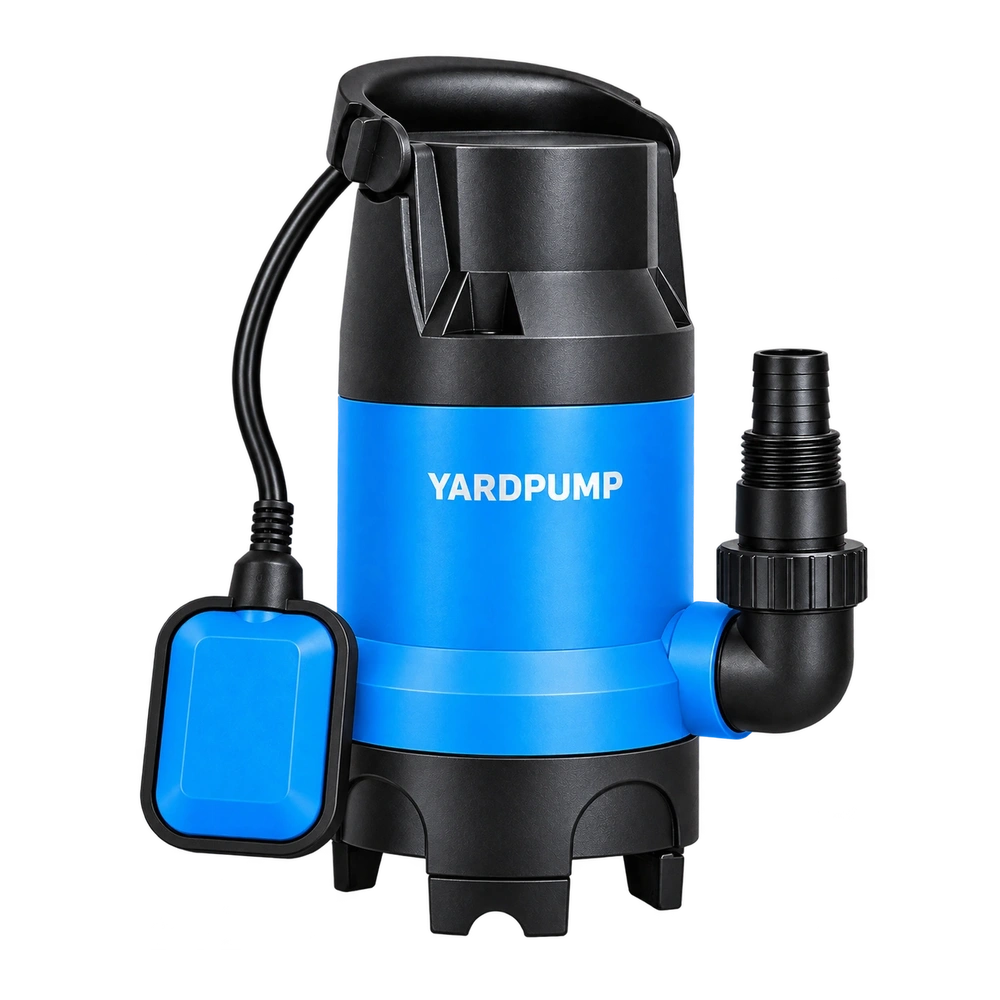
The sump level rises. There is no debris around the float, its cable is free and it has room to move, yet the float sits unusually low in the water. Should it be tied higher or fitted with extra foam? That is not a sound repair. In a switch that relies on a sealed buoyant body, liquid entering through damage or a failed interface adds weight and may prevent the intended operating position.
Stop using the faulty arrangement and have the correct component assessed or replaced. Do not compensate by modifying buoyancy or bypassing the switch.
Free movement and sufficient buoyancy are separate
Float operation depends on buoyancy, weight, restraint and the switching mechanism, as well as liquid level. The displaced liquid must provide enough upward force to move the assembly into its required position. Added internal liquid can alter that position even when nothing physically obstructs the float.
Construction matters. Hollow floats, filled bodies and other level-sensing arrangements do not share identical failure mechanisms. Identify the actual switch before deciding how ingress might affect it. Check liquid density, temperature, compatibility and installation conditions too.
Failure to rise is an observation, not proof of ingress. Nor does it automatically establish that electrical contacts have failed.
Record the external evidence safely
Follow the site’s safety procedure to disconnect and isolate relevant supplies. Do not enter potentially electrified water to retrieve a float or handle plugs with wet hands. Electrical testing and replacement require qualified personnel. If temporary drainage is necessary, use a separate suitable arrangement instead of defeating protection on the original pump.
| Observation | Causes to distinguish | What it does not prove |
|---|---|---|
| Free float at an abnormal level | Internal liquid, external deposits or density | Electrical contact failure |
| Cracked shell or damaged entry | Mechanical damage, material or installation load | When the damage occurred |
| Heavy surface deposits | Added weight or restricted movement | That the float also contains water |
| Changing operating levels | Float condition, mounting or mechanism | That cable adjustment alone is sufficient |
After isolation, preserve photographs of the installation, liquid level and float condition. Record the liquid handled, service history and previous adjustments. Shaking, striking or opening a sealed body can disturb evidence and does not establish electrical safety.
An illustrative buoyancy calculation
Imagine a sealed body that can displace 0.30 litres of fresh water in a specified fully immersed position. Its own mass and equivalent supported load total 0.18 kg. Ignoring other forces, full immersion provides buoyancy corresponding to roughly 0.30 kg, leaving a mass margin of about 0.12 kg. Adding 0.15 kg of internal water could prevent that displacement from lifting it.
These are hypothetical figures, not a switch specification or acceptance limit. Real switches may need to reach their operating position before full immersion. Cable bending, mounting, liquid density and internal mechanisms also affect operation. A float that eventually remains at the surface is not necessarily operating correctly.
Adding a separate float changes the approved mechanics and can introduce snagging or detachment. Original switching-level data cannot simply be retained after that modification.
Confirm the fault and replace appropriately
The service provider should follow the manufacturer’s method for checking body integrity, mounting and switching. How ingress is confirmed depends on construction. A sealed component that is not approved for field repair should be replaced as an appropriate complete assembly. Draining it through a drilled hole and sealing the hole does not restore its original qualification.
Replacement requires more than matching the outside shape. Check electrical loading, control function, cable, sealed connections and operating levels. Similar floats may perform different control functions.
Qualified personnel should complete the required electrical and functional checks after repair, then verify start and stop behaviour in the actual installation under safe controlled conditions. Where flooding has serious consequences, assess independent alarms and backup arrangements separately. Replacing a float does not establish complete drainage-system reliability.
Frequently asked questions
If the float still floats, does that rule out water ingress?
No. Partial ingress may first change switching level or angle. External deposits can produce similar symptoms, so further assessment is needed.
Can extra foam restore reliable operation?
Do not use it as an improvised repair. It changes forces and operating positions and may detach or obstruct movement. Use an approved replacement assembly.
Must the entire pump be replaced?
Not necessarily. Qualified personnel should assess the construction and electrical condition, determine whether an approved component replacement is possible and complete the required release checks.