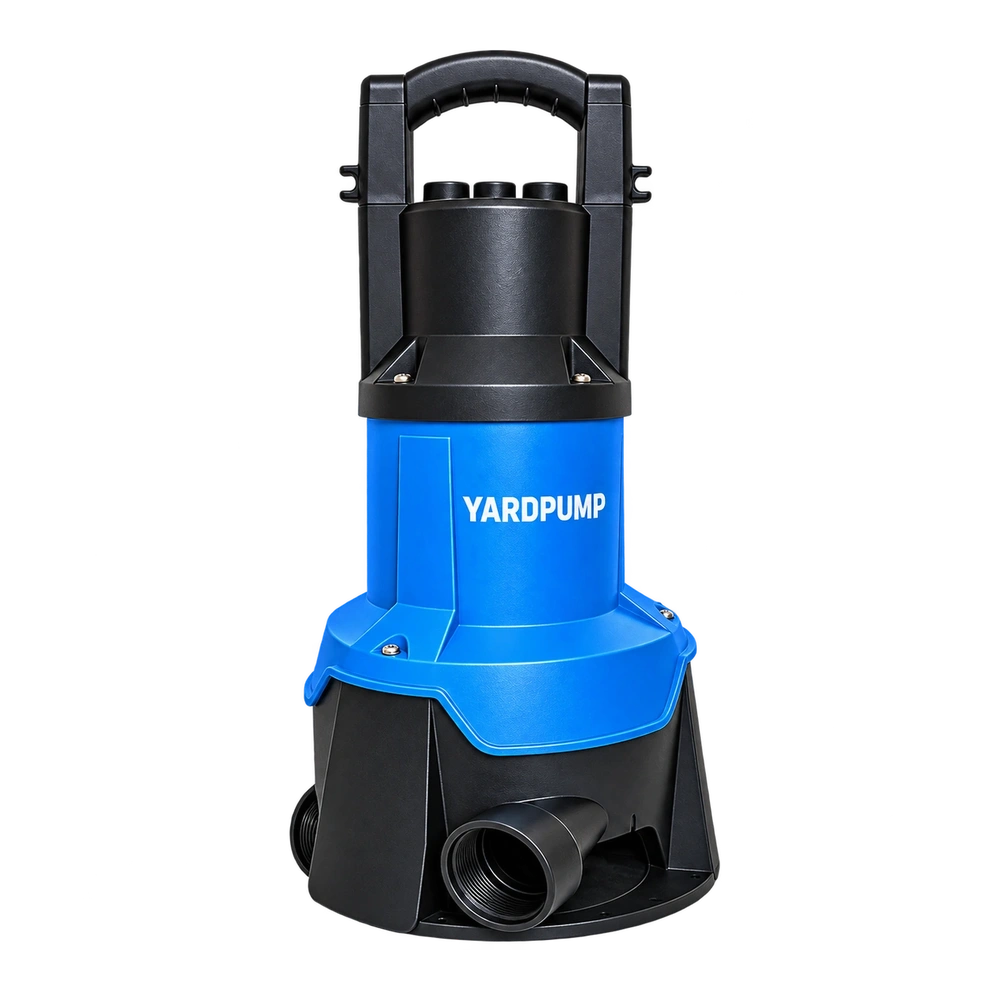
A pump uses the same motor for two trials. One impeller has two vanes and the other four. Flow is higher in one run and the current changes. Is that entirely due to the vane count? Measure actual shaft speed first. Changing impeller load can change the slip of an induction motor at the same supply frequency. The complete pump comparison is useful, but it does not isolate geometry. For a design decision, use a separate test that controls speed.
Decide which of two questions the trial should answer
A buyer needs to know which complete pump delivers the required flow and head, what power it takes, and how it behaves at approved supply and cooling conditions. A speed change caused by the new load is part of that result. Do not correct it away on the complete pump report. A development team may also need to know how two wet ends compare at a common speed, which can help separate a hydraulic change from the motor’s response. Record the volute, clearances, impeller diameter and seal arrangement as applicable. Even with the same outside diameter, vane thickness, inlet angle, outlet area and clearance can differ. Do not attribute all changes to the count.
Two vanes can change the space for flow and the way loading pulsates compared with four. That does not establish a general power saving or a particle limit. Check actual shape, balance and allowable solids. Do not cut vanes off a production impeller to make a prototype for a release test. The altered edges and balance make that a different component with different risks.
Run a complete-pump trial and a controlled-speed comparison
On a guarded, approved rig, compare the complete pumps under the stated supply, liquid, cooling and duty. Record flow, head, true input power and speed over settled intervals, and temperature where relevant. A qualified team should use an approved sensor arrangement without exposing rotating parts on a running pump. For the wet-end comparison, use a suitable controlled drive or test method and record torque and the hydraulic points at the matched speed. If matched speed is not available, treat any speed correction as an estimate for the same geometry over a small range, not as a release result for a different impeller.
For illustration, take a measured head of 4.8 metres at 2,750 rpm on one geometry. Ideal affinity scaling to a corresponding point at 2,850 rpm gives about 5.16 metres. The corresponding flow also scales with speed. It does not mean a fixed-flow reading will become 5.16 metres, and it is not a prediction for a different geometry. The example simply shows that a few percent of speed difference can matter when the change you are comparing is small. Record actual curves for the proposed parts, including the intended operating range and the test uncertainty.
Keep the two results side by side
Use complete-pump results to approve a configuration for the customer’s power and installed duty. Use the speed-controlled comparison to investigate whether the wet end still needs work. Verify starting, temperature, sound, wear or approved solids passage under the test relevant to each. When choosing from clean-and-dirty-water pumps, confirm the actual model and impeller. A result on one prototype is not a specification for every variant.
Keep the hydraulic duty and actual speed together in every line of the test report. It should be possible to revisit a point after a change to the supply variant or the controlled drive without inferring speed from the nameplate.
Frequently asked questions
Do equal motor amps mean equal load?
No. Current depends on supply, power factor, speed and the motor itself. Use measured electrical input or shaft torque as appropriate, with the actual duty recorded.
Why does flow change in the affinity example?
The scaling describes corresponding points on curves for the same geometry. Holding flow fixed while changing only the head is not the same corresponding point.
Do buyers need the matched-speed trial if they only want the faster draining pump?
Their main acceptance evidence is the performance of each complete pump at the allowed installed duty. Matched-speed testing helps explain a design change and should not replace that acceptance check.