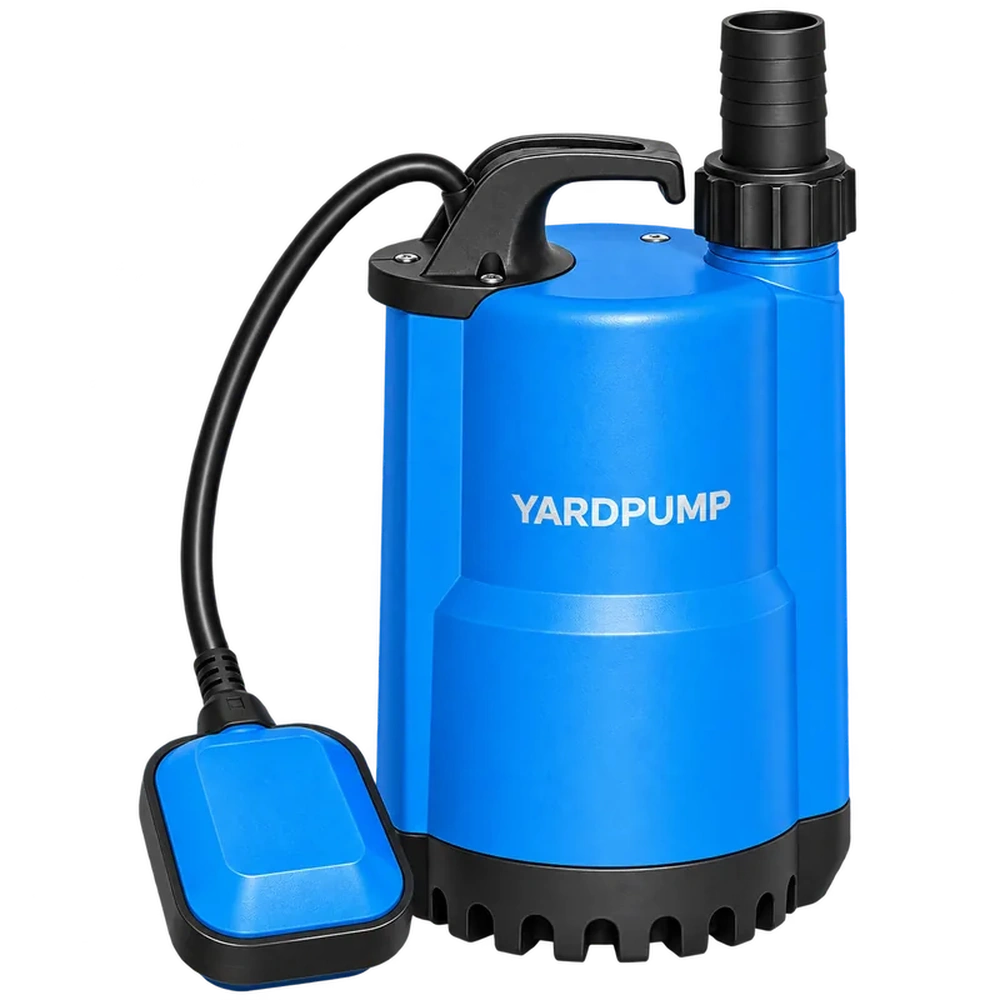
A portable power station displays 230 V and starts the pump, yet the motor becomes noisier and hotter than on its usual supply. This typical observation cannot be resolved by voltage alone. Check frequency, waveform, continuous-load capability and compatibility of the motor, capacitor and controls, while confirming that load and cooling remain comparable.
Equal RMS voltage does not mean equal waveform
RMS describes an equivalent magnitude; it does not establish a sinusoidal waveform. Modified-sine, stepped or other distorted outputs can contain different harmonic components.
The instrument also matters. An average-responding meter may give an inaccurate reading on a non-sinusoidal signal. Suitable true-RMS measurement helps establish the equivalent magnitude within the instrument's limitations.
However, even a correct RMS voltage does not prove suitable fundamental-frequency conditions for the motor. Magnetic behaviour, torque, losses and capacitor-circuit response depend on waveform and frequency. A motor cannot be treated simply as a resistive heater.
Starting capability is only one requirement
A source that starts a motor may still be unsuitable for continuous operation. Additional loss, torque changes or control problems may become apparent only after time.
Conversely, heat can result from restrictive pipework, insufficient cooling, an unsuitable operating point or mechanical faults. Do not declare every portable inverter unsuitable merely because one pump runs hot.
| Check | Relevant question |
|---|---|
| Waveform and frequency | What is actually supplied, and what does the motor permit? |
| Continuous capability | What duration, temperature and derating limits apply? |
| Motor and accessories | Are capacitor, controls and protective devices compatible? |
| Pumping task | Are head, flow, immersion and cooling unchanged? |
The complete combination matters. A power station's headline wattage is not evidence that every motor and controller will operate correctly.
Compare the same pumping duty
For a hypothetical validation, two sources both display 230 V, but one has the specified sinusoidal output and the other a different waveform. Different current or temperature results require further investigation of waveform, frequency and load.
Those two display values do not establish equal motor output. The example supplies no measured result for a particular product.
Keep pump, pipe route, water level, liquid temperature and duration comparable. Record actual flow and head. If the duty changes, some current difference may come from hydraulic load rather than the source alone.
Use a power instrument suitable for the signal conditions. Multiplying voltage by current does not, by itself, give active input power for a motor load.
Keep electrical diagnosis with competent personnel
Waveform and power-quality measurements require suitable equipment and competence. Household users should not connect oscilloscopes in wet locations, open the power station or improvise earthing changes.
Protection, earthing arrangements and residual-current protection must follow the relevant source and equipment instructions and local requirements. Off-grid supply does not remove electric-shock risk.
Stop and isolate the equipment if abnormal noise, smell, overheating or protective trips occur. Do not increase capacitor size, bypass a protector or force prolonged operation to make the combination work. Those changes require complete approval, and a larger source wattage does not resolve every compatibility issue.
Request evidence for the actual combination
Ask the source supplier about permitted motor loads and limitations. Ask the pump supplier about approved supply conditions for that motor and its accessories.
A suitable sinusoidal output is an important consideration, but a label alone does not establish frequency, continuous capability or protective compatibility. For unattended drainage, also assess stored energy, loss of supply, restart behaviour and alarms.
The useful conclusion is specific: this pump and its controls are permitted and validated under these supply and duty conditions. Neither “all inverters fail” nor “correct voltage is enough” provides a sound purchasing basis.
Frequently Asked Questions
Does a normal true-RMS reading exclude waveform problems?
No. Fundamental conditions, frequency, harmonics and motor compatibility still matter.
Does a successful start prove long-term suitability?
No. Verify continuous capability, temperature behaviour and approved operating conditions.
Can a larger capacitor correct inverter-related heating?
Do not make that change independently. Capacitor matching and supply compatibility require complete design validation.