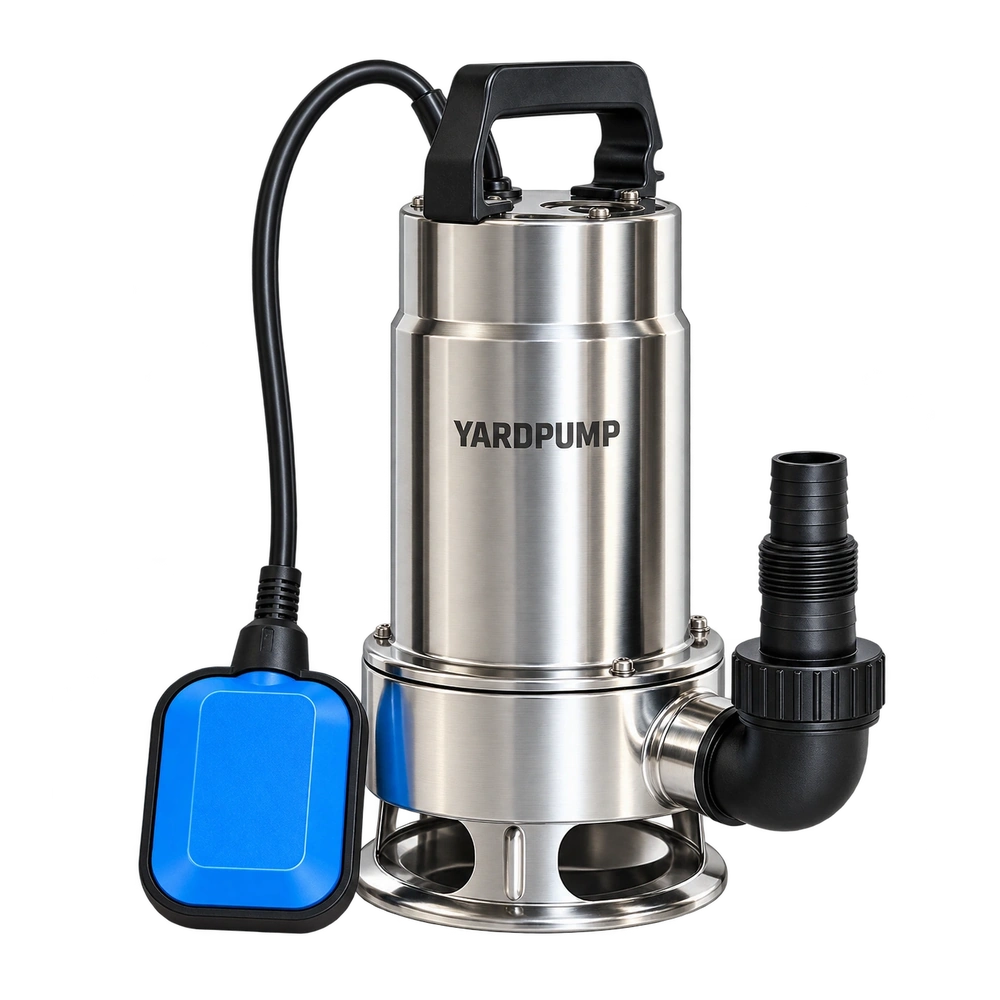
Suppose a buyer receives two submersible pump stators. The drawings show the same stack length, wire size, and turn count, yet the cold winding resistances differ. Alongside the measurement method, wire, and joints, look at the portions of the coils outside the core. Two coils can follow the same route through the slots while covering different distances at each end. Changes in coil height, span, or forming can alter the average length of a turn.
Equal turns can use different lengths of wire
A turn includes the conductors inside the slots and the paths that join them outside both ends of the stator. Keeping the stack length fixes only part of that path. Bend radius, the way overlapping coils are laid out, and the final shape after lacing affect the route outside the slots. For the same conductor material, cross section, and temperature, a longer path gives higher resistance. A DC measurement may include leads and joints. Confirm the endpoints before comparing a winding measured with its leads to one measured without them.
For illustration, suppose a branch of a winding changes from 4 to 4.2 ohms at the same temperature, a 5 percent increase. If the branch carries 3 amperes in both cases, the resistive loss in that resistance, calculated as current squared times resistance, is 36 watts versus 37.8 watts. The 3 amperes are the current in that branch rather than the pump's line current. A design change can also affect running current and temperature. The 1.8 watt difference is not an estimate of overall efficiency or temperature rise, and the numbers are not product measurements.
Fix the measurement boundary before finding the cause
Have qualified factory or service personnel isolate the equipment under the approved procedure and compare the earlier and revised samples at the same temperature. Allow the samples to stabilize first. Record endpoints, meter, and fixture. Select a method appropriate to the resistance range; four-wire measurement can reduce the influence of the test leads when needed. Where the main and auxiliary windings can be measured separately, record them independently and keep capacitors or other branches out of the measurement. Retain the matching end profiles, dimensions on both sides, and wire specifications. Once the boundary is consistent, use the drawings and approved samples to investigate mean turn length.
If the profile agrees but resistance is high, investigate the wire and joints next. If resistance agrees but the end turns sit higher, check dimensions anyway. Electrical resistance cannot establish clearances to the rotor, end cover, or leads. Look at the laced shape in its assembled position for interference, chafing, or changes in lead routing. If the sample shows an imprint or rub mark, stop for an engineering review. Pressing the coils into place to finish assembly can hide evidence and compromise insulation.
Require three sets of results before release
Confirm the wire and manufacturing drawing, compare resistance at the same temperature and assembled dimensions, then compare the complete pumps under load. Use the approved tank method and control flow, head, supply frequency and voltage, and cooling conditions. Record the thermal state reached and how it was measured along with input power. A similar case temperature by touch does not establish similar winding temperature rise. Resolve either a thermal issue or a mechanical interference before releasing the change.
This is a comparison for small submersible motors of the same design and duty. Changes to the winding design, supply, or protection require review for that configuration. Opening or rewinding a sealed pump is work for qualified manufacturing or service personnel.
Frequently asked questions
Should I specify the shortest end turns possible?
A shorter mean turn can reduce resistance at the same temperature, but the design still needs adequate insulation, bend radius, assembly clearance, and support. Avoid shortening at the expense of those conditions.
Can one cold resistance reading tell me how much wire was used?
No. Temperature, material, cross section, joints, and measurement endpoints also affect it. Control the conditions and compare the reading with drawings and part records.
How do I tell which winding is abnormal when main and auxiliary resistances differ?
Compare each with its own specification and approved sample. Verify that the measurement covers the same branch and endpoints before interpreting a difference.