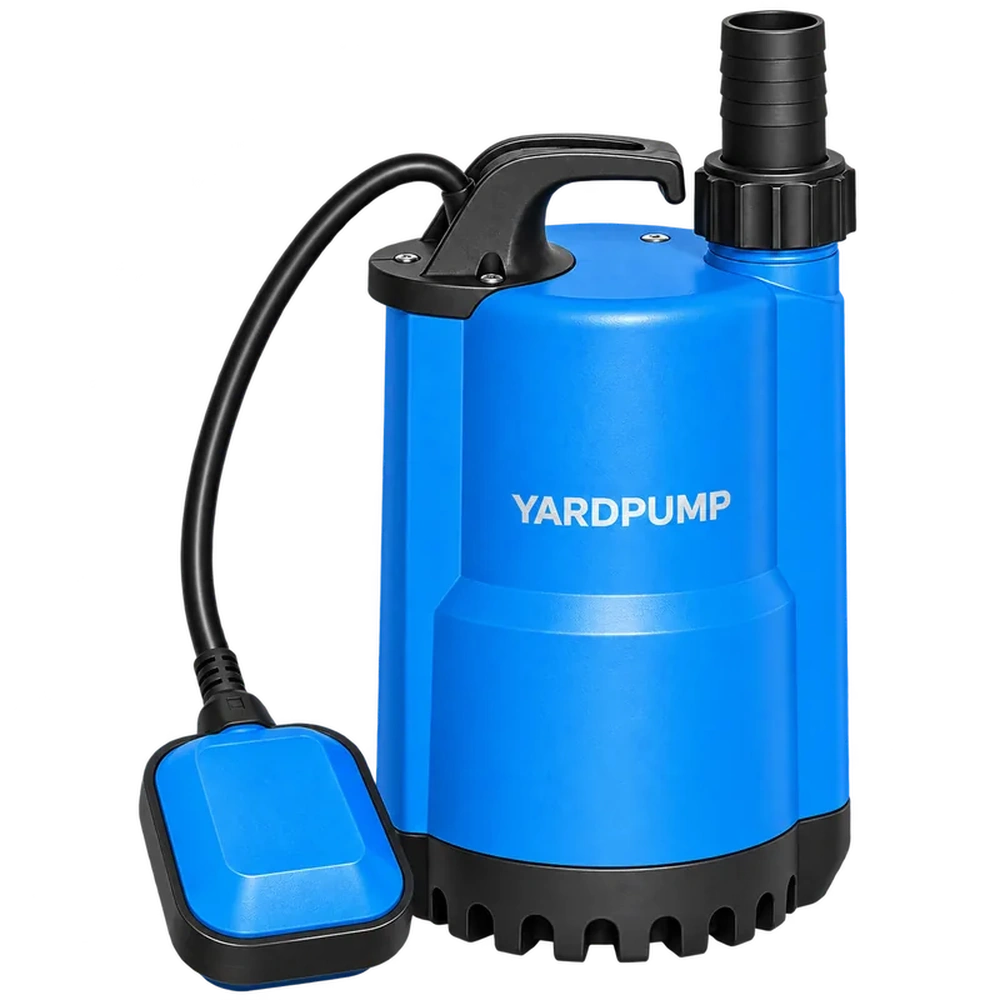
Consider the following motor-test example. A small induction-motor pump draws more current on a higher supply voltage, even though its water delivery barely changes. Is that impossible because higher voltage should reduce current? That rule does not describe every motor condition. The motor needs current to establish its magnetic field as well as to supply load and losses. At fixed frequency, increased voltage can raise magnetising demand, particularly as the magnetic circuit approaches saturation.
The motor is not a constant-power calculator
Dividing a fixed wattage by voltage assumes the wattage and power factor behave as required by that calculation. An induction motor's input is determined by its design, supply, mechanical load and operating state. It does not hold all those quantities constant while voltage changes. Input current can increase or decrease over a particular range; the direction is not a universal efficiency verdict.
Approximately, ignoring relevant winding voltage drops, magnetic flux is related to applied voltage divided by frequency. The approximation is useful for understanding the trend, not for predicting a pump's exact current. When iron becomes harder to magnetise further, extra field-producing current can grow disproportionately. Losses and heating can change even if shaft speed and measured flow seem similar.
Keep frequency and the single-phase circuit in view
For a calculated example, increasing 230 volts to 240 volts at the same 50 hertz raises the voltage-to-frequency ratio by about 4.3 percent. This is an illustration, not permission to change a pump supply or a prediction of a 4.3 percent current increase. The actual approved voltage range and winding version govern what may be tested.
In a capacitor-run motor, the auxiliary circuit also changes with voltage and phase relationships. Capacitor-terminal voltage is not necessarily equal to line voltage, and the total line current is not the arithmetic sum of branch magnitudes. Do not identify magnetic saturation from one clamp-meter number while ignoring capacitor condition or a changed hydraulic load.
| Recorded quantity | Why it belongs in the comparison |
|---|---|
| Actual voltage and frequency | Defines the electrical excitation condition |
| Flow, head and speed | Helps establish comparable mechanical duty |
| Real input power and current | Separates energy input from current alone |
| Water and motor temperature condition | Makes thermal observations comparable |
| Capacitor and winding version | Confirms the single-phase circuit being compared |
Investigate within approved test conditions
Qualified personnel should first confirm the correct motor version, supply quality and measurement arrangement. Measurements on operating electrical circuits require suitable equipment and safe procedures. Do not turn up field voltage experimentally, attach an improvised regulator or use a different frequency to force a preferred current reading.
Where the engineering test plan includes a voltage-range assessment, reproduce the same pump, hydraulic point, water condition and initial thermal state. Record stable data and the time to reach it. A change in flow shifts shaft load, so comparing two electrical readings at different deliveries can mix separate effects. Protection operation or abnormal heat calls for the prescribed stop, not continued testing to see whether current eventually falls.
Decide from the combined evidence
A higher current at the upper approved voltage can justify examining excitation, the capacitor circuit and thermal margin. It does not independently establish defective laminations or poor winding material. Equally, a lower current does not prove that the winding runs cooler or that wire-to-water efficiency improved. Compare real input with the defined hydraulic output, and assess temperatures through the approved method.
For compact pump procurement, retain the tested voltage and frequency next to every performance and temperature result. A family-level electrical option list is not a claim that one winding operates identically at all those options. Release the exact supply version against its specified operating range and duty, rather than choosing the specimen that displays the smallest current under a different voltage.
Frequently asked questions
Does high voltage always make motor current rise?
No. The response depends on design and load. The point is that a reduction cannot be assumed from a constant-power formula.
Can normal speed rule out an excitation problem?
No. An induction motor can maintain a similar operating speed while current components and losses change. Use electrical and thermal evidence together.
Is a higher voltage rating on the capacitor enough?
No. Capacitance, circuit matching, temperature, mounting and the approved motor configuration still require confirmation.