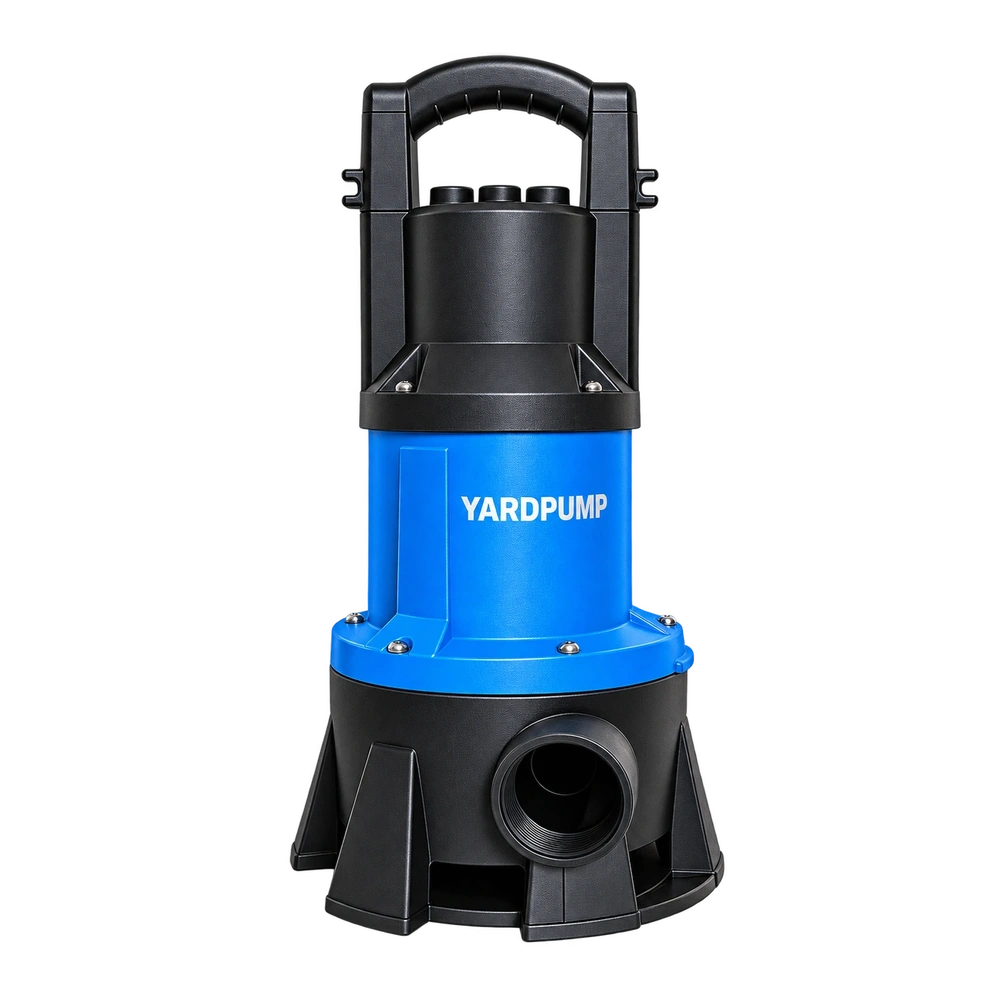
Should a submersible pump oil chamber use PA66 or PPS? The answer cannot come from resin price or one temperature figure. The chamber must retain its structure and sealing dimensions under the actual oil, water exposure, temperature changes and assembly stresses. Compare specific grades, processing and complete-part validation rather than declaring one polymer family universally best.
The chamber does more than hold oil
Depending on the design, an oil chamber can support a stationary seal ring, shaft-seal interfaces, screw clamp loads and casing joints. Short-term resistance to melting is not the functional target. Sealing grooves, seats and joint faces must remain suitable after the relevant exposure.
Oil expansion, free space and pressure conditions also belong to the actual design. Adding extra oil arbitrarily is not a remedy for a material problem. Likewise, “oil resistant” without an oil type, temperature and duration is insufficient evidence for long-term service.
The medium includes the specified oil and its additives, together with relevant external water or cleaning exposure. This does not imply that an ordinary submersible pump is suitable for every chemical liquid.
Assess PA66 in its relevant condition
Reinforcement, heat stabilisation and other modifications can change PA66 performance substantially. Appropriate grades serve many engineering functions, but moisture condition affects dimensions and mechanical behaviour.
Dry test-bar values do not necessarily represent a component exposed to water, oil and thermal cycling. Define the measurement state and examine critical dimensions over the intended conditions.
Glass reinforcement can improve stiffness and change dimensional behaviour, while also introducing directional effects. A higher glass percentage is not an automatic reliability improvement. Fibre orientation, weld regions, toughness, mould filling and assembly stress remain relevant.
PPS still requires component validation
PPS is often considered for its heat resistance, chemical resistance and dimensional behaviour. Actual results still depend on grade, fillers, moulding and geometry.
Pay attention to brittle-sensitive regions, screw bosses and sharp transitions. Substituting PPS into an unchanged drawing does not establish that the design has been upgraded. The new material may require different processing and local geometry.
Neither polymer name establishes the complete chamber's response to sustained clamp load or exposure. Candidate selection should lead to testing of the real component rather than end at a datasheet comparison.
| Comparison area | Evidence needed for either candidate |
|---|---|
| Oil compatibility | Specified oil and additives at relevant temperature and duration |
| Dimensional retention | Seal seats, grooves and joint faces before and after exposure |
| Mechanical function | Assembly, clamping and relevant impact effects |
| Manufacturing consistency | Drying, moulding, orientation and defect control |
Test the real component and assembly
Screen candidate grades for relevant medium effects, then measure changes in actual moulded parts. Finally, validate the assembled chamber with its seals, fasteners and realistic production variation.
A test bar cannot reproduce every load or interface in the assembly. Where accelerated exposure is used to infer longer-term behaviour, the method and limits of that inference also need justification.
Consider a hypothetical comparison: both candidates pass an initial tightness test, but one design develops an out-of-tolerance seal seat after the specified oil exposure and thermal cycling. Investigate material, process and geometry together. The initial pass or resin temperature rating cannot settle the result. This is an illustration, not reported product data.
Compare the cost of an acceptable assembly
Include processing conditions, tooling suitability, cycle time, yield, inspection and change validation alongside resin price. A more expensive polymer does not purchase an automatic lifetime extension, especially if the geometry still needs development.
Conversely, a lower-cost candidate that satisfies the complete task should not be rejected because of its family name. The relevant outcome is a reproducible assembly meeting its defined requirements.
Freeze the approved grade, formulation, oil, critical dimensions, process and change rules. Conclusions apply to the validated configuration and must not be presented as the oil-chamber specification for every YARDPUMP model.
Frequently Asked Questions
Does PPS's higher heat capability automatically make it preferable?
No. Oil exposure, dimensions, loads and manufacturing conditions must also be satisfied.
Does more glass reinforcement always improve reliability?
No. Orientation, toughness, weld regions and clamping geometry can change the outcome.
Is a resin supplier's oil-resistance statement enough?
No. Validate the complete component and assembled sealing function under the actual conditions.