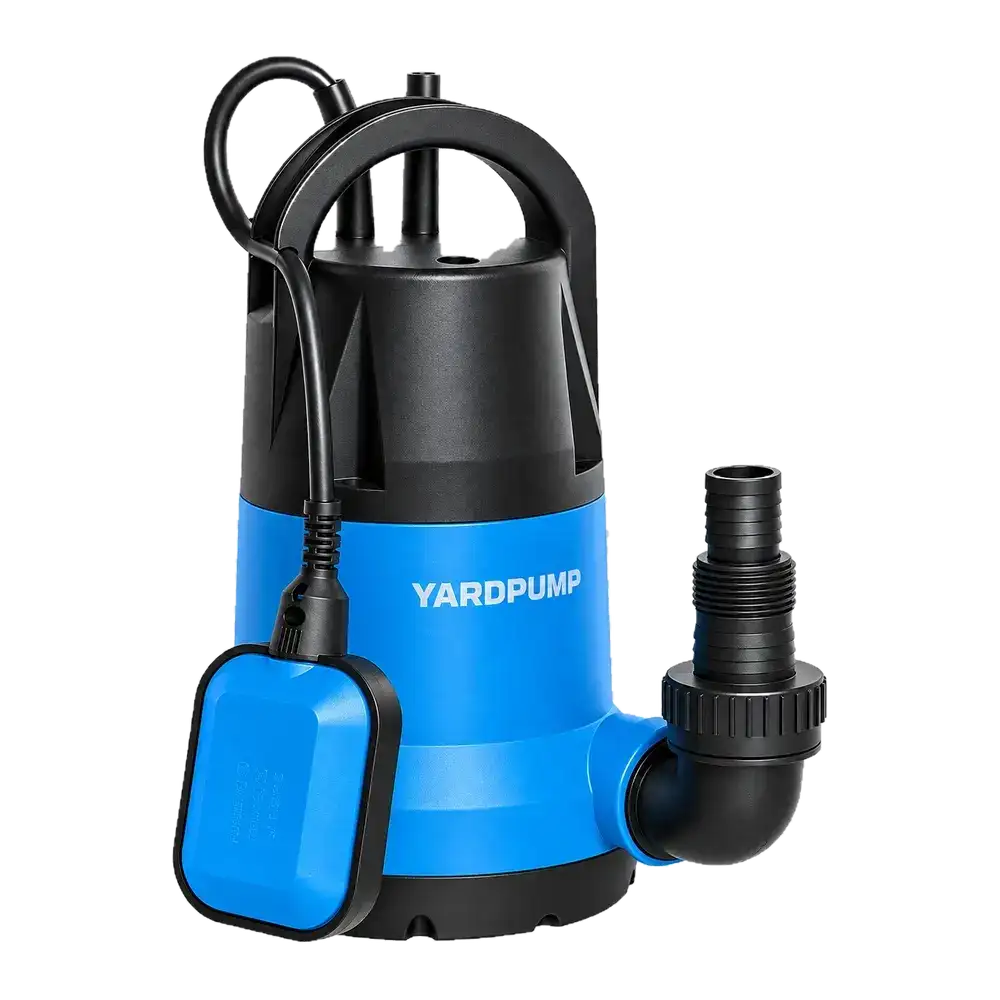
In an illustrative bench test of a small single-phase submersible pump, the main winding branch reads two amps and the auxiliary branch reads one amp, but the supply line does not read three amps. For a motor with a run capacitor and a confirmed branch layout, that difference does not in itself indicate a faulty meter. AC currents have both magnitude and phase. The currents add at each moment in time; their two RMS readings do not generally add as ordinary numbers. It can also be misleading to compare one branch reading with the complete pump's nameplate current.
Identify what is carrying each current
In a common permanent split capacitor motor, the run capacitor is in series with the auxiliary winding. The main winding forms another branch. The capacitor and winding impedances affect when each current reaches its peak, helping produce the rotating field used to start and run the motor. In the series branch, the capacitor and auxiliary winding carry the same branch current. The supply line carries the combined current. Other designs can use separate starting capacitors, starting switches or electronic controls. Verify the diagram for the specific motor before assuming the same running circuit.
For an illustration with sinusoidal current in steady operation, suppose the two branches carry two and one amps at a phase difference of 90 degrees. The combined current is the square root of two squared plus one squared, or about 2.24 amps. If the two are in phase, it is three amps. These are demonstration numbers. A 90-degree difference is not a specification for these motors. With switched supplies, distorted waveforms or harmonics, select a suitable instrument and analysis method instead of assuming this simplified calculation will describe the readings.
Ask for three groups of measurements
The first is the circuit version and test points. Ask for the complete pump model, motor revision, voltage and frequency, run capacitor marking and allowable tolerance, and clear labels for supply line, main winding and capacitor branch. The second is the common operating condition. Record whether the readings were taken during start or steady operation, the supply conditions, flow and head, and submergence or cooling conditions. Include measured real input power if the question is energy use. The third is a sound comparison: an approved sample of the same revision or an applicable manufacturer criterion. Without those details, one reading can lead to the wrong capacitor change or the unnecessary rejection of a motor.
Electrical diagnosis belongs with qualified personnel. Users can report the symptom and the conditions from a dry, safe place. Stop using the pump and have it isolated if there is burning odour, abnormal heating, protective tripping or concern about insulation. Do not open the pump, handle a wet connector or bridge a capacitor or protective device for a trial. On an approved bench, qualified staff follow the service procedure for electrical isolation, stored energy and measurement. A clamp reading from an undefined location is no substitute for a branch reading.
Evaluate the whole pump after a capacitor change
Changing capacitance changes auxiliary branch impedance and phase. It can also affect starting, winding current and heating. A lower line current alone does not show lower winding losses, better efficiency or longer life. Compare starts, actual input power, applicable temperature rise and protection behaviour at the same hydraulic load and cooling conditions. For replacement, confirm the manufacturer-approved capacitance, AC voltage rating, duty and terminals. A factory test that records only line current does not establish the load on either individual winding.
Label the result with the circuit revision and operating point. A record of RMS line current under identified conditions is useful; a statement that capacitor current was low and therefore the motor was fine is not enough. If the capacitor value is in range but the pump still starts or runs poorly, review supply, hydraulic load and motor circuits separately.
Frequently asked questions
Can the two current readings ever be added directly?
Yes, if the model and phase conditions justify it, such as two in-phase sinusoidal currents. Do not assume that for a capacitor-run motor.
Does a lower line current prove the new capacitor saves energy?
No. Compare measured real input at the same hydraulic duty and check starting, heating and protection.
Will clamping the complete power cord measure a motor branch?
No. Outgoing and returning current largely cancel. Have a qualified person use an appropriate test setup for branch measurements.