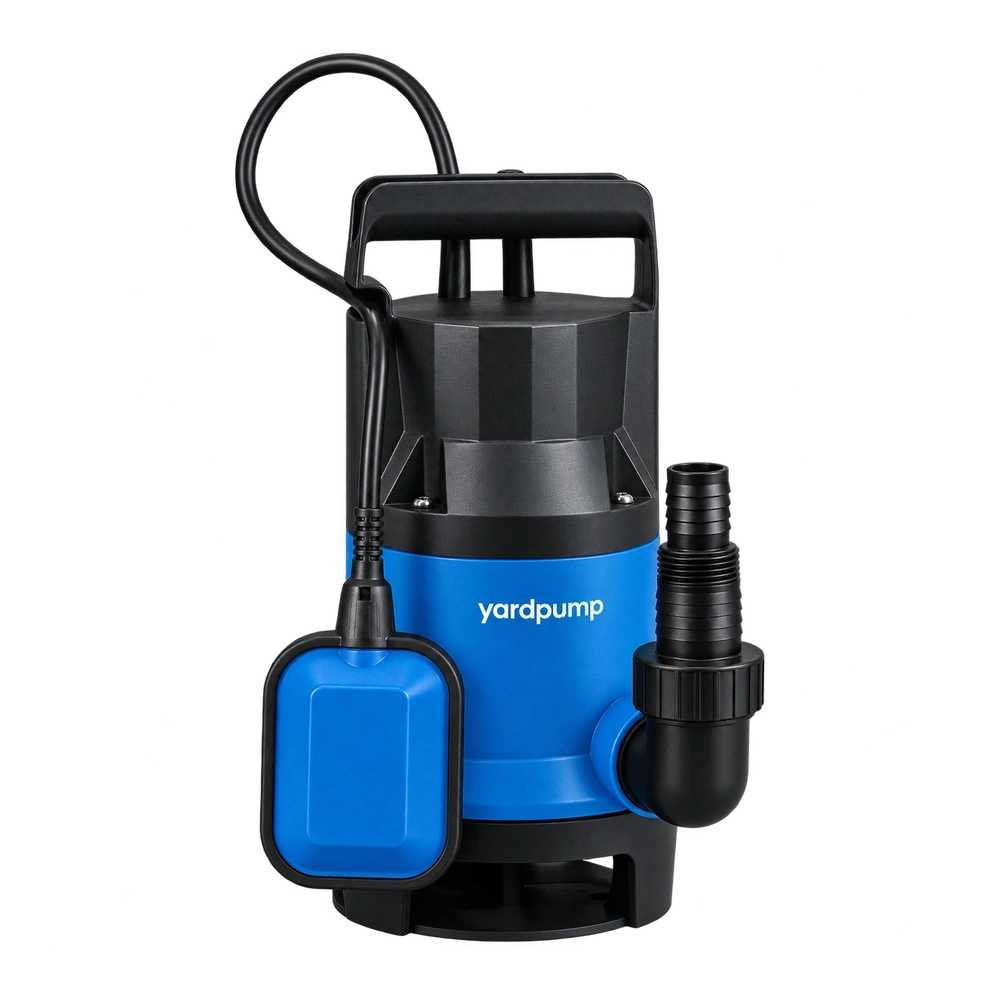
A submersible pump passes an internal air-pressure check. Does that prove water cannot enter when the pump is submerged? Not automatically. Pressure direction, seal loading, fixture boundaries and detection sensitivity may differ from service. An internal leak test can be useful, but its conclusion must remain tied to what it actually verifies.
Establish which side has higher pressure
For a sealing interface, pressure includes both the differential and its direction. Some lips, faces or joints change contact under reversed loading. Internal pressure may help seat one interface while external water pressure acts on it differently.
This does not mean every seal is strongly directional, or that internal air testing is invalid. Examine the actual construction to identify potentially direction-sensitive paths. Then establish how the test relates to the intended application. Equal numerical pressure does not independently establish equivalence.
A section sketch showing both sides of the seal is often more useful than a report containing a pressure value without an explanation of where it was applied.
Fixtures can alter the boundary
Charging ports, plugs, clamps and temporary seals may block a path that otherwise needs verification or load the housing differently. Leakage at a fixture connection may also be mistaken for product leakage. Separate the fixture, product interfaces and connecting points in the test record.
Consider a hypothetical production arrangement: internal pressure screens assembly defects, while the final application subjects the pump to external water pressure. These methods may form a useful combined plan. They require correlation and appropriate supplementary evidence, rather than converting a production-screening pass into unrestricted submersion permission.
| Dimension | Internal-pressure test | External-pressure verification |
|---|---|---|
| Differential | Inside relative to outside | Outside relative to inside |
| Seal loading | Possible seating or opening effects | Relevant service-direction loading |
| Tested paths | Interfaces obscured by fixtures | Actual cable and assembly condition |
| Decision method | Detection capability and stability | Method and duration for detecting ingress |
Matching numbers leave other differences
Gas and liquid differ in flow behaviour, surface effects and detection methods. Duration, temperature and structural response also matter. A simple multiplication of pressure and time cannot establish equivalent test capability.
Nor does a supposedly harsher direction automatically cover every failure mechanism in the reverse direction. The useful question is which defects a method can detect under its specified conditions, not which pressure number looks most impressive.
Testing requires suitable equipment, approved pressure limits and safeguards for the housing, fittings and fixture. Qualified personnel should carry it out with electrical power isolated. Users should not improvise high-pressure charging or plug a pump for an uncontrolled pressure experiment.
Build a defensible relationship
List the important leakage paths and plausible defects. Determine whether the internal method can detect representative abnormalities, then complete relevant external-pressure or application verification using the final configuration.
Temperature changes, starts and stops, and dynamic shaft-seal conditions may also need inclusion. Even matching static pressure direction does not establish that running behaviour has been covered.
Confirm detector sensitivity, fixture repeatability, temperature stabilisation and the decision rule. If the method changes, assess whether the previous acceptance limit still means the same thing. Changing a pressure setting without reviewing the detection boundary can weaken an otherwise useful production control.
Describe the acceptance accurately
Purchasing records should state the method, differential direction, boundary, configuration, decision criteria and supplementary verification. Separate production screening from model-suitability evidence. A report saying merely “sealing passed” invites a broader sales interpretation than the evidence supports.
These principles do not specify pressure settings or immersion depths for YARDPUMP models. They explain how to preserve the meaning of a test so that manufacturing evidence and field expectations remain connected.
Frequently asked questions
Does an external water-pressure pass eliminate the need for air screening?
Not automatically. Production detection capability, efficiency and control objectives still require assessment.
Is a higher internal pressure necessarily the more severe test?
No. Direction, construction and detection mechanism prevent ranking by pressure alone.
Does the same differential direction reproduce actual operation?
Not completely. Rotation, temperature, starts, stops and other interfaces may still differ.