A replacement O-ring is unavailable, so a technician proposes cutting rubber cord to length and gluing the ends together. Is matching the circumference enough for a pump housing seal? No. Joint construction, cross-section, compound and assembled behaviour must be qualified. An engineered spliced ring can be a legitimate product, but it is not equivalent to an improvised glued loop by definition.
A joint introduces another controlled feature
A moulded endless ring has no fabricated cord joint. A spliced ring uses a defined joining process whose strength, shape and compatibility must suit the application. Industrial suppliers offer controlled splicing and vulcanizing methods; their existence does not validate any adhesive or any field-made ring.
At the joint, local stiffness, diameter, flash or a step can differ from the rest of the cord. That region may compress differently in the gland or provide a leakage path. The joint must also remain intact during assembly stretch and service. A neat appearance is useful, but it cannot establish those properties.
Circumference is not the whole size
Cross-section controls squeeze and gland occupancy. Inside diameter influences stretch and the installed section. Cutting a cord to an external circumference taken from an old flattened ring can produce the wrong new size. Ageing, swelling and compression set can make the removed seal a poor dimensional master.
For an illustrative service check, compare the drawing's required section and inside diameter with the proposed ring, then inspect the joint in its installed location. Do not derive a replacement from the perimeter alone. Nor should the joint be hidden in a convenient corner without evidence that the assembled design tolerates it; the whole ring must seal.
Identify the actual rubber and joining system
NBR, EPDM and FKM describe families, not identical compounds. Hardness, temperature capability and liquid response need the specific grade. The adhesive or vulcanized joint has its own relevant properties. A cord that suits the water may still be unsuitable when joined by a material that does not.
Consider assembly lubricant and approved cleaners as well as the operating liquid. Do not use a general chemical compatibility table as proof of joint durability. Where a supplier offers a finished spliced ring, request the exact construction, dimensional controls and application evidence rather than assuming its performance from the cord name.
Decide whether the service route can be supported
For a compact submersible pump with an available approved moulded spare, that part generally provides the clearer controlled replacement route. If a special spliced alternative is proposed, treat it as a design or service change. Define the required static sealing, temperature exposure, assembly and applicable operating verification with the responsible manufacturer.
Electrical isolation and qualified service are necessary before opening the pump. Do not pressurize an improvised housing assembly without appropriate procedure and protection. A single room-temperature no-leak result cannot establish performance over immersion, temperature and ageing conditions. Retain the old ring and test evidence until the replacement decision is resolved.
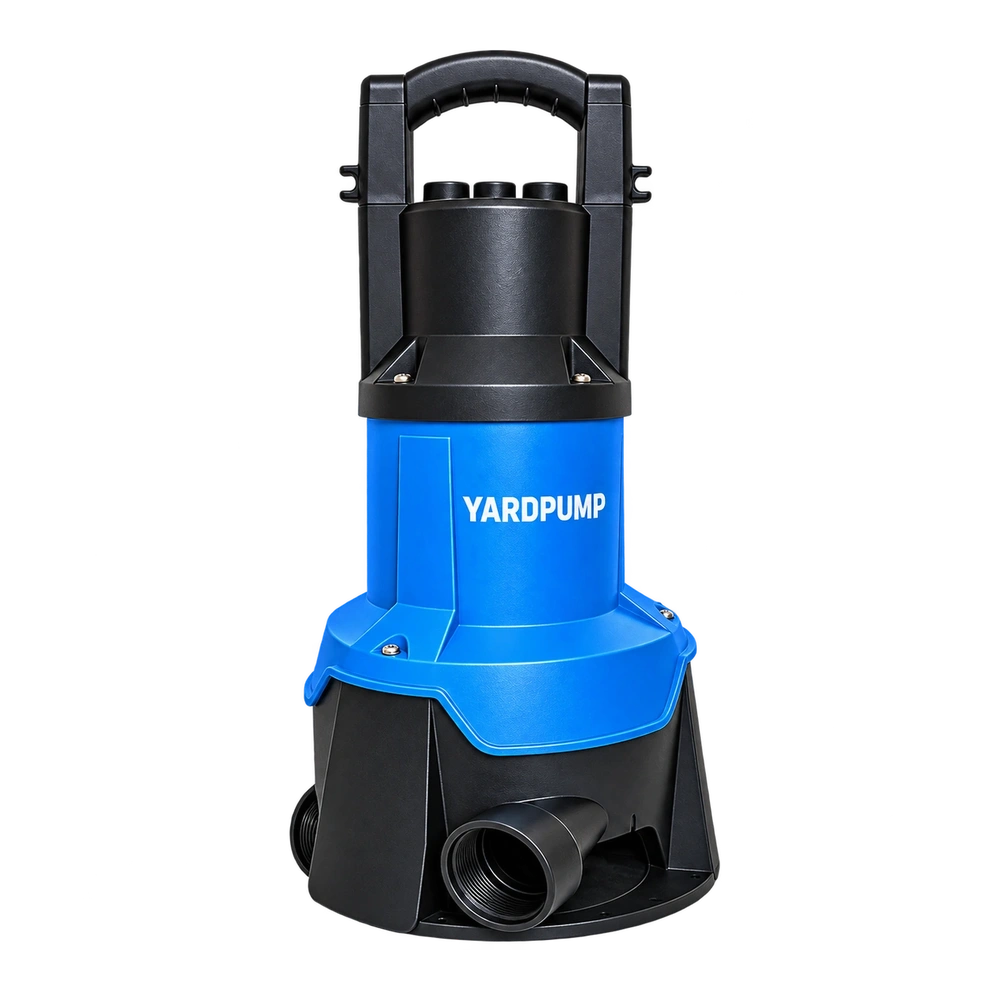
For YARDPUMP service, use the exact approved spare and applicable repair instructions. This discussion neither prohibits all engineered spliced seals nor approves a cord-and-glue substitute for every pump. The meaningful choice is between a documented finished seal and an unsupported fabrication, not simply between two loops that fit in the same groove.
If a supplier offers a joined ring, ask how the joint is inspected and identified in the delivered part. Documentation should connect the cord compound, joining process and finished dimensions to the batch. This lets the buyer distinguish a qualified fabricated seal from an undocumented workshop substitute. It also provides a useful route for investigating a future leak at the joint without assuming that every failure of the assembly has the same origin.
Frequently asked questions
Are all spliced O-rings poor quality?
No. Controlled engineered splices can serve suitable applications when their construction and use are qualified.
Can the old ring define the new cord length?
Not reliably. The removed seal may have stretched, swollen or taken compression set. Use the approved dimensions.
Does one dry pressure test approve the substitute?
No. It does not alone cover joint durability, material compatibility or the pump's complete operating conditions.