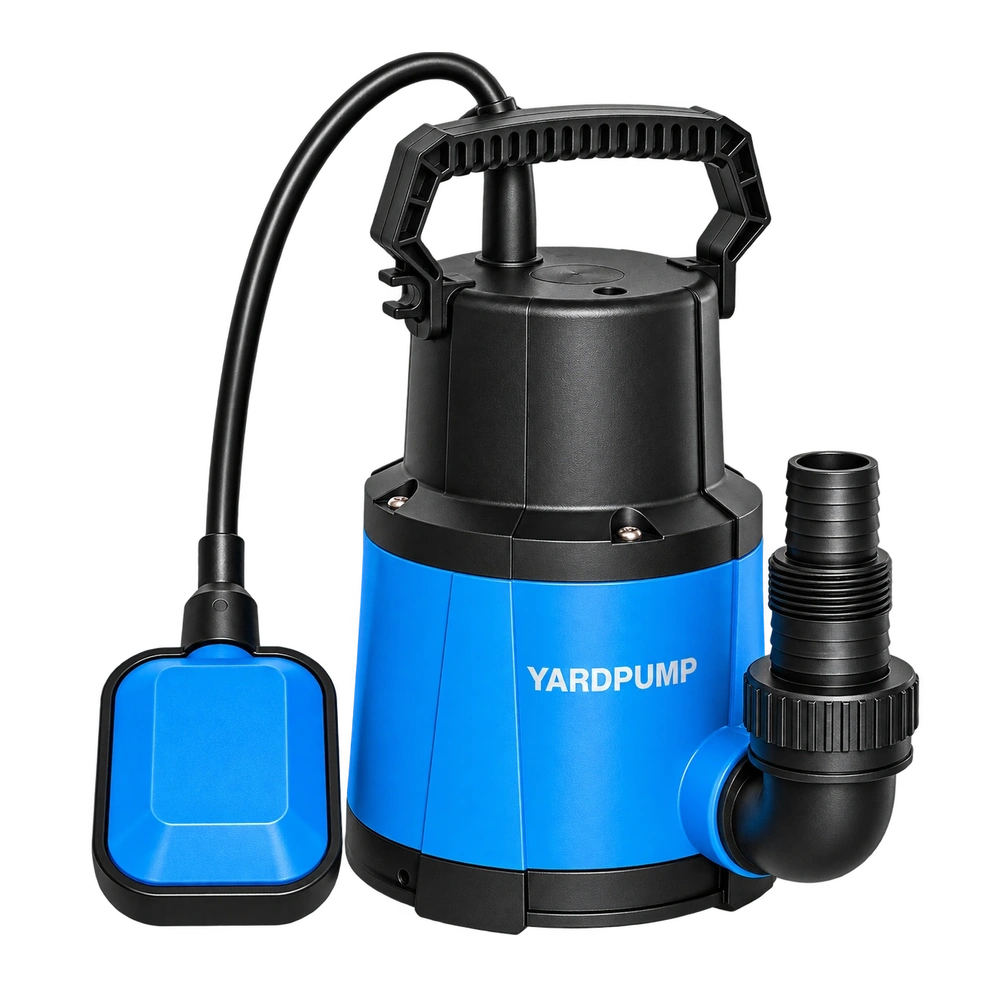
A pump endurance report states “water temperature: 30°C”. The sensor, however, sits beside the return inlet while the pump is at the opposite end of the tank. Does that number describe the pump’s cooling environment? Not necessarily. Return flow, heaters, cooling coils and tank boundaries can produce local differences.
Before interpreting winding temperature or comparing tests, establish where and when water temperature was measured and whether the location represents the condition being evaluated.
Moving water is not always uniform
Return water may carry heat added by the pump, or it may have passed through external cooling. Short flow paths, quiet zones and vertical stratification can prevent one sensor from representing the complete tank. A probe beside a wall or heat exchanger may disproportionately describe that local condition.
This does not mean every test tank needs a permanent array of sensors. It means the selected measurement point needs a defensible purpose. During initial setup or after changes, measurements at several locations can establish the distribution and support a practical routine monitoring arrangement.
Define the temperature you need
Pump inlet temperature, surrounding cooling-water temperature and return temperature may answer different questions. Hydraulic performance testing uses the liquid conditions required by the applicable method. Motor temperature evaluation also needs the conditions governing heat transfer around the sample.
Calling all these quantities “water temperature” to simplify a report can remove useful information.
| Location or period | Information provided | Limitation to consider |
|---|---|---|
| Representative point near the pump | Local cooling environment | Avoid direct housing contact or obstruction |
| Return inlet | Return-flow thermal condition | May not represent the pump location |
| Different tank heights | Possible vertical stratification | Preserve sensor position and identity |
| Warm-up and stable operation | Change over time | One final reading cannot describe the full test |
Retain probe identities, locations and synchronised times. A slow sensor can smooth rapid changes. Differences between probes can also be mistaken for differences between locations. Confirm equipment suitability and comparability before interpreting a temperature map.
Make a useful distribution check
Under a controlled procedure, record the water level, sample location, flow directions and heating or cooling equipment. Probe installation and electrical arrangements must meet site safety requirements. Do not reach into an energised test tank to move sensors or alter protective arrangements.
Observe startup, settling and sustained operation. Measuring only after shutdown may miss the condition present during the test. Where circulation or position is adjusted, retain before-and-after records.
Additional mixing may improve uniformity, but a strong external flow can also change the pump’s cooling. Eliminating every measured difference is not useful if the method creates an environment that no longer matches the test objective.
For a hypothetical illustration, three locations read 28.0°C, 30.5°C and 33.0°C at one moment. Their simple average is 30.5°C. That does not establish that the pump experienced a 30.5°C cooling environment. Interpret the locations, flow and trends, and revise the tank arrangement if needed before repeating on a consistent basis.
Use the evidence in supplier comparisons
Before comparing two motor temperature reports, compare measurement locations and boundary conditions. A sensor beside a cooling coil and another beside the pump return can produce reports with similar nominal temperatures while describing different environments.
Ask for a position sketch, original trends and the criterion used to establish stable conditions. The final maximum temperature alone is insufficient to reconstruct the test.
Adding a parallel test pump, changing tank size or moving the return height can alter circulation and heat distribution. Assess whether the previous monitoring arrangement remains representative. Do not rank old and new results as efficiency or life improvements until their conditions are comparable.
A validated single point may be entirely suitable for routine control. An unvalidated point should retain its limitations. The phrase “temperature-controlled tank” is not evidence of a uniform or representative temperature.
Water control is also only one part of the test. Supply, operating point, immersion and sample configuration still need records linked to the result.
Frequently asked questions
Does visible circulation guarantee no temperature difference?
No. Flow paths and local heat sources can leave less-mixed areas. Verify with measurements rather than judging surface movement.
Is averaging several readings sufficient?
Not automatically. An average can hide the actual condition around the pump. Purpose and representativeness matter more than the arithmetic alone.
Must every mapping sensor remain in routine use?
Not necessarily. Validation may support fewer routine points. Reassess the arrangement after equipment or circuit changes.