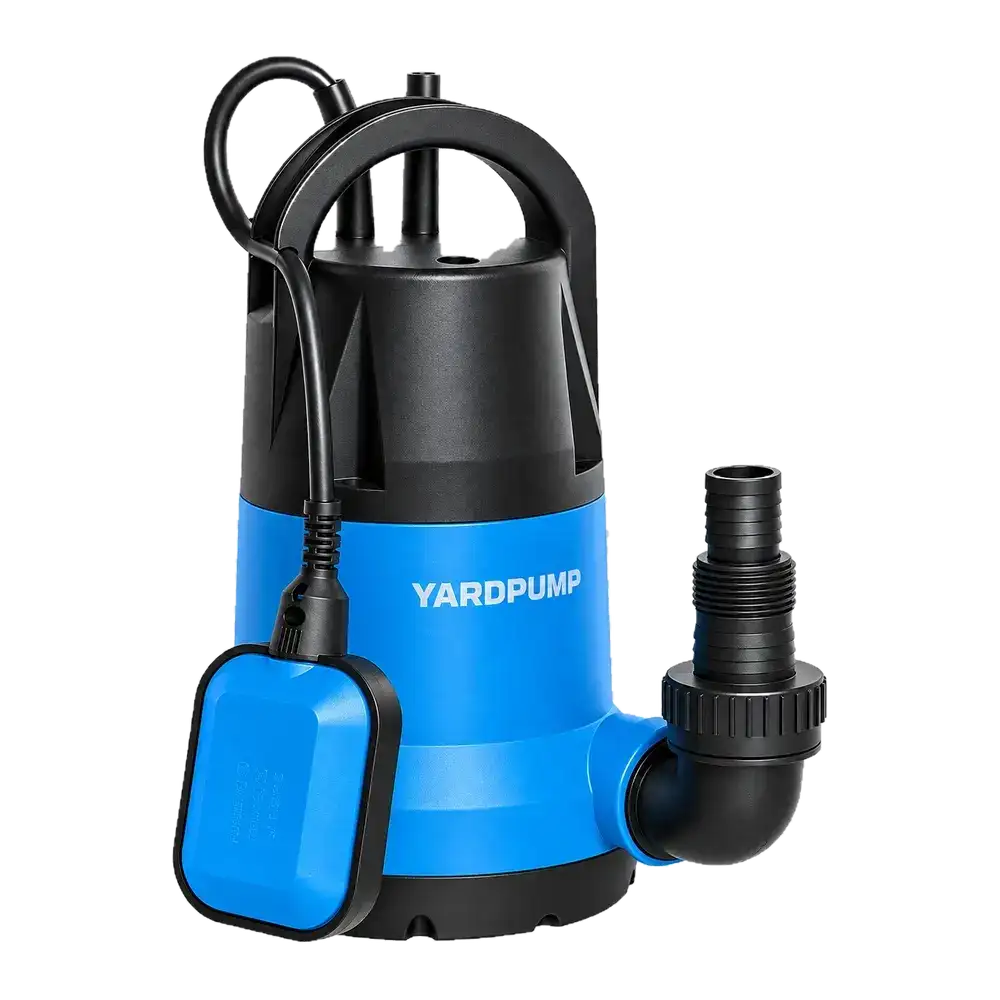
Suppose two pump motors finish a controlled low-water test with nearly the same winding temperature calculated from resistance. Yet one design shows early discoloration in a small part of an end turn. That can happen. Winding resistance estimates a distributed temperature for the measured circuit, while a small hot region can sit well above it. A temperature sensor near that region can answer a different question. Neither reading alone qualifies the entire motor for a new water level or liquid temperature.
A resistance reading sees a path through copper
As a conductor warms, its resistance rises. Comparing cold and hot resistance with the appropriate material relationship is a way to estimate winding temperature. The measured resistance includes contributions along the entire connected path. A small section with poor heat transfer may add too little to noticeably change the total, especially if another part has become cooler. Multiple parallel paths and connections complicate the interpretation. Use the circuit and test procedure specified by the motor designer rather than applying a correction to an unidentified pair of leads.
For an illustrative series winding with uniform conductor and no connection error, suppose 95 percent of the cold resistance belongs to regions around 85 degrees Celsius, and 5 percent belongs to a small region around 125. With a simplified linear relation for resistance, the resulting average is about 87 degrees. A uniformly heated winding around 87 could give a similar resistance. These temperatures are illustrative and are not a limit for any motor. They show why an acceptable average can coexist with a local difference that matters to insulation.
Put the local measurement where the question is
A design engineer might instrument an end turn near a blocked cooling path, an area next to a thermal barrier, or another position suggested by the inspection. Document sensor type, exact placement, contact and attachment. A sensor loose in the cavity may report nearby air rather than the conductor or its insulation surface. A sensor embedded incorrectly can change the heat path or impair insulation, so it is not a field modification. A housing surface temperature is useful for repeatable comparisons at the same spot and conditions, but it cannot substitute for the internal measurements.
Take the hot resistance at the timing specified by the validated procedure. When a motor is de-energized, temperatures change; a later reading can hide the actual value near shutdown. A protocol may require recording time to first reading and using an approved correction or extrapolation. Record the water temperature and depth at the same test, the running point, speed, input and the starting thermal state. Compare the same measurement method across designs. If one unit is still cooling from an earlier run, the result may describe different initial conditions instead of the design change.
Keep a thermal comparison separate from a safety rating
Consider a change that routes leads differently or moves a thermal protector. The steady resistance temperature may stay close while the closest sensor rises more quickly during a blocked-cooling event. The decision is to investigate local heat transfer and protection response, not to clear the change on the average. Check repeatability, inspect the material and contact paths, and evaluate the required normal and abnormal duties with the motor designer. A trip temperature at one point does not prove that all other points remain below their permitted limits.
Electrical isolation, control of stored energy and qualified test staff are required. Do not operate an installed pump beyond its permitted immersion or cooling conditions to reproduce a hot spot. A good report states whether each number represents a circuit average, a point in the winding, the casing or the surrounding water. That distinction makes the temperature data useful to a buyer comparing two motor builds.
Frequently asked questions
Will an infrared reading on the outside show the hottest winding?
No. It shows the measured surface with its own measurement uncertainties. Use it as a casing observation, not a winding map.
Is one thermocouple better than resistance temperature?
It provides information about one point. Combine it with a suitable overall measurement and a placement plan rather than treating either as universally better.
Does a protector that never trips prove the winding is cool?
No. Its threshold, mounting and response time describe that device and location. They do not establish the maximum temperature elsewhere.