Short answer. A start capacitor and a run capacitor are not interchangeable merely because both are measured in microfarads. A start-only capacitor is designed for brief, intermittent service and must be removed from its circuit by the intended switching arrangement. A run capacitor is designed to remain in circuit during operation. Some permanent-split-capacitor motors use one continuously connected capacitor to assist both starting and running; that does not make it a start-only component. The motor circuit, not the appearance of the capacitor, decides the correct replacement.
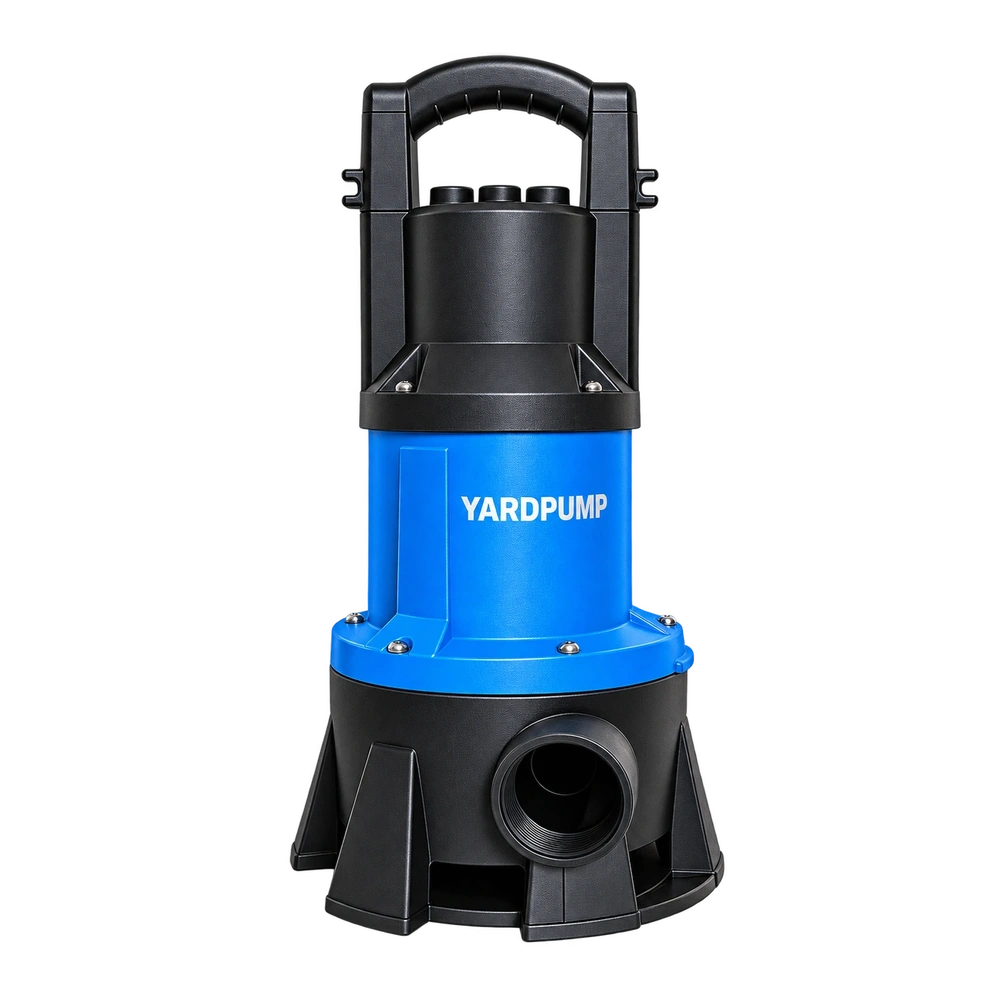
A service centre opens two visually similar pump returns. Both contain cylindrical capacitors, but one motor is a permanent-split-capacitor design while the other uses a start circuit with switching. Installing the part that happens to fit the bracket could create poor starting torque, excess winding current or an overheated component. The difference belongs in the approved BOM and wiring diagram.
Identify the motor circuit before reading the label
A single-phase induction motor needs a means of creating a useful phase difference for its auxiliary winding. Capacitor arrangements differ. In a permanent-split-capacitor (PSC) motor, the run capacitor normally stays connected during operation. In a capacitor-start motor, a start capacitor is connected for startup and disconnected by a suitable mechanism. Some capacitor-start/capacitor-run designs use both components with distinct roles.
| Question | Run-capacitor application | Start-only application |
|---|---|---|
| Connection time | Continuous while the motor runs | Briefly during startup |
| Primary design concern | Continuous AC stress, heating and lifetime | Intermittent starting duty and switching |
| What controls suitability | Circuit design, capacitance, AC rating, temperature and safety class | Circuit design, capacitance, duty rating, switching and restart frequency |
| Replacement shortcut to avoid | Fitting any similar-sized cylinder | Leaving a start-only capacitor connected continuously |
The table describes circuit roles, not a universal rule for capacitance size. There is no reliable threshold at which every capacitor becomes a start capacitor. Confirm the component's actual product type and approved motor diagram.
Why a larger microfarad value is not automatically an upgrade
Capacitance changes the auxiliary-winding current and phase relationship. Increasing it may alter starting behaviour, power factor, temperature rise and winding stress. A motor that starts more forcefully for a few seconds may still run hotter over the full duty cycle. Conversely, a lower value may reduce torque or prevent a loaded start. Neither conclusion should be guessed from a single clamp-meter reading.
Consider a hypothetical motor approved with a 16 µF run capacitor. A 20 µF unit is 25% larger. That arithmetic does not establish that it is better or acceptable. The design must be evaluated against the original electrical and thermal requirements. Do not carry the revised component into mass production without a controlled engineering change.
A replacement checklist for OEM quality teams
First, identify the exact pump model, motor variant, supply voltage and frequency, winding diagram, capacitor role and original BOM revision. Then compare the proposed part's capacitance and tolerance, rated AC voltage, duty class, ambient temperature range, protective construction, physical fit and terminals. A higher voltage rating is not a substitute for the wrong capacitance or safety design. The replacement must also satisfy applicable product and component requirements for its destination market.
After a qualified technician installs the approved candidate in a safe test setup, verify repeated starts at the intended hydraulic load, steady real input power, winding temperature rise, protective-device behaviour and the required operating range. Record the test voltage, frequency, water conditions and run time. A brief successful no-load start is not evidence of acceptable loaded performance.
The distinction between synchronous speed and measured shaft speed is covered in our 50 Hz motor slip guide. The pump performance-curve guide helps anchor flow and head to a stated duty point; neither a default efficiency setting nor a single reading independently measures shaft power. Both checks help prevent capacitor changes from being justified by misleading single-number comparisons.
Safety and failure analysis boundaries
Capacitors can retain hazardous electrical charge after disconnection, and water-damaged electrical equipment can be unsafe. Do not open, probe, discharge or replace a capacitor in a connected pump as a consumer troubleshooting step. Disconnect and secure the supply; inspection and replacement should be performed by qualified personnel using the manufacturer's procedure. A bulged or failed capacitor may be a symptom of heat, incorrect switching, frequent restarting, supply problems or another motor defect; replacing the component alone may not solve the cause.
For an OEM supplier, retain the failed part's marking, batch, photographs and measured findings with the return record. For a distributor, do not promise that a generic capacitor fits all units sold under one retail name if the motor version changed over time.
Questions technical buyers ask
Can a start capacitor replace a run capacitor with the same µF? No. The duty design and circuit function differ.
Does a higher AC voltage rating make any substitute safe? No. Capacitance, duty, safety class, temperature, construction and motor approval still matter.
If the pump starts, is the capacitor correct? Not necessarily. Running current, winding heating and repeated-start behaviour may still be unacceptable.
Do all single-phase submersible pumps contain both types? No. The motor design determines whether there is one continuous capacitor, a switched start capacitor or another arrangement.
What should purchasing freeze in the BOM? Manufacturer or approved equivalent, capacitance/tolerance, AC rating, duty and safety construction, terminals, fit, motor revision and verification evidence.