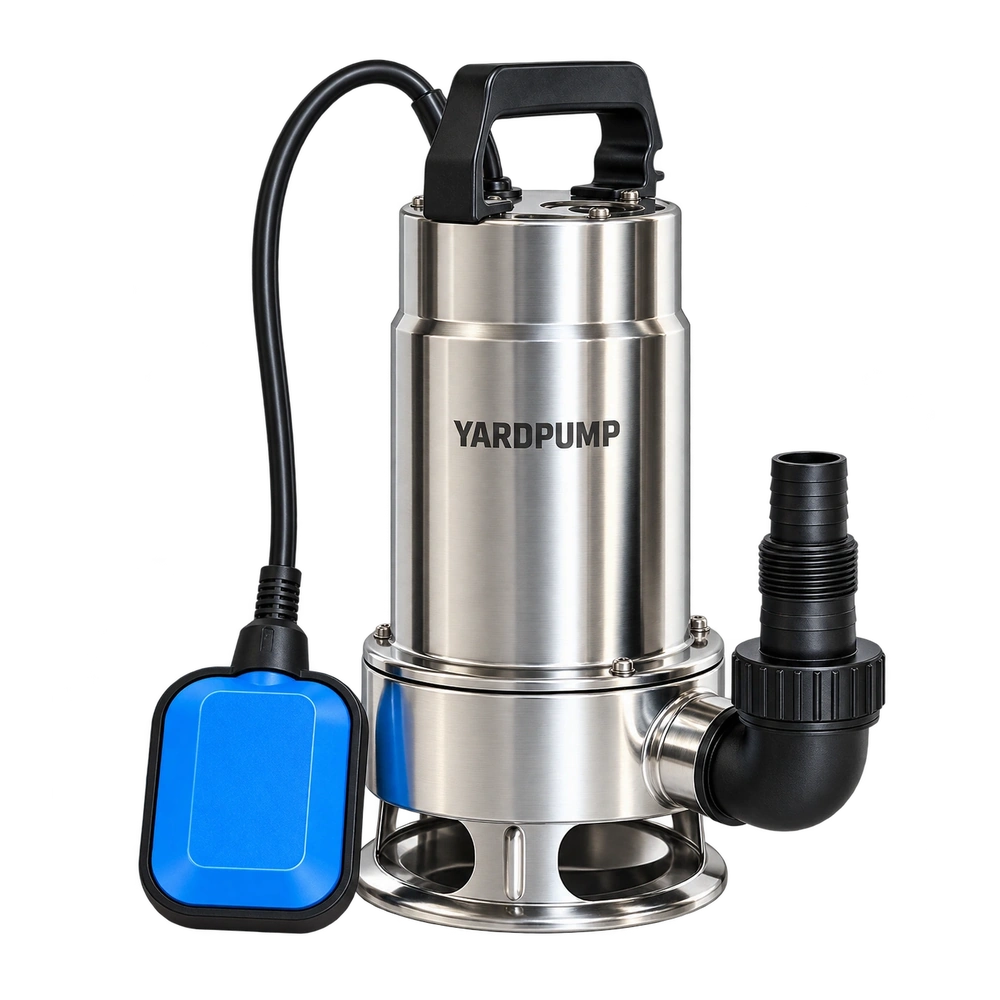
Take this refill question as an illustrative service scenario. A service shop opens a pump with an oil chamber and asks whether ordinary engine oil or an available white oil can replace the original fill. The answer is to identify the approved fluid first. Similar viscosity is not sufficient. Base fluid, additives, seal materials, temperature behaviour and the chamber's actual purpose all matter. Do not transfer another pump's oil recommendation to an unverified model.
Establish what the chamber does
An oil chamber between shaft seals is not necessarily an oil-filled motor. Different constructions use fluids for different sealing, lubrication, heat-transfer or monitoring purposes. Identify the exact pump, seal arrangement and service instructions before deciding what properties the replacement needs. Some compact pumps have no user-serviceable oil chamber at all.
Keep fluid selection separate from fill quantity. An approved oil can still cause trouble if the chamber is incorrectly filled; an accurately measured quantity of an unsuitable fluid remains unsuitable. A new container marked “lubricating oil” does not establish compatibility with the chamber, elastomers or seal faces.
Viscosity describes only part of the fluid
Viscosity affects drag and the fluid film, and it changes with temperature. The value needs a reference temperature and method. A suitable room-temperature feel does not demonstrate cold starting or hot running performance. Do not compare an oil grade from one classification with a number from another as if they were the same property.
Base chemistry and additive packages can affect elastomers and other materials. An oil intended for an engine contains features selected for that application; those features do not automatically suit a pump seal chamber. Conversely, white appearance or a food-related designation does not prove the required lubrication, electrical or materials performance for this particular assembly.
| Requirement | Evidence to obtain |
|---|---|
| Approved identity | Fluid part number, formulation or explicitly permitted equivalent |
| Temperature behaviour | Relevant viscosity and service limits |
| Material compatibility | Exact seal compounds and other contacted materials |
| Chamber function | Applicable lubrication, heat-transfer or other verified properties |
| Maintenance condition | Fill procedure, quantity and contamination disposition |
Decide whether the old fluid can remain
Do not mix unknown residual oil with a proposed replacement and assume the blend inherits both approvals. Mixing can change properties and obscure a water-ingress investigation. Preserve a representative original sample through the approved service process where diagnosis requires it. Cloudiness, debris, smell and colour are observations, not independent laboratory identifications.
For a hypothetical review, two candidate oils carry the same stated viscosity at 40 degrees Celsius, but only one has compatibility evidence for the approved elastomer compounds and service temperature range. The shared viscosity does not release the other candidate. This example does not prescribe a viscosity grade or describe a supplier's actual parts.
If the old fluid is contaminated or its identity is unknown, follow the manufacturer's drain, cleaning or replacement disposition. Do not invent a solvent flush. Residual cleaning chemicals may affect seals or the replacement oil. Qualified personnel should handle the isolated, cooled assembly and any retained chamber pressure under the specified procedure.
Make the service refill reproducible
Use a controlled fluid source, clean handling equipment and the approved fill and closure method. Record the fluid identity, batch where relevant, quantity and replaced seals or plugs. Complete the required sealing and electrical checks before return to use. The chamber's fluid is not a substitute for fixing the path through which water or contaminants entered.
For OEM purchasing, require approval of any fluid substitution together with the affected BOM and service-part information. If a supplier offers an equivalent, ask which defined properties and assembly tests support that claim. Do not advertise drinking-water suitability merely because a particular oil has a food-related statement. For small utility and dirty-water pumps, the practical decision remains the exact fluid approved for the exact serviceable construction, not the most convenient oil on the workshop shelf.
Frequently asked questions
Can I use any oil with the same viscosity number?
No. Confirm the classification, reference condition, chemistry, material compatibility and full approved requirement.
Does food-grade oil make a pump suitable for drinking water?
No. Suitability of a complete pump and its wetted materials needs its own applicable evidence.
Can fresh oil solve an ingress fault?
Not by itself. Identify and correct the ingress path and assess the affected parts through the approved service process.