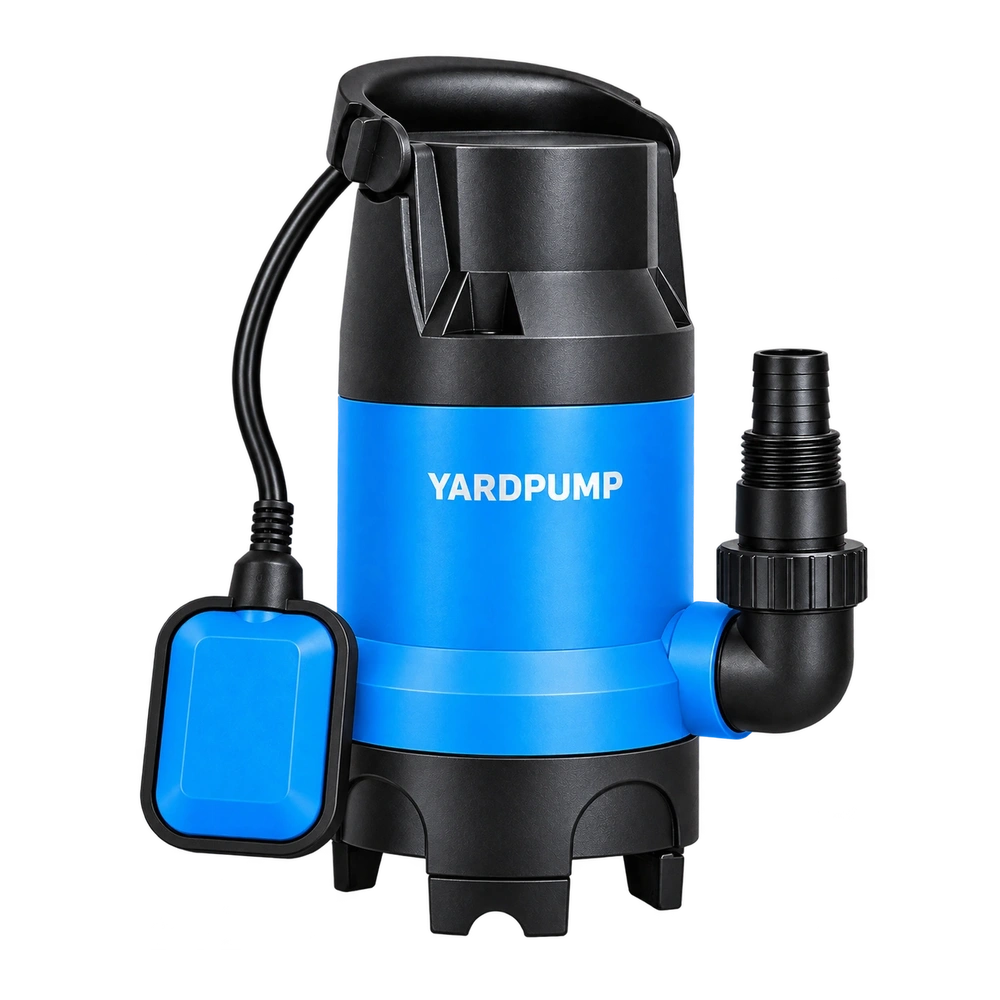
A submersible motor is being tested on a rig that measures the stationary housing reaction. The water duty and speed are unchanged, but the measured torque drops after a stiff length of cable is tied to the bench. A cable, pipe or bracket that bridges the fixture’s nominally floating side to its fixed side can carry some reaction around the sensor. Investigate the mechanical load path before adjusting a meter’s zero or concluding that motor output changed.
Draw a boundary around the body whose reaction you measure
In a reaction measurement, an assembly allowed a small controlled motion transfers torque to a sensor or a measured lever arm. The reference setup is intended to send the relevant reaction through that measuring path. Anything that provides another path to the fixed frame can change what is read. A cable bending at a rigid clamp can act as a spring. A hose can pull or twist when it fills with water, and a guide or transport bolt can contact the fixture as temperatures change. Moving an attachment on the frame can change both the load at zero and how the reading changes with working load.
The torque being measured also depends on which components lie inside that boundary. A stationary complete pump can impose forces from the routed water and its outlet on the same fixture. A housing reaction is not automatically motor shaft torque. Verify how the test isolates or accounts for wet-end loads, supports, outlet reactions and the test motor configuration. If the rig was qualified to measure a different boundary, do not apply a shaft-power formula to the new arrangement as though the values were equivalent.
Run the reference and loaded comparisons separately
The test belongs with qualified personnel using the rig’s guards and wet electrical controls. Isolate power and relieve pressure before changing any hose, clamp or cable routing. Keep the cable support, bend and protections approved; never remove strain relief or put a lead where it can touch rotating parts. Document the original arrangement with a simple diagram showing which points move with the assembly and which attach to the fixed structure.
First use the approved reference torque procedure with the system safe and stationary. Compare unladen readings and selected known loads under the documented fixture arrangements. A return to zero after unloading supports stability at zero only. A parallel support path can still change span, linearity or hysteresis once the fixture reacts against it. Pay attention to the usable range and direction of the measurement, and do not correct the entire trace by subtracting a value measured once at rest.
Then compare loaded states using approved arrangements with the same water duty, temperature, speed, electrical input boundary and mechanical condition. If torque changes substantially with support route while the credible independent channels remain stable, investigate a fixture contribution. If changing the route also moves the outlet or cooling path, the experiment is confounded; repeat after separating those changes. An approved in-line shaft method or another independently validated reference is valuable when the result affects an acceptance limit.
Put the possible error in useful units
In a simplified illustration at 2,800 rpm, a difference in recorded torque of 0.10 newton metres changes computed shaft power by about 29 W, because mechanical power is torque times angular velocity. The calculation is valid only once the measured torque represents shaft torque. It shows why a small support load can matter at low test loads. It does not establish a tolerance or correction for a specific fixture.
Write the supported routing, attachments, approved fixture boundary and reference result into the test instruction. When a cable or hose layout changes, repeat the relevant fixture check before comparing efficiency runs across dates. If the reference and load agree on a shift, correct the setup and retest rather than reusing the suspect readings.
Frequently asked questions
Can software tare fix a cable that carries some reaction?
It can remove a constant offset. It cannot generally recover load that bypasses the sensor by a variable amount.
Is cable slack always the answer?
The routing must still protect the cable and preserve clearances. Use the specified support and verify its force contribution.
Why record the outlet hose as well as the cable?
Filling, discharge pressure and movement of the hose can affect the fixture independently of the cable.