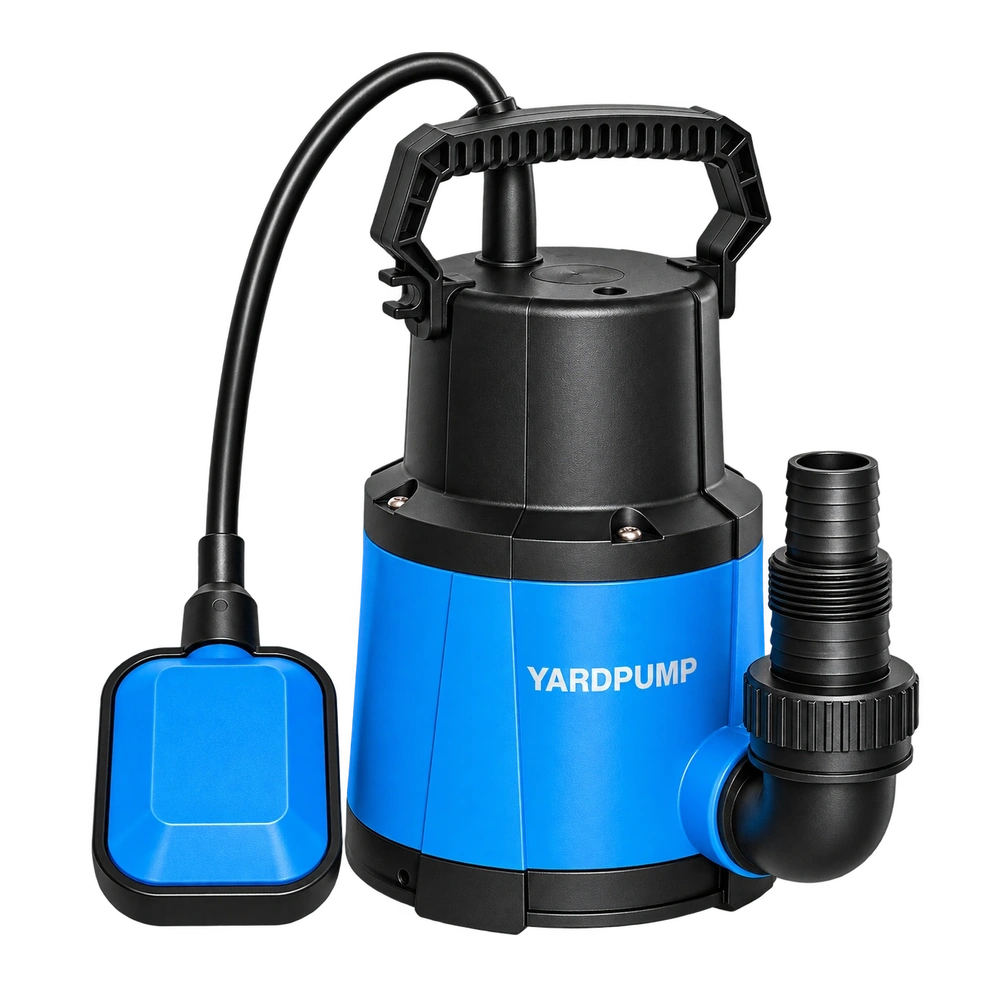
Suppose a distributor compares two clean-and-dirty-water pumps with the same solids size on the quote. Neither sheet says whether that refers to a sphere, soft particles or water carrying long fibres. First decide whether the purchase needs a geometric passage check or evidence of continued delivery at specified flow, head and water conditions. A soft particle passing once, a thin fibre catching and abrasive sand wearing a passage are different mechanisms. A single passing ball does not prove that the pump suits all dirty-water duties.
Separate the claims that can be checked
A geometric check can use an approved drawing or gauge to confirm restrictions along the actual path, including the inlet cover, hydraulic assembly and discharge accessories. Identify the limiting location for that construction; do not use the largest diameter at the outlet as a substitute. Geometry helps identify a mismatch. It cannot explain how debris deforms, wraps or accumulates while the pump works.
For a wet test, define the particle type, representative shape, size distribution, feed method and quantity, running time and outlet condition. A flexible fibre and a round soft particle cannot be described by one interchangeable length. When the buyer only handles lightly cloudy water, do not demand a test unrelated to that job. When there are roots or strands, describe them separately and confirm whether the supplier can support that duty. Do not put unknown materials or objects outside the stated limits into an installed pump to see what happens.
Write an acceptance procedure the lab can repeat
Identify the pump and accessory revisions, including the inlet cover, impeller and packed adapter. Use a suitable controlled test setup and qualified personnel. Establish clean-water delivery near the required duty point, then apply the agreed feed sequence and observe delivery during and after exposure. Define failure before testing. It may mean sustained loss of delivery, an agreed reduction in flow, the need for cleaning or failure to restart within the specified procedure. Define isolation and examination for any intervention. Never reach into a pump that is running.
For an illustration, suppose a sample passes an approved single-particle check. In a separate test with a specified short fibre mixture, a sample loses substantial flow while the motor can still be heard. The first result records passage of that particle or the geometric limit. The second records the fibre condition and any cleaning intervention. Do not tick off both requirements based on the first result, and do not turn a small demonstration into a claim about industry-wide defect rates. Agree separately on lot scope, number of units and retest rules if the buyer wants production acceptance.
Write the claim the dealer can explain
Carry the tested water condition, particle type and limits into the specification and instructions. If the inlet screen, impeller or packed adapter changes, check whether the old evidence still covers the new combination. Where the only evidence concerns one particle size, say what that evidence supports. If a customer's real problem is roots wrapping or sand wearing the pump, test for that condition rather than expanding a diameter claim into promises about clogging or wear.
For comparison, hold the mixture, feed location and duty point constant across samples. Clear the rig between trials so one run does not seed the next. If a change in supply, water level or the test line interrupts a run, record that change before attributing the interruption to a blockage in the pump.
Frequently asked questions
Does a wide outlet prove the claimed solids size can pass?
No. The inlet cover, hydraulic passage or another fitting may set the restriction.
Can we skip a dirty-water trial after a clean-water pass?
When the purchase promise covers specific solids or clog resistance, seek evidence for that condition. Clean-water data do not show how debris behaves.
Does a sphere passing prove that fibres of the same length will pass?
No. Fibres can bend, wrap and collect. The failure mechanism differs from round-particle passage.