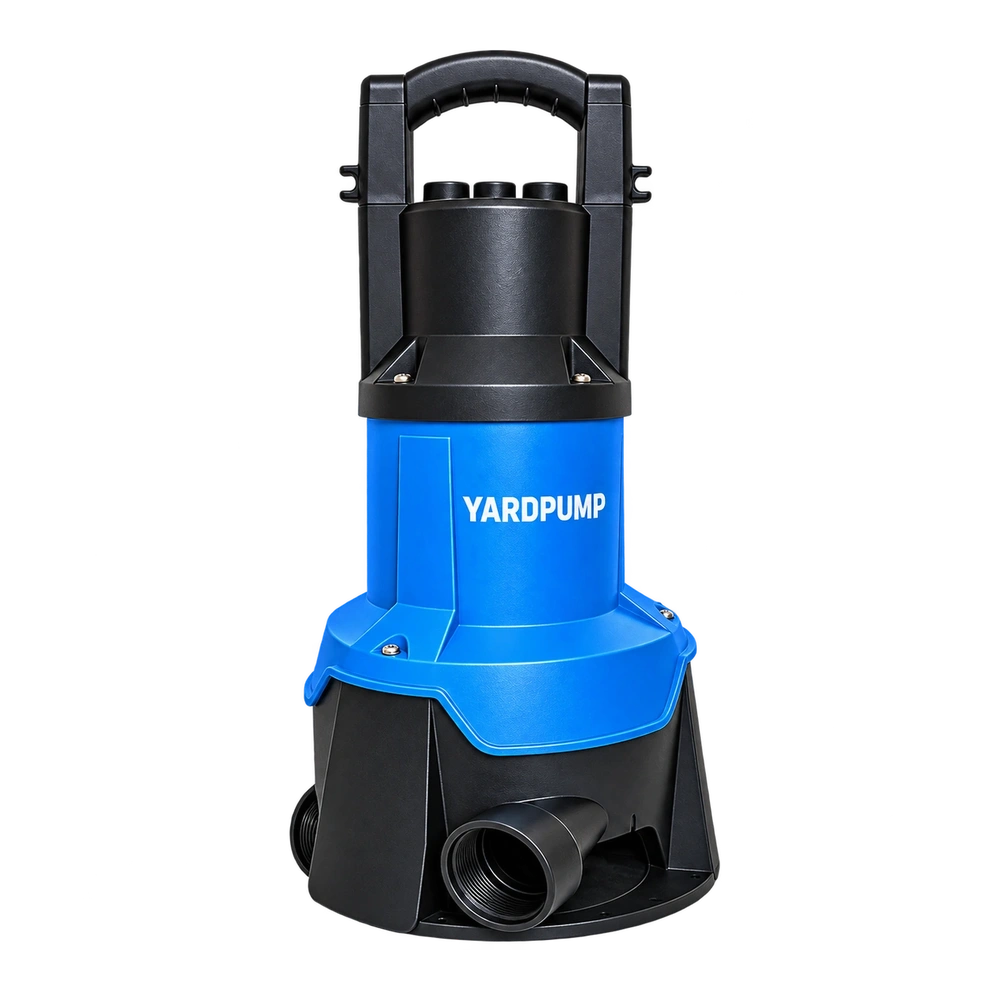
Suppose a buyer receives a low-level clear-water submersible pump and a sample report giving a few millimetres of residual depth. The supplier measures beside the intake on a flat test tray. The buyer measures a corner of a different tray and gets a deeper result. Establish whether both parties measured the same thing. Residual depth depends on the relative positions of pump and floor, the point measured and the stopping conditions. A deeper corner does not establish a pump failure. A low reading beside the pump does not show that the entire tray meets a specified limit.
Define what the depth is measured from
Agree on the test surface, its allowable flatness and whether it needs to be levelled. Level and flat are different conditions. A tray can appear level overall while one corner is lower than the surface under the pump. State whether each reading is local depth or a water level referenced to a common floor datum. Mark the pump base, intake, corners and area to be drained. Minimum local depth, maximum remaining puddle depth and total residual volume answer different questions. Decide which result is required before looking at the numbers.
When repeating the supplier test, keep the relevant setup and delivered assembly comparable, including the base, intake parts and discharge line. If the real task covers a large floor, use a separate field check for water routes and low spots. Keep the two results separate. Do not tilt, press down or move a running pump to obtain a lower reading. Follow the manufacturer's placement, start and duty limits.
Use the same unit for two identifiable comparisons
Consider an illustrative result. After shutdown, the reading beside the intake is about two millimetres on the flat tray. A corner of another tray still has about eight millimetres, while the intake area remains around two. Both can be true if the corner sits lower or the water there no longer connects to the intake. The numbers are examples, not rated values. Measure the tray and look for a connection first. Then investigate floor geometry, drainback or inability to reach the agreed depth.
For the repeat test, record starting water depth, liquid, discharge elevation, hose and check valve layout, method of starting and stopping, time of shutdown and time of reading. If water drains back through the hose, a later reading may differ. Keep that information rather than choosing only the earliest photo. Fix multiple measurement points relative to the intake and record the acceptance rule. Readings of a few millimetres are sensitive to scale, surface and viewing angle; one photo is not a precise measurement. Have qualified staff run the approved test. Do not delay shutdown simply to reach a lower number.
Match the acceptance rule to what buyers will read
If the claim describes residual depth near the pump in a defined test, include the test conditions and measurement point in the quote, sample approval and report. If the buyer needs an entire area left without puddles, define the working surface, drainage paths, measured area and method separately. For a complaint, compare the original pump and installation record, and ask for safely obtained water-level observations or a surface sketch. Drain-down performance also does not define minimum starting depth or continuous duty. Once those quantities are separated, the buyer can decide whether to investigate the pump, piping or floor.
If the two sites have different trays, map both empty surfaces and repeat the test with the same pump and setup. Identify the tray and pump separately so it is clear whether the difference follows the tray or the unit.
Frequently asked questions
Can the smallest reading beside the pump represent the entire tray?
Only if the agreed acceptance method defines the result that way. Check corners and overall residual water by the corresponding method.
Are the same pump and hose enough for a fair comparison?
Also match the surface, measurement points, starting depth, stop criteria and time of reading.
Is drainback after stopping part of the residual result?
That depends on the agreed goal. Record the level at shutdown and after settling separately so the two parties use the same timing.