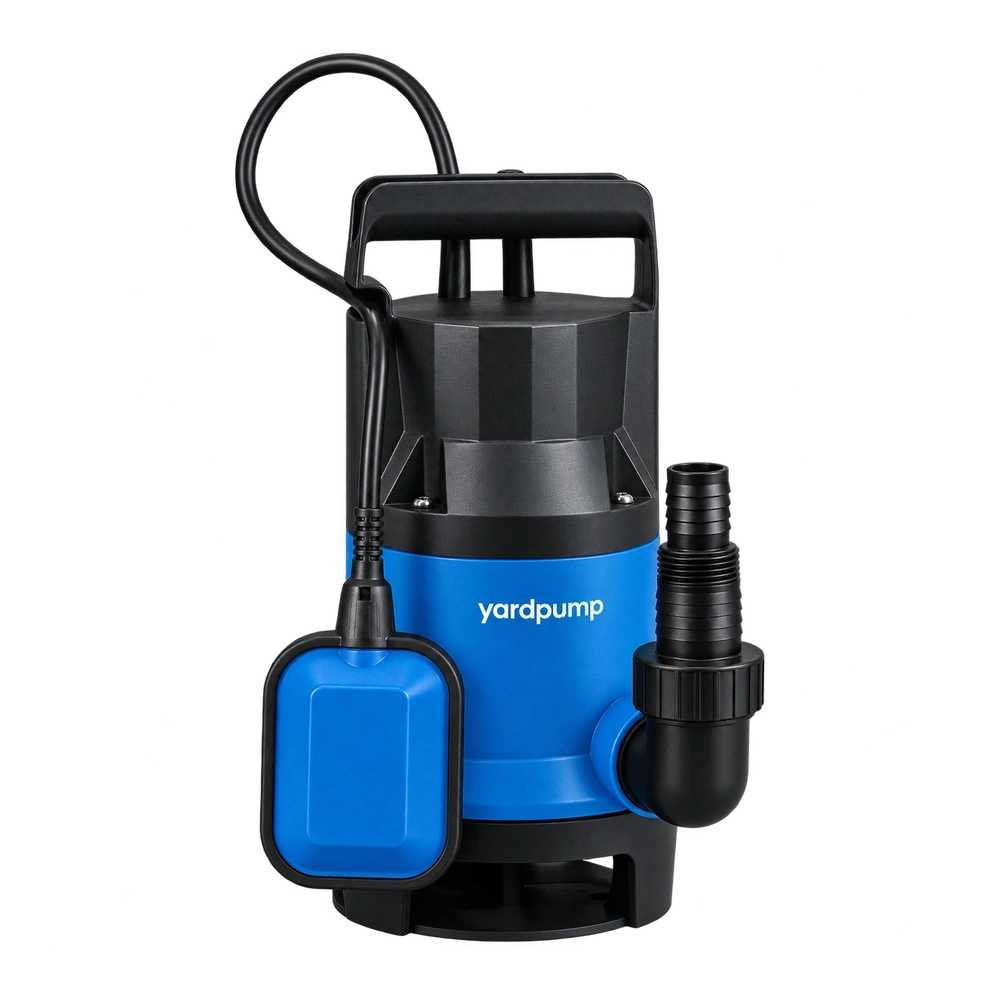
A distributor has two floats marked for the same voltage. The plugs and cable colours look similar. To authorize substitution, obtain the original spare assembly or documented equivalence for the pump. Compatibility includes the switch function, the motor load, cable-entry sealing and the actual water levels.
Find out what the float is switching
A float may switch the motor directly or signal another control. Starting current, contact type and logic therefore matter. Cable diameter and jacket affect the gland, while buoyancy, tether and weight affect start/stop levels.
For example, two 230 V floats can have different motor-load ratings and opposite switching logic. Energising the wrong one can create a no-start or no-stop condition.
A switch in the motor power path is selected for the motor load, including the starting conditions covered by the rating. A float connected to a separate controller may only have to switch a signal. Check the circuit drawing and the permitted mode, including whether the controller expects a closing or opening contact when the level rises. Keep the logic and rating in the spare-part record.
Compare the cable at the entry as well as the plug
A sealed entry can depend on the cable’s outside diameter, jacket profile and the gland and strain relief as a set. A cable that fits through the hole can still be outside the released sealing range. Verify the jacket’s suitability for the liquid and temperature. For a sealed assembly, require the approved replacement method and tests after service from the manufacturer or competent service provider.
Tethered switches rely on their cable length and attachment point for the working arc. Vertical assemblies depend on guide travel and end stops. Compare the fitted part with the pump, cover and pipe in the real pit. Check start and stop levels and allow for sufficient water at the intake.
Make the replacement traceable through the service centre
Match part number or approved equivalent, circuit role, contact rating, normally-open/closed logic, cable construction, entry seal, temperature, liquid and mechanical travel. After competent repair, repeat electrical and wet-cycle release checks.
Use the released spare assembly and document any approved change to switch, cable gland or wiring. Quarantine look-alike parts that lack traceable compatibility.
The service record should tie the pump identifier, spare revision and work performed to the electrical and wet-operation checks. A box stamped with the supply voltage is easy to stock. A parts list that names the specific pump variants and sealing pieces is what lets the next repair reproduce the approved assembly.
Suppose the same OEM pump ships with a direct-switch float in one version and a control-module float in another. An ohms or continuity result on a loose spare cannot establish whether that spare can carry the first version’s motor load. It can also miss why the second version starts at the wrong level. Keep a compatibility matrix with the pump revision on one side and the complete spare assembly on the other. For each approved fit, point to the controlled drawing and test result. Mark unidentified units for verification by serial or label before sending a part.
Frequently asked questions
Can I use a float with the same amp rating?
Check that the rating covers the load type and motor starting conditions in this circuit. Then compare contact logic, travel, cable and seals.
Why does a new float run the pump at the wrong depth?
Buoyancy, counterweight, anchor position and guide travel set the incline or height that triggers switching. Verify the installed on/off levels.
Can the pump stay in use with the float bypassed?
Take it out of service. Use the manufacturer-approved control and arrange qualified replacement and testing before returning it to automatic operation.