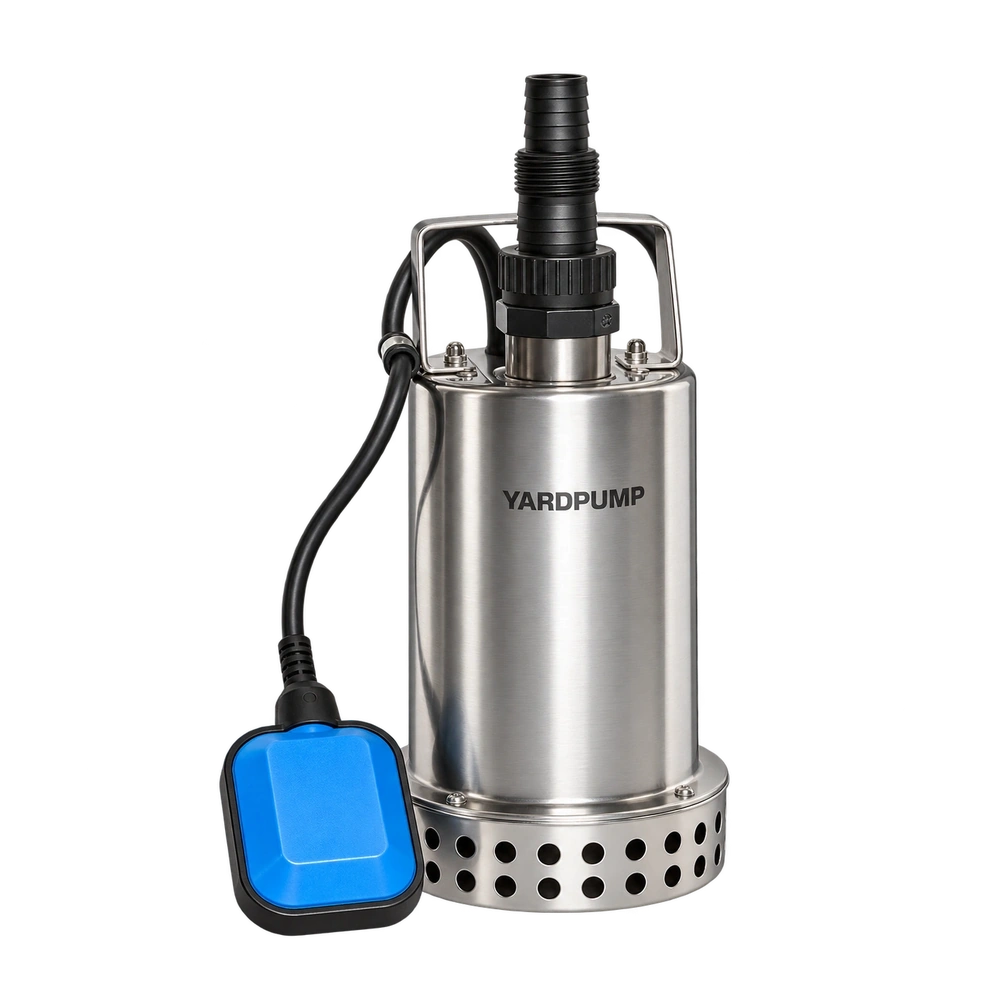
The supplier says a pump casing passed a pressure test. The buyer wants to connect that submersible pump to a header that is already pressurised. A single test pressure cannot answer the request. A static test shows how a specified specimen behaved at a given pressure and duration. The installation still needs evidence that the pump can deliver against the intended backpressure and that each exposed component can handle the pressures when the pump stops.
Put each pressure on the drawing
Mark the source water level, pump, hose or pipe, isolation or check device, header measurement point and flow direction. Record header pressure during flow, pressure applied from downstream at shutdown and any credible transient peak. State the reference for each measurement. On the test report, identify where pressure was applied, the duration, liquid and assembled components. A casing test may leave out the supplied adapter, hose, seal and check valve. A brief outward test from inside does not establish how a joint or valve behaves under sustained pressure from downstream.
Do not use elevation alone for the required head. In a hypothetical example, the source is open to atmosphere. Header pressure at the connection is 0.35 bar above atmospheric pressure, equivalent to about 3.6 metres of clean-water head. The connection is 1.8 metres above the source surface, and pipe and fitting losses are assumed to be one metre at the target flow. Ignoring the small velocity head difference in this example gives about 6.4 metres in total. If other equipment changes the header pressure, check the relevant range at the intended flow. These values illustrate a calculation, not a pressure allowance. A gauge reading taken at another location needs a correction for elevation and intervening loss before it represents the connection.
Ask what the line does when the pump stops
Other pumps or a pressurised vessel may still put pressure on the header. Confirm what isolation and reverse-flow protection the designer approves, where the water can go on a fault, and which parts remain exposed. An adapter or ordinary check valve in the carton is not automatically qualified for that job. A check valve has an allowed orientation and conditions for opening, leakage and repeated loading. Even when it closes, the buyer needs to know the pressure conditions on both sides. Reverse pressure, external backpressure, valve transients and normal delivery pressure describe different states.
Ask for the pump curve and its operating limits, evidence for the pressure envelope of the whole assembly, and records of running and shutdown under a representative header pressure. Have qualified personnel agree measurement points and verify the system under controlled conditions. Do not improvise a connection, close a delivery line or create a pressure surge as a field test. A connection to a specially protected supply or process system must be assessed by the appropriate professionals.
Decide what the existing report actually releases
A proof record can support acceptance of the casing condition that was tested. It does not release the installation. Maximum head alone also says nothing about delivery at the required flow. Find the intended operating point on evidence that accounts for the expected header pressure, then confirm what the whole assembly can withstand during normal operation and a shutdown or isolation event. If that cannot be established, consider a designed separate transfer arrangement or a pump qualified for the duty. Do not turn the proof pressure into permission to operate.
Frequently asked questions
Is maximum pump head the maximum allowable external pressure?
No. Head is a performance quantity. The external pressure allowance depends on the actual structure, components and test boundary.
Does installing a check valve remove the need to assess backflow?
No. Check installation, leakage, pressure and fault conditions, including which parts are exposed on each side.
Does a casing report qualify the boxed hose?
It does not. Verify the hose, fittings and valves for the liquid, temperature, layout and pressure conditions they will actually see.