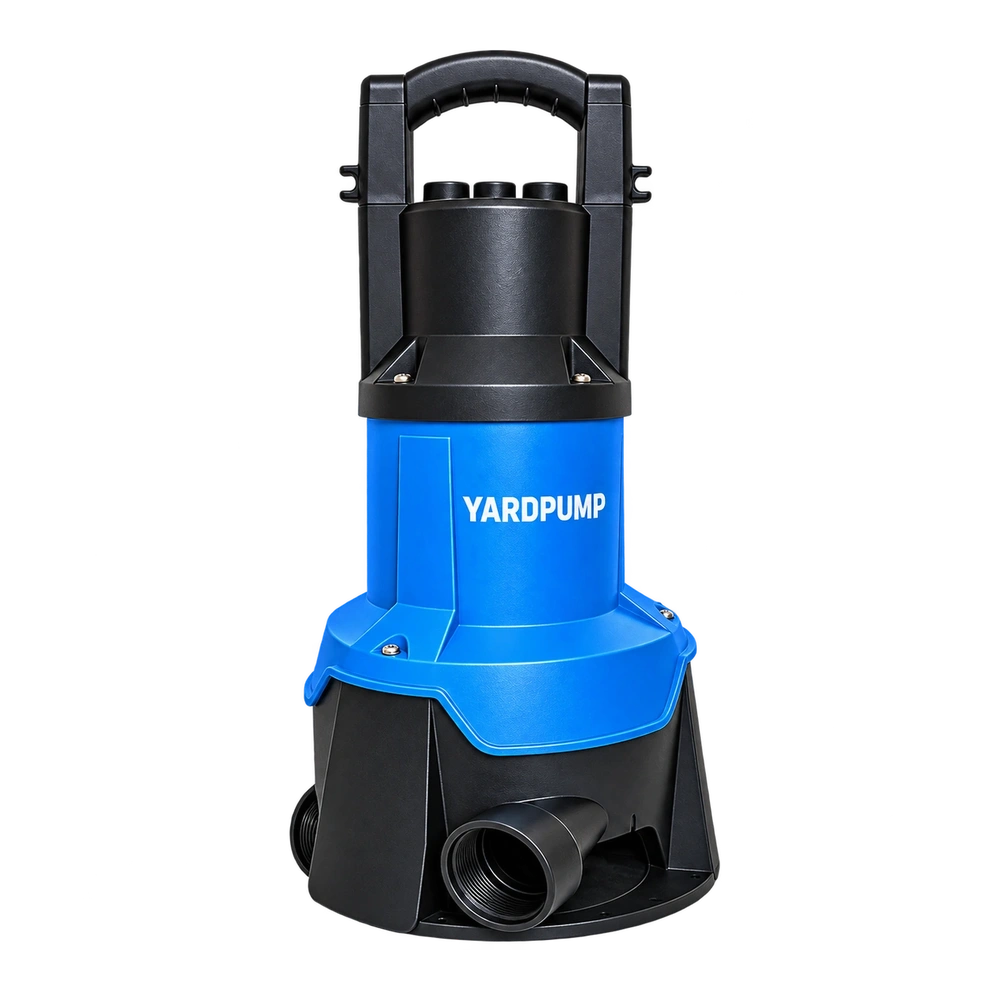
Imagine a buyer receiving two backup-pump quotations. Both say “up to eight hours” but neither says how often the pump runs or what water level it can maintain. Ask for runtime under a named inflow pattern and installed head, from a defined battery state to a defined endpoint. A battery can supply energy for hours while the water level rises beyond the permitted line. A useful quote shows that the system still drains the required water throughout the stated period.
Define how the backup will be called on
Begin with the ordinary pump unavailable. Write down the pit dimensions, usable volume between control levels, expected inflow cases and actual discharge route. The backup’s duty may be different when its outlet shares pipework with the main pump. Confirm which check valve, connection and pressure conditions apply. A backup can run continuously at one inflow and only intermittently at another. If its running flow is below sustained inflow, more battery energy will delay electrical shutdown but cannot stop the pit filling.
The energy available at the battery or power pack also needs a boundary. Ask for measured usable energy to the permitted cutoff at the stated temperature, load, age or state of health. A voltage times amp-hour figure is a nominal starting point, not necessarily the energy delivered to the pump. Wiring, inverter or controller losses, and protection thresholds matter. Include the energy used while waiting for the next start, and ask where input power is measured so losses are not counted twice.
Put one hypothetical quote on a common basis
Suppose a test has 240 watt-hours of usable energy at the battery-side boundary, and the system draws 120 watts while pumping and 4 watts while waiting, both at that same boundary. If it runs one third of the time under the defined inflow and head, the average is about 42.7 watts. The idealized duration is roughly 5.6 hours. Continuous running at 120 watts would give roughly two hours from the same assumed energy. This calculation omits changes in battery delivery and cycle behavior over time. It shows why a runtime without a duty definition is not comparable.
Request a water-level trace, pump run times, battery state, installed delivery and the endpoint. The endpoint might be a safe limit, an alarm or the power pack’s protective cutoff, whichever prevents the system from maintaining the specified water level first. Clarify how much reserve remains after an alarm. If both bidders use a different test vessel, ask for the conditions in volume and inflow terms, not just a description of the tank.
Accept the full outage and recovery sequence
Have qualified staff run an approved simulation under safe electrical and drainage controls. Start from the agreed charge state, simulate the primary loss without defeating safeguards, and check that the backup starts at the intended level. Watch the level through the defined period. Restore supply per instructions, confirm the recharge and primary return sequence, and ask how much reserve would be available after a second interruption before recharge is complete. If the installation uses a replaceable battery, agree on the service check used to decide when it no longer meets the promised condition.
Do not infer suitability for an unattended or critical site from a catalog maximum. A complete quotation names the inflow, discharge head, battery condition, operating window and verified water-level limit. Those are the values that should carry forward into purchase and commissioning.
Frequently asked questions
Can I compare an eight-hour standby claim with eight hours of pumping?
No. Standby and running demand are different. Use the same documented water duty and test endpoint.
Does a bigger battery solve a backup pump that cannot match inflow?
No. The water level will still rise if sustained inflow exceeds actual discharge.
Must every incoming unit be run to full discharge?
That depends on the agreed inspection plan. A validated representative runtime test and separate lot checks can serve different purposes; do not substitute a brief startup for the runtime evidence.