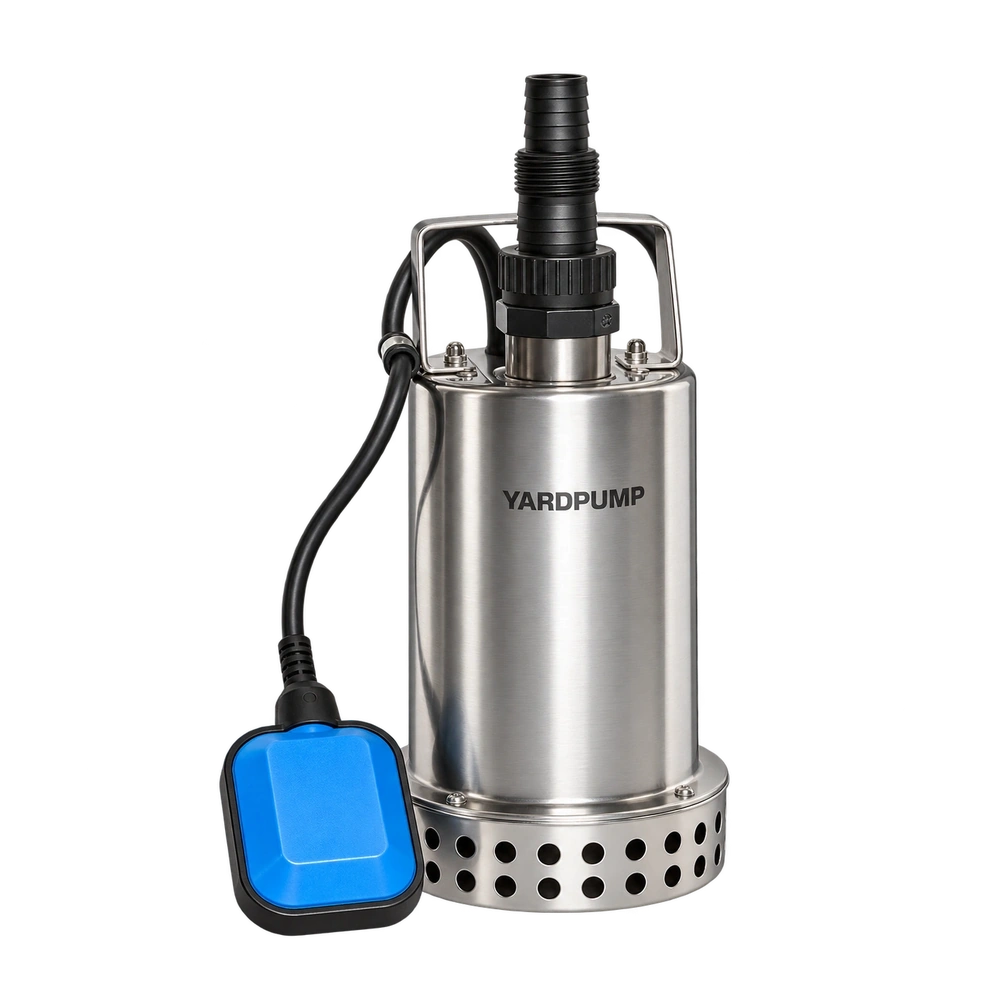
Water enters a sump looking fairly clear, then leaves orange-brown deposits after pumping. Does the pump need a larger solids passage? Not necessarily. Some iron remains dissolved until aeration or other changes cause it to precipitate. Distinguish that process from sand, corrosion products and biological slime before changing the pump or making a material complaint.
A particle rating cannot describe dissolved material
Sand arrives as particles. Dissolved iron can pass through an intake screen and later form visible material when water encounters oxygen. The pump, a falling discharge stream or an open collection container can expose water to air. Increasing the nominal particle passage does not prevent a dissolved substance from forming deposits downstream.
Orange colour is a clue, not a laboratory identification. Iron-bearing groundwater, corrosion of nearby steel and iron-related biological activity can produce overlapping appearances. Other contaminants may be present. Do not infer that the pump is rusting internally, that the water is harmless or that it is suitable for drinking from colour or smell alone.
Preserve source and discharge samples
Take separate samples of the incoming source water and discharge water using clean, appropriate containers and safe access. Record collection time, temperature, visible sediment and how the appearance changes after standing. Avoid entering a sump or handling wet electrical equipment. Arrange any required water analysis with a competent laboratory and follow its collection instructions, especially where dissolved and total iron are to be distinguished.
A simple jar observation can help describe the symptom but cannot reliably identify an organism or certify water safety. If clear source water becomes cloudy after standing in contact with air, precipitation deserves investigation. If gritty particles were present from the start, sediment transport also matters. A sticky film needs its own assessment rather than being classified as sand because it is brown.
Locate where deposits interfere with drainage
Inspect the inlet screen, float movement path, level sensor, check valve and hose after electrical isolation. A film can hinder moving parts or narrow an opening without containing large individual particles. A recurring coating therefore needs a maintenance plan based on its actual accumulation, not simply a pump with a larger advertised passage.
For illustration, an inlet with ample clean opening area can become progressively coated between inspections. The relevant decision is how quickly that site loses usable area and control movement. There is no general interval such as “clean monthly” that fits every iron-bearing source. Record the condition after cleaning and at later inspections to establish a suitable site-specific interval.
Separate water treatment from pump acceptance
If corrosion is suspected, retain photographs of the exact component and its damage pattern. Compare upstream material, fasteners and the pump's verified wetted-material specification. Deposits on a surface do not alone show that the underlying metal has lost material. Where necessary, a qualified service examination should distinguish staining, adhering deposits and actual corrosion.
Do not pour bleach, acid or a descaling chemical into a pump simply because it removes orange stains elsewhere. The liquid, seals, metals, plastics, downstream discharge and treatment method all need appropriate approval. A water-quality professional may be needed to address the source; a drainage pump is not an iron-removal or disinfection system.
For a YARDPUMP clean-and-dirty-water application, choose the family against the real liquid and solids limits, then obtain model-specific compatibility information. The practical outcome may be water analysis, planned cleaning, revised intake protection or mechanical inspection. Those are different decisions from increasing power or claiming that every orange deposit proves a defective pump.
Separate a maintenance recommendation from a water-quality conclusion in the service response. A screen can need cleaning regardless of whether the deposit is mineral or biological. However, advice about treatment, safe reuse or discharge requires the appropriate assessment. Record both decisions rather than presenting cleaning success as proof that the source water has been characterized. This preserves a useful boundary for distributors who are responsible for the pump but are not operating a water-treatment laboratory.
| Observation | Useful next step | Limit |
|---|---|---|
| Grit present immediately | Record settling and particle condition | Does not identify all dissolved substances |
| Water clouds after standing | Obtain appropriate source-water analysis | Colour alone cannot identify iron or organisms |
| Local component damage | Preserve the part for inspection | Staining alone is not proof of metal loss |
Frequently asked questions
Does a five-millimetre passage prevent iron deposits?
No. Particle passage does not remove dissolved iron or guarantee freedom from coatings and slime.
Can orange water prove that a stainless part is corroding?
No. Deposits can arrive from the source or upstream equipment. Inspect and identify the actual affected material.
Can I identify iron bacteria with a jar test?
No. A jar can document changes and settling, but organism identification and health conclusions require suitable professional assessment.