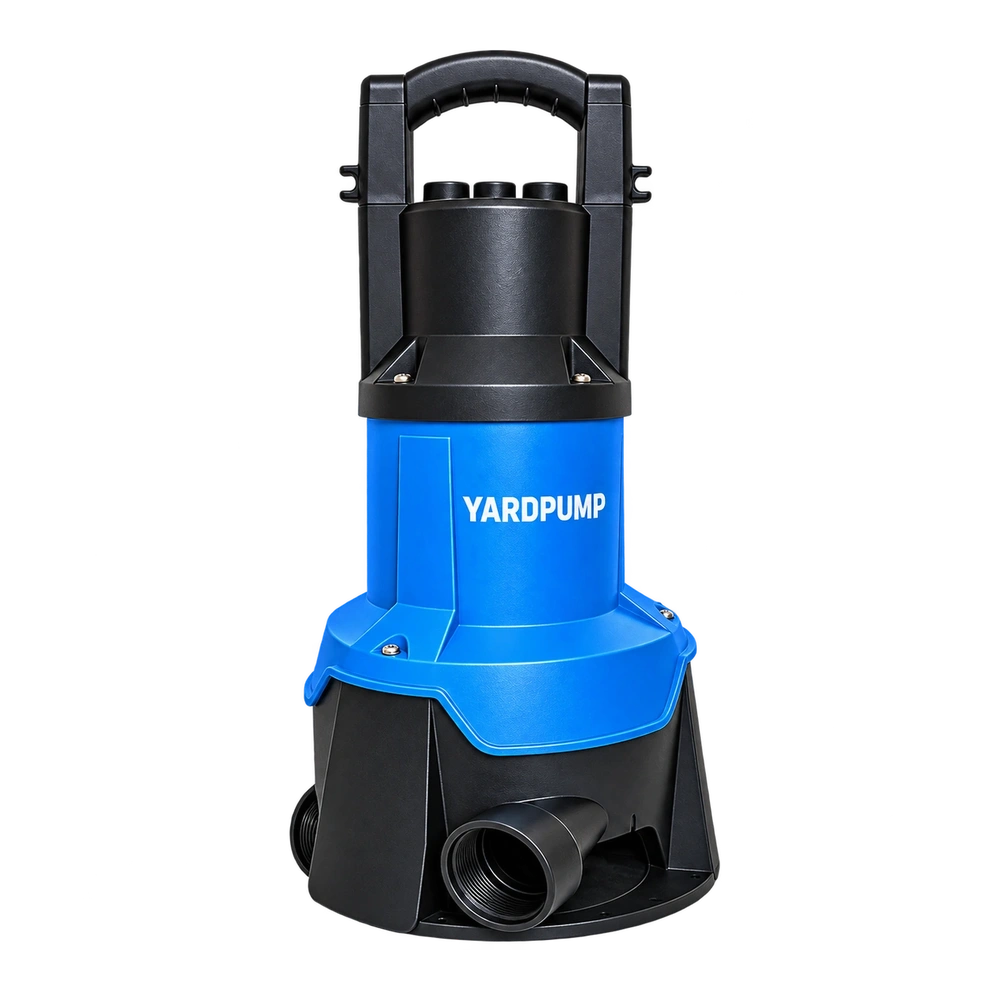
A rain barrel pump supplied a sprinkler satisfactorily until a small water meter was put in the hose. Now the throw looks shorter and the meter reports less flow than expected. The meter and its adapters may add pressure loss, or its indication may not be accurate at that operating point. Start with a separate delivery measurement under matched conditions. That will show whether water is really missing at the sprinkler or whether the number alone is misleading.
The fitting can change flow, the display can misread it
An inline meter introduces a body, some internal passage and usually two connections. A marked hose size does not show the minimum bore inside that arrangement. At the same flow, local restrictions and passages in the meter can require additional pump head. A small centrifugal pump then settles at a new duty on its curve. The sprinkler may receive less working pressure even if no leak is visible. The pressure rating of a meter does not tell you its pressure drop at the needed flow.
On the other hand, the display and the hydraulic path are separate. A meter may have a specified flow range, orientation, direction or behaviour during start and stop. Some register a total and an instantaneous rate differently. Weak flows, rapid bursts, air after refitting or an incorrect unit can make a display hard to compare with a previous observation. First check the device instructions and what it actually reports. Also make sure the rainwater and any filter arrangement are suitable for the pump and for the meter; fitting an instrument does not remove the water-quality limit.
Compare with and without the meter under the same conditions
Use safe ordinary operation allowed by the equipment and arrange any changes with power isolated at a dry point and retained pressure relieved. Secure the hose outlet. Preserve the same hose length, sprinkler or other resistance, elevation and water level as closely as possible. Use the approved connectors; swapping in a different hose for the meter-free run would make it hard to tell which component caused the change. Let both runs stabilize after installation under the allowed water depth and duty.
For an accessible reference, a known volume and timing interval can give average delivery on a suitable outlet. Catch water only at a safe intended outlet and avoid unplanned spray near electrical equipment. When the question is sprinkler performance, a free hose discharging into a container is a different duty. Use representative catch or a qualified measurement under the unchanged sprinkler arrangement, or clearly label a free-outlet comparison as diagnostic rather than the sprinkler’s actual flow. Record visible throw under comparable wind if that is the symptom.
In a hypothetical diagnostic comparison at a fixed hose outlet, 12 litres in 40 seconds without the meter is about 18 L/min. With the meter fitted, the same 40 seconds delivers 10 litres, or about 15 L/min. If the inline display shows 15 L/min, the loss under these assumptions is largely real. If both runs actually deliver 12 litres in 40 seconds but the meter shows 12 L/min in one, check its range, units, setup and condition before selecting a stronger pump. The figures are examples, not meter or pump specifications.
Decide whether to change the meter, the fittings or the pump
If the confirmed loss follows the meter assembly, inspect its path and adapters when isolated, including a partially seated quick coupling or a small insert. Ask the hardware supplier for the flow and loss data at the desired duty; an appropriately sized, approved meter and suitable connections may recover delivery. Moving an identical meter along the same single hose does not normally eliminate its hydraulic resistance. Choose a location mainly for the approved orientation, accessibility and other installation conditions.
If the independent delivery is comparable but the display is off, correct the instrument or measurement method rather than the pump. If even the meter-free setup is weak, return to the source level, hose route, filters and required sprinkler pressure. A useful record includes the outlet, the installed fittings, both volumes and the time windows. It helps a buyer order the minimum necessary change.
Frequently asked questions
Does the maximum flow on a meter equal its low-loss flow?
No. Check the operating range and pressure loss under the required conditions separately.
Does putting the meter at the tap make it stop affecting flow?
Not by location alone in an otherwise unchanged series path. Changes in fittings or the installation may affect the result.
Should I use the totalizer or the instant display for comparison?
Use the approved method. Over a matched interval, the change in total and the independent volume are often useful to compare.