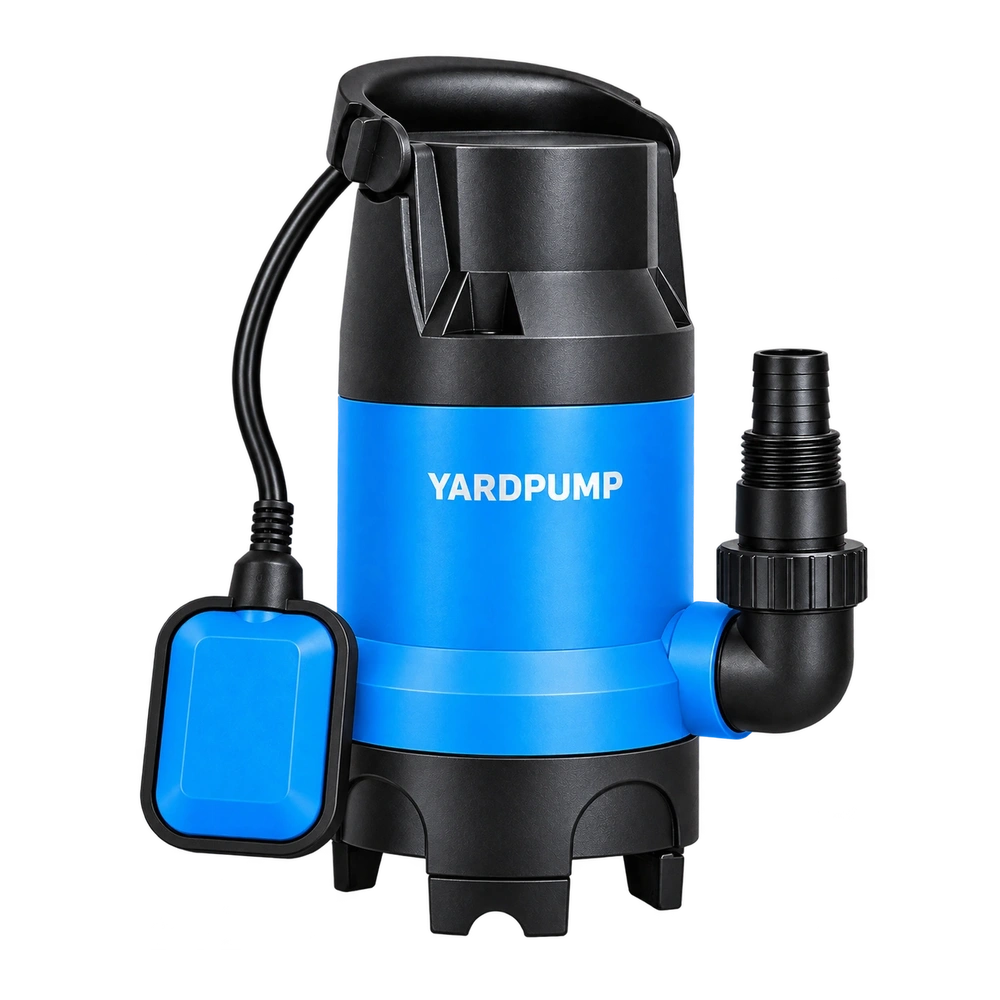
On a garden transfer line, water comes from a known working outlet when the pump is tested according to its instructions. With the normal hose connected and the shutoff handle in the open position, nothing comes out beyond that valve. Before ordering a new pump, establish whether the handle still moves the closure inside. A loose connection between handle and stem, a damaged stem or a jammed closure can make the outside position misleading. An obstruction somewhere else can produce the same no-flow symptom.
Treat the handle as one piece of evidence
A quarter-turn ball valve usually has a handle connected to a stem, which drives a ball with a hole through it. A gate valve has a different drive and its handwheel may take several turns. Depending on the model, an indicator may show the handle or actuator position rather than directly report the opening inside. Read the part markings and manual. If a handle moves loosely for part of its travel, stops short, or behaves differently from an identical good part, record that detail. Do not pull harder on the handle to overcome a stop.
Pressure on one side of a valve does not prove adequate flow through it. When there is no delivery, a centrifugal pump may build pressure upstream even with a blocked line. A static pressure reading can be useful to a technician at a designed measuring point, but it does not identify which component is blocked. The hose, quick connector, nozzle and a misoriented check valve, if fitted, can all obstruct the path. An empty supply or water below the intake can also stop delivery; check the source before blaming any fitting.
Isolate and compare one section at a time
Disconnect the pump at a dry, safe point. Shut off other supplies, wait for stored or trapped pressure to relieve according to the equipment instructions and do not loosen connections that may remain pressurized. A closed valve can trap water under pressure on either side. If there is no safe means of proving the line is relieved, have the assembly examined by a qualified installer.
Start with the layout as found. Mark the direction from pump to outlet. Note which valve, hose and fittings were fitted for the failed test and whether there was a recent change. Inspect a removable manual valve off the system, following its service instructions. For a straight-through ball valve whose port is safely visible off the line, check whether the ball’s hole actually aligns with the channel when the handle says open. Do not try to view a valve while under pressure or reach into a line. A buried, fixed or non-serviceable valve is a job for an installer.
If the pump is permitted to discharge safely through a tested route, compare with an approved known-good valve or hose section at the same approximate lift and source level. Make changes with the power isolated and use a secured outlet. Restore normal operation only inside the pump’s allowed conditions, walk away from the discharge zone and observe. Do not deliberately keep the pump running against a closed line to feel whether it has built pressure.
As an illustrative test, a safe reference route delivers 10 litres in 30 seconds, or 20 L/min. The installed route delivers nothing behind one valve. Replacing only that valve with an approved known-good equivalent returns delivery close to the reference, and off-line examination finds the older valve’s ball did not follow its handle. Taken together, these observations support replacing the valve. If changing the valve makes no difference, follow the remaining hose and fittings downstream; do not report the valve as confirmed failed from the pressure reading alone.
Keep the finding useful to service and procurement
Save a short clip of the handle and stem movement off the line, the model identifier and the safe comparison test conditions. If only a handle has loosened and the product offers an authorized repair, follow that procedure. If the closure or stem is damaged or the valve is not serviceable, order a compatible valve with the right connection, pressure range, liquid compatibility and permitted flow direction. The goal is a reliably open flow path that can be shut off when needed.
Frequently asked questions
Is a handle parallel with the pipe always open?
Many ball valves use that convention. A mispositioned or slipping handle can still give a false indication; check the specific model.
Can an automatic valve be diagnosed the same way?
The hydraulic path still matters, but actuation, pressure differential and control faults may require a different procedure. Follow the controls manual.
Why did water come back after I moved two fittings together?
The fault remains unlocated. If safe, repeat with one approved change at a time so the replacement decision can be justified.