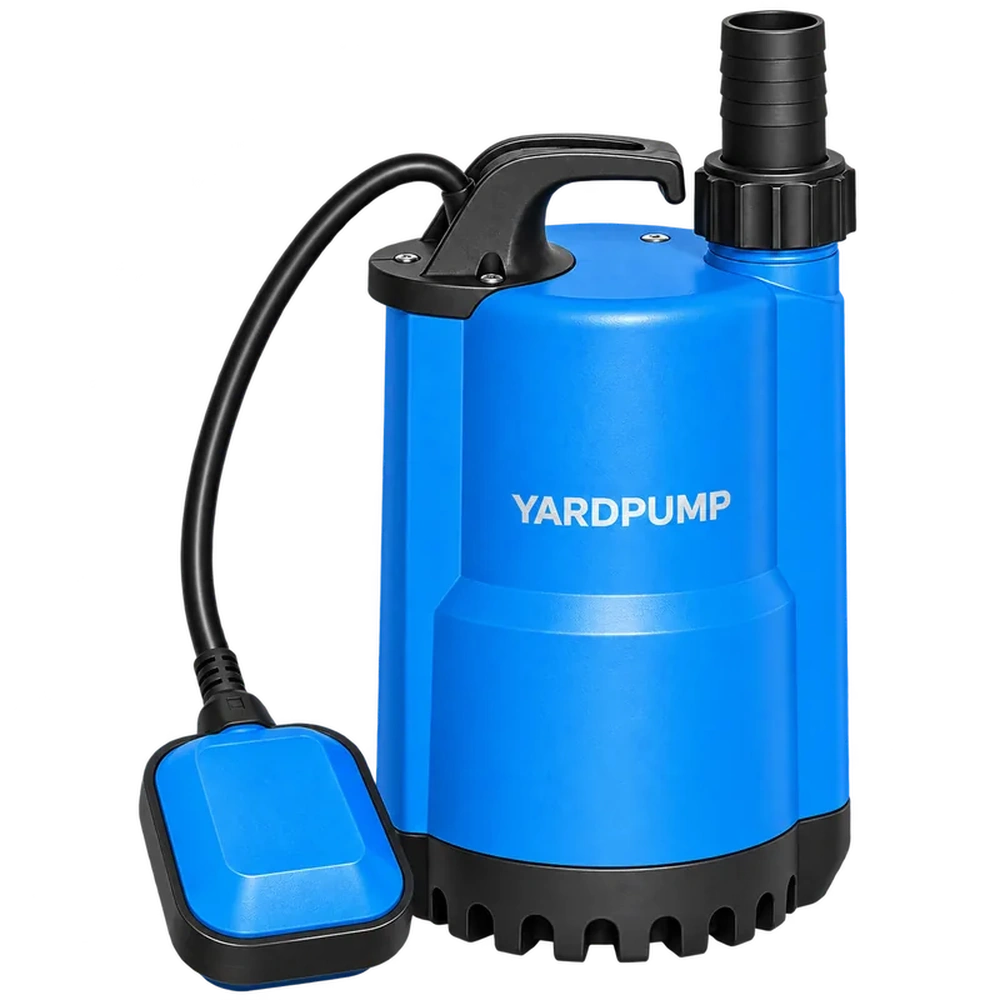
The floor around the pump is nearly dry, but the grooves still hold strips of water. A residual-water rating normally describes the water depth at the pump on an agreed surface and in a specified mode. To decide whether the rating has been met, measure near the inlet and check which strips of water can still reach it.
Two water depths can exist side by side
As depth falls, tiny floor height differences become dams. Surface tension and debris can further slow thin-sheet flow. A low inlet does not pull water through a dry ridge, and tilting the pump may obstruct its intake or violate the permitted operating position.
Set a straightedge across two tile shoulders and check the groove bottom and the nearby broad floor separately. Wet grout darkens long after a layer of free water has gone. For cleaning purposes you may care about either, but only a measurable depth of free water belongs in a pump residual-depth check. Check the manual for the measuring point and surface used in the stated result.
For example, a 4 mm ridge can isolate a groove even when the pump area is at 2 mm. The values demonstrate geometry, not a model specification or a universal finish depth.
There is a useful difference between a groove that holds isolated water and a groove that feeds the pump. In the second case you should still see slow movement along the groove, provided the pump is operating within its permitted low-water range. A ridge that is dry across its width tells you why the far side stayed wet.
Check the water by the inlet when the pump stops
Map the remaining wet areas after a complete cycle and check whether each has an open downhill path to the pump. Use a straightedge or controlled shallow water to distinguish local floor geometry from premature pump stopping.
Record the instant the pump stops and recheck after the line has drained back, using the same measuring point. A shallow ring that grows near the pump after shutdown points to returning water. A strip that was already left behind on the other side of a dry shoulder deserves a floor check. A broad pool connected to the inlet when the pump stops calls for a look at the control mode, position or inlet condition.
On a unit with an automatic switch, the stop level may be above the depth listed for a permitted manual finishing mode. Check the rated mode and the minimum water requirement before planning the finish. Keep the pump upright in its allowed position and check the strainer with the power isolated if debris could be restricting the inlet.
Define the finish before comparing pumps
Place the approved low-level pump at the true collection point, clear the permitted inlet area and use a squeegee or secondary cleanup for isolated pockets where the finish requirement is drier than the connected floor allows.
For a garage or tiled room, describe the required result in terms of the water you can collect. A pump can remove most of the connected water and a squeegee can bring remaining strips to the collection point. A contractor who needs the grooves dry enough for another trade should include that finishing step in the time estimate. For distribution, a diagram showing where the residual depth was measured will often settle a disagreement faster than repeating a catalogue number.
Frequently asked questions
Should I measure in the deepest groove?
For a room cleanup report, record the groove separately. For the model’s residual-depth check, reproduce the stated test surface and measurement point near the pump.
Will a second pump in the groove help?
Only if the groove can safely accommodate an approved intake and enough water to run it within its limits. For shallow disconnected strips, direct the water to a collection point.
How can I tell if water came back down the hose?
Watch the connected water near the pump after shutdown. A rise that starts near the outlet or sump should be checked against the discharge route and any approved backflow control.