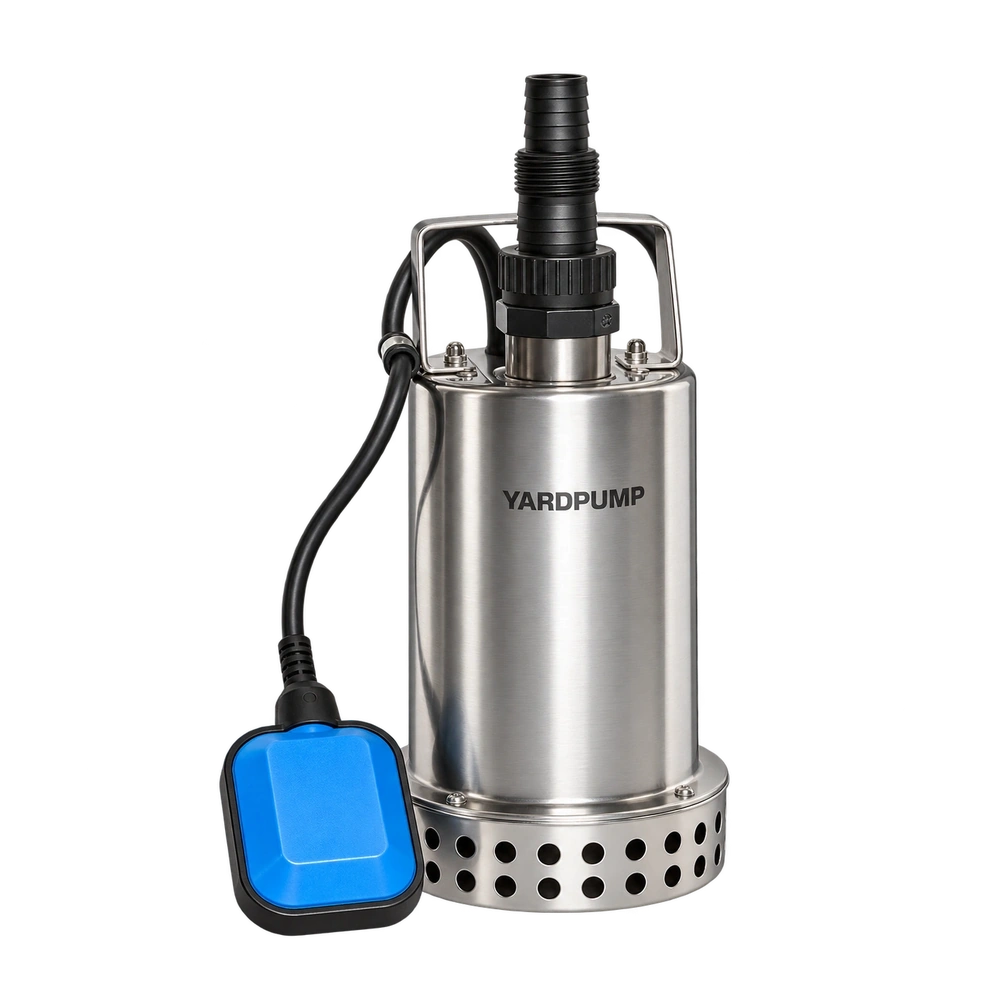
Imagine this cleanup situation. The portable pump has stopped delivering, yet the concrete floor looks dark and the bottom of a wall remains damp. Has the pump failed to finish? Not necessarily. A low-level drainage pump removes water that can collect and flow into its intake. It cannot draw all moisture out of pores, joints, insulation or enclosed building layers. Decide separately whether free water remains and whether the affected materials are ready for reinstatement.
Find out what kind of water remains
A shallow puddle can be disconnected from the pump by a floor ridge. Water may also sit under removable coverings or keep arriving through a leak. Those are collection and access problems. By contrast, water absorbed into concrete, timber or wallboard does not become a pumpable pool simply because the intake is lowered. Surface tension and the pore structure retain moisture after the visible surface clears.
Use the wet-area history and a safe inspection to distinguish these conditions. Note where water was deepest, how long it remained, which layers were affected and whether new water appears after removal. A dry-looking top surface can conceal wetter material beneath it. A dark patch can also have another cause, so colour alone is not a moisture measurement or a diagnosis of continuing ingress.
Set a drainage completion point that the pump can achieve
For illustration, a 30-square-metre floor with an average connected water layer of 3 millimetres contains about 90 litres. A low-level pump can remove some of that water only while its intake is adequately supplied and its operating requirements are met. The same area of damp concrete has no corresponding three-millimetre free-water depth to insert into the calculation. These are different quantities.
Do not continue dry or air-filled running to chase a damp appearance. Follow the actual pump's start, running and residual-water requirements. Use suitable tools for isolated remaining puddles, and stop to investigate continuing replenishment. A small clean-water low-level pump is not automatically suitable for floodwater contaminated with sewage, chemicals or abrasive sediment.
| Stage | Useful completion evidence | What it does not establish |
|---|---|---|
| Free-water removal | Accessible standing water has been collected within the approved method | Materials are dry inside |
| Cleaning | Suitable cleaning of affected accessible surfaces | Hidden layers are clean or sound |
| Drying assessment | Material readings and inspection against an appropriate criterion | Every unrelated area has been assessed |
| Reinstatement release | Responsible specialist approves the affected construction | A pump specification alone authorizes rebuilding |
Hand over a location record, not just a photograph
Mark the affected floor and wall locations, the water line and inaccessible areas. Record the drainage time and whether water reappeared. Where layers may be wet, a restoration professional can decide what must be opened, removed, cleaned or dried. Electrical equipment exposed to water needs its own qualified assessment before reuse.
Moisture meters need a method appropriate to the material. A reading on one material or with one instrument setting cannot be treated as a universal percentage for another. Compare equivalent locations and, where suitable, an unaffected reference area. Surface infrared temperature also does not directly measure moisture content. Keep inspection limits explicit rather than declaring an entire room dry after checking one convenient spot.
Choose the next process by the remaining problem
Once free water is removed, controlled ventilation, dehumidification and other restoration methods may be required. Their suitability depends on contamination, weather, the construction and safe electrical availability. Do not blow air through a contaminated or mould-affected space without an appropriate cleanup plan. Covering wet materials with new finishes can trap the problem.
For a distributor supplying a low-level pump, state the handover clearly: residual-water performance describes a liquid-removal condition under specified circumstances. It does not promise a dry slab or a ready-to-paint wall. That distinction prevents a normal finishing limit from becoming an unnecessary pump return and helps the owner arrange the work that pumping cannot perform.
Frequently asked questions
Can a more powerful pump dry concrete faster?
More flow may help remove a connected pool. It does not directly extract absorbed moisture from the concrete. Match the next process to the remaining water.
Is a floor dry if no water comes up when I press it?
That observation is insufficient. Relevant layers may retain moisture and require material-appropriate assessment before finishes are replaced.
Does a stated residual depth apply to every corner?
No. Floor slope, disconnected puddles, pump position and operating conditions affect collection. The specification does not guarantee uniform remaining depth throughout a building.