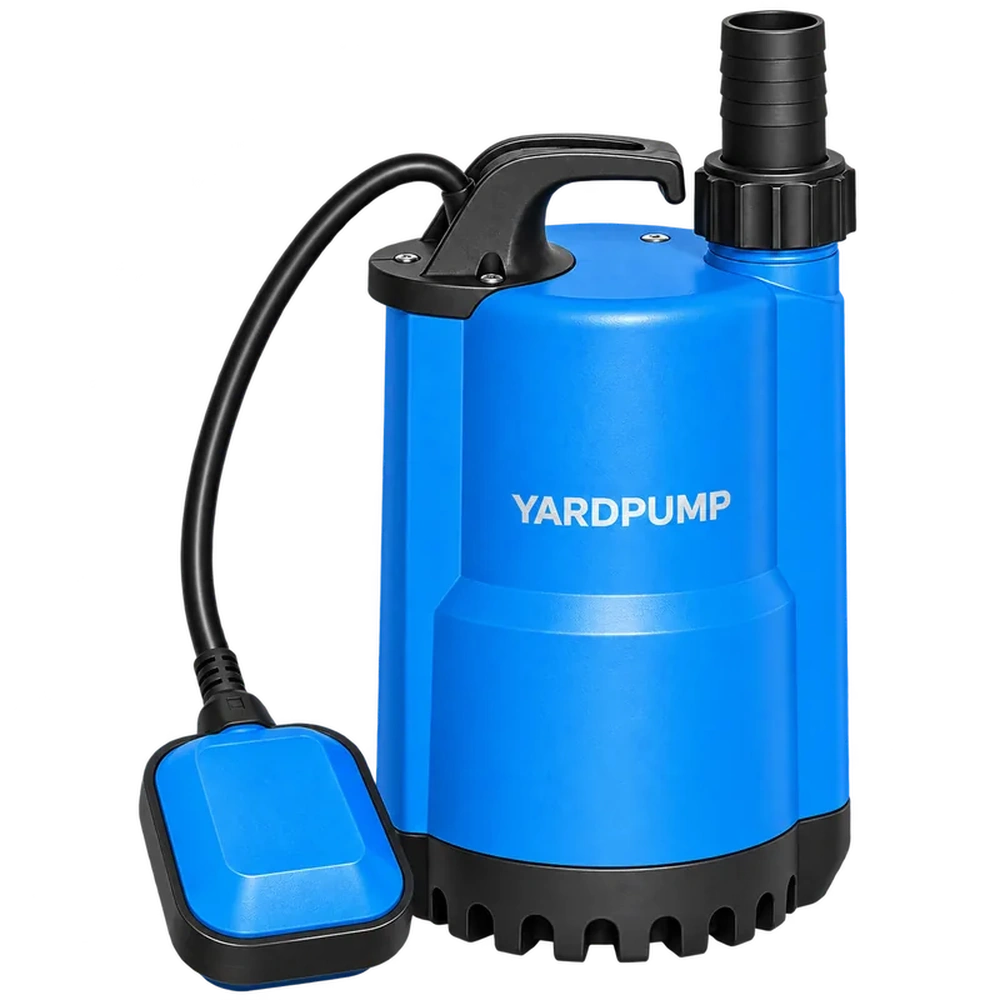
“The pump housing is plastic. Why does its plug still need earth?” This is a useful buying question, but the outside material does not determine the electrical protection class. Confirm the complete pump's approved Class I or Class II construction and its original electrical version. Do not remove a required protective-earth connection or fit a two-pin substitute because the casing looks insulating.
Class follows the complete safety design
Class I equipment uses protective earthing as part of its safety arrangement. Class II equipment uses the required double or reinforced insulation arrangement and does not rely on protective earth in the same way. A plastic shell alone does not establish either construction. Internal conductive parts, accessible components and the complete insulation system matter.
Look for the applicable marking and manufacturer documentation. The double-square symbol is associated with Class II equipment, but an unclear or missing label is a reason to obtain confirmation, not permission to assume the pump is double insulated. Do not confuse insulation thermal class, such as a winding temperature classification, with the electrical protection class.
Plug shape is not the whole answer
Countries use different plug systems, and some protective-earth contacts are not a separate protruding pin. A plug can look like it has two power pins while also having side earthing contacts. Conversely, an adapter can physically fit a socket while failing to carry the required earth connection.
Identify the exact plug and cord set approved for the destination market and pump variant. A product photograph, colour or broad voltage range cannot establish that compatibility. Do not cut off an earth conductor, defeat an earthing contact or replace the plug as a way to make an unsuitable outlet usable. A qualified electrician should assess the supply and correct arrangement.
Residual-current protection is a separate safeguard
Use the protection and supply required by the instructions and applicable installation rules, especially around water. A residual-current protective device does not convert Class I equipment into Class II or authorize removal of earth. The pump, cord, socket and protective devices must work as a complete approved system.
If the plug, cord or connection has been damaged or immersed contrary to its permitted conditions, isolate the supply and obtain competent inspection. Do not test for safety by touching the water, using wet hands or trying repeated starts. A pump that runs and does not trip a device has not thereby proved its protective-earth path or insulation condition.
Make the electrical version a purchasing requirement
For an illustrative RFQ, list the destination, nominal supply, exact plug/cord configuration, protection class and required evidence as separate fields. Ask the supplier to confirm the released assembly rather than requesting “two-pin because the body is plastic.” At receiving, cross-check the label, cord and order identity, and use qualified inspection where electrical verification is needed.
Keep these requirements through OEM branding and spare-part service. Changing a cord or plug can affect the approved configuration even if the pump motor is unchanged. A distributor should explain the safety design accurately without claiming that all plastic pumps are double insulated or that all two-pin equipment is unsafe.
For YARDPUMP compact pump orders, use the current model and market-specific documentation. This article does not assign one protection class to the entire range. The practical decision is to obtain the correct complete electrical version and a suitable supply, preserving every safety measure the design requires.
Where the electrical identity cannot be confirmed, keep the unit out of use until the manufacturer or qualified service provider resolves it. Do not infer class from the cable core count alone after an unknown repair. The remaining conductors may not represent the original construction. This matters especially for used, relabelled or previously modified pumps whose visible plug no longer provides reliable evidence of the released assembly.
| Evidence | Useful for | Insufficient by itself for |
|---|---|---|
| Plastic outer housing | Identifying an external material | Declaring Class II construction |
| Exact marking and manufacturer record | Confirming released protection class | Approving an altered cord or plug |
| Plug and supply identification | Checking market and earth compatibility | Proving the whole pump is electrically sound |
Frequently asked questions
Does a plastic casing prove double insulation?
No. The complete construction and approved identification determine Class II status.
Is every plug with two visible pins unearthed?
No. Some plug systems use other earth-contact arrangements. Identify the exact plug standard and assembly.
Can an RCD replace a required earth conductor?
No. Do not remove protective earth or infer a different equipment class from additional residual-current protection.