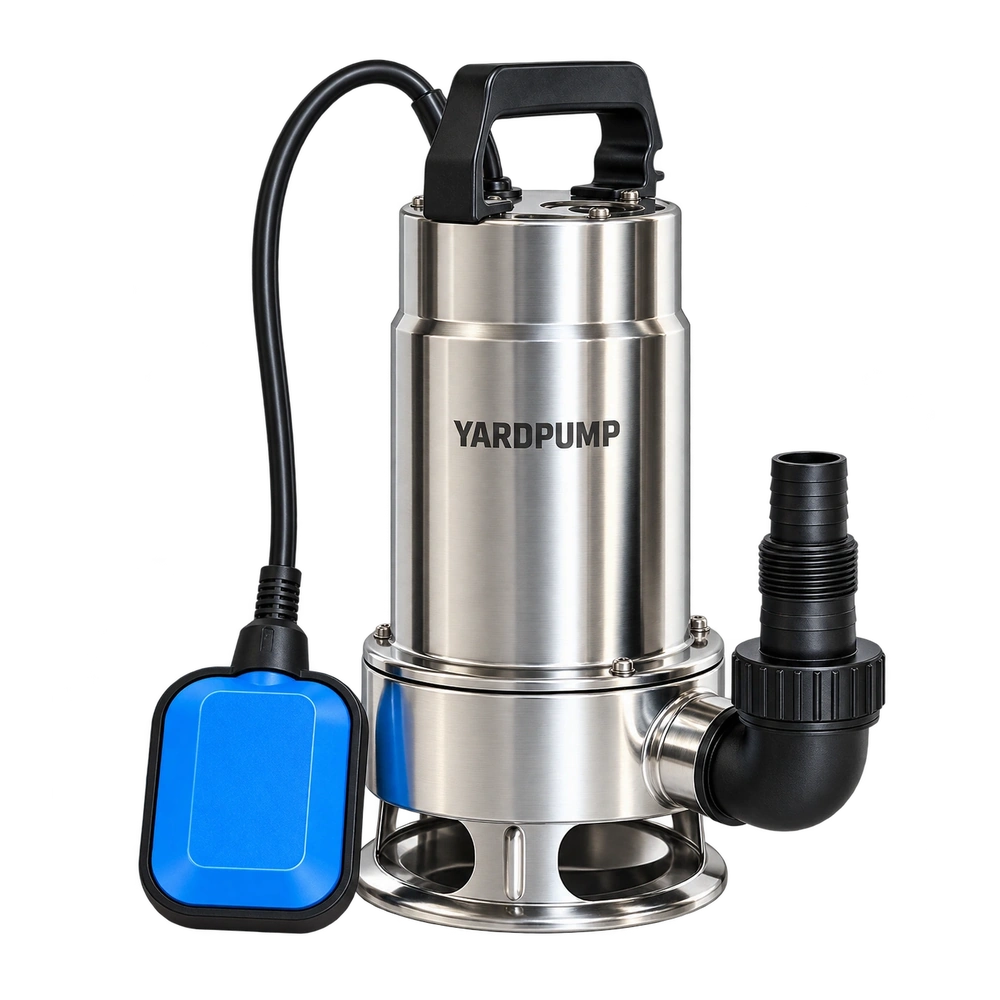
A pool cover pump clears a shallow pocket and switches off. Within seconds water comes back around the base. A dead end in a hose or a run up over the pool edge can leave water high enough to flow back through some pumps when the motor stops. First check whether the returning water looks like a limited release from the discharge line. A torn cover, a hose that drains onto the cover from its end, and water migrating from a second pocket call for different remedies.
Identify the route before choosing a part
This check applies only to a pump specifically permitted for the cover and installation in question. A low-level clean-water pump is not automatically a pool cover pump. Support, operating position, electrical protection and permitted fittings depend on the pump and the cover instructions. Observe from a dry position without entering the pool or stepping onto the cover. If an outlet needs repositioning or a fitting needs attention, isolate power first from a safe dry point. Keep people away from a damaged cover and arrange inspection.
Look at the hose profile. Water in a rising section between the pump and the crest can fall back toward the pump at stop if there is an open reverse path. Beyond the crest, some of the water may run toward the outlet instead; pockets and the admission of air change how much returns. Also trace the actual outlet: a hose ending on a slope toward the pool can send water back over the cover from the outside, even if the pump connection has a working check valve.
Record the moment flow stops, where the new water first appears and whether the water continues to recover once the visible pulse ends. Return through the pump can be quick and localized at its intake. A second pocket may connect slowly along a fold, leaving a visible wet trail. Continuous growth in dry weather, particularly if it cannot be explained by hose storage or water elsewhere on the cover, is a reason to stop and investigate cover condition. Timing helps prioritize checks; it does not prove a tear is absent.
Compare the returning volume with what the hose can hold
For an illustrative bound, a hose with an actual bore of 16 mm and 12 m of full water column holds about 2.4 litres: the cross-sectional area is about 0.000201 square metres, multiplied by 12 m. Only some of that amount may return to the pump. A 4 m rising portion of the same hose holds about 0.8 litres. Use inside diameter, not the number on the connector. A long flat hose may not be round or full, so calculate an order of magnitude and look at the route.
In a hypothetical shallow pocket of 0.12 square metres, 0.8 litres spread evenly would raise the surface about 7 mm. The real cover moves and its pocket area changes with depth. That is why the same return can cycle one setup and barely change the level on another. It also explains why a switch that correctly stops at its specified level can still restart. Do not try to change that switch threshold without approval.
Choose the least complicated correction that fits
If the outlet is shedding water onto the cover, correct the destination and protect the hose against shifting. If the approved setup allows an alternate route with a shorter rising section, compare the stop and restart sequence with the revised route. Keep it free of pinches and make sure the final outlet is secure and suitable. Keep rain and water moving in from folds in mind when comparing any two trials.
When backflow through the pump is the confirmed source, check whether the manufacturer requires or permits a specific adapter with a check valve. It must face the right direction and fit the particular pump. It can add head loss, hold water that may freeze and affect the way air leaves the system, so a generic valve is not a universal fix. Follow the model’s winter and installation instructions. If a route and approved fitting cannot make the setup reliable, choose a cover drainage arrangement intended for that geometry instead of forcing extra starts or keeping the pump on.
Frequently asked questions
Can I tell from the puddle’s colour where it came from?
No. Water from the hose, the cover and the pool may look alike. The first point of return, timing and estimated volumes are more useful.
Would a wider hose solve drain-back?
It may lower operating friction and hold more water at the same length. The height profile and reverse path still decide how much returns.
Does a check valve fix water that flows back across the cover?
No. It acts on reverse flow through the connection. Water from an unsuitable discharge destination or another pocket follows its own path.