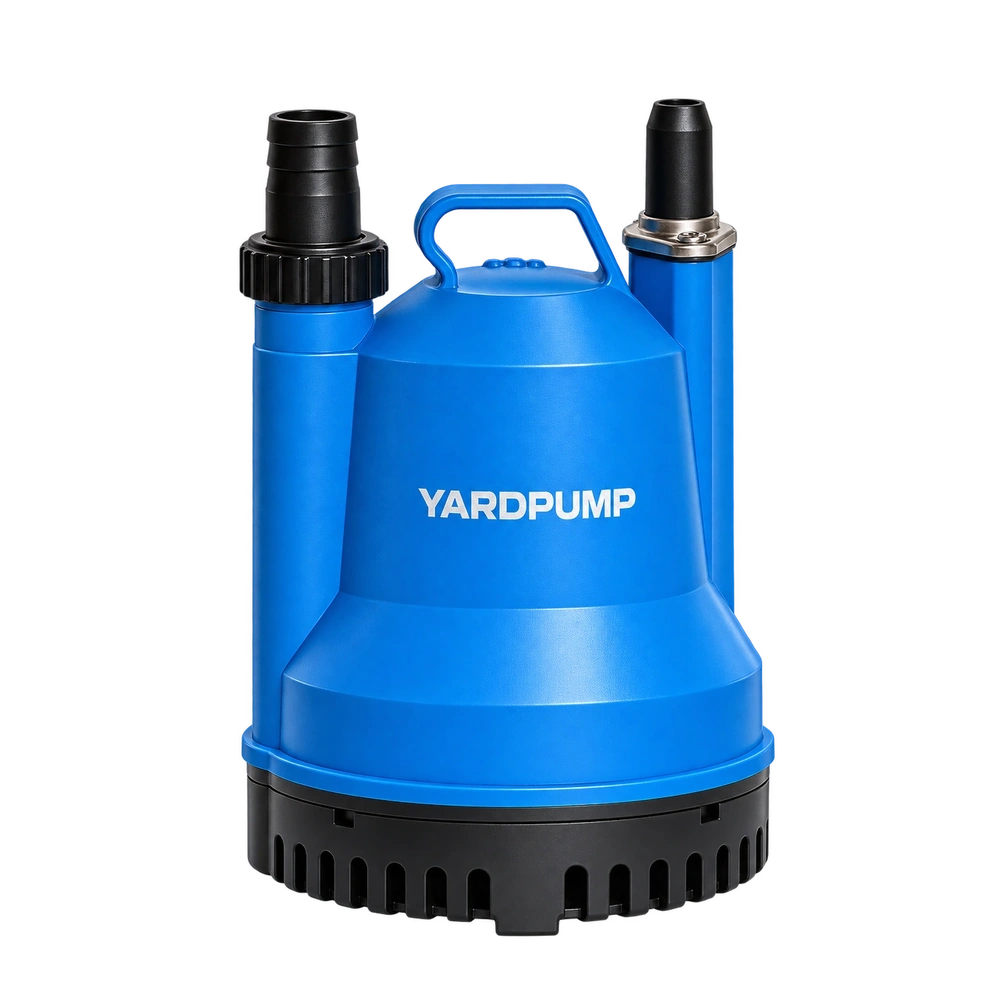
Suppose a clear-water submersible pump transfers rainwater to a higher non-potable storage tank. A mechanical float valve at the destination closes gradually as the water rises. The inlet flow dwindles, the valve shuts and the pump still makes noise. Identify the device that stops water and the device that stops the motor. A valve that only controls the water path normally sends no electrical stop command. Treat a full tank and a stopped pump as separate results until the entire system has been checked through the actual valve movement.
The pump sees a different system as the valve closes
As the opening gets smaller, resistance at the destination rises and the operating point shifts. For many centrifugal pumps, delivery falls and discharge pressure can approach the condition of a closed outlet. The motor can still be energized even if the tank level hardly moves. A quieter stream does not show that the motor has stopped or that its protection is suitable. Use the pump and valve instructions for allowable flow, pressure and any permitted duration at a restricted duty. A designed package may stop on pressure or demand. Do not assume that shutting a mechanical valve is a suitable way to control any portable submersible pump.
Before buying, separate low-level protection in the source tank, high-level shutdown in the receiving tank and the valve's water shutoff. A source float senses the source level. It does not know when the valve in the other tank has closed. A mechanical valve may be one part of the water path, but the system still needs an approved control and overflow arrangement. Have qualified personnel specify and install high-level shutdown according to the actual pump and controller.
Record three events during a controlled fill
From a dry position, the installer records receiving level, when the valve starts restricting delivery and when the motor actually stops. Also record source level. Keep the test within the permitted duty and a controlled fill volume, with someone able to stop the equipment safely. Do not deliberately leave a pump running against a closed valve if that operation is not allowed. Where flow can be measured safely, record full-open delivery and flow near the intended stop. Include elevation, hose and filter arrangement so the readings describe the real installation.
For an illustration, suppose the open valve admits 35 litres per minute, while the valve near closure admits only five. The pump has already moved to a different duty before the valve shuts completely. Check the allowed flow range, whether the controller recognizes its intended stop condition and how much storage remains. Five litres per minute is an example, not a minimum flow limit. If high-level shutdown acts before the valve restricts the line too far, still check for continued flow, drainback or siphoning after stopping. The tank not overflowing immediately is not sufficient evidence.
Put the whole shutdown sequence on the purchase specification
For a quote, describe the location of both tanks, required open flow, valve model, receiving high-level control, source low-level protection and where excess water can go. If the pump cannot support the intended control, change the transfer design or choose compatible equipment. Increasing motor power or a pressure setting, bypassing a float or testing against a closed valve does not resolve the control issue. Acceptance should show that the pump fills at an allowed duty, stops reliably at the specified level and that water has a defined path if a component fails. This article concerns non-potable rainwater transfer. Potable supplies or connections to drinking water need a separate qualified assessment.
Frequently asked questions
Can the source tank float replace the high-level stop?
Not by itself. A source float senses its own tank and does not show that the pump will stop when the destination is full.
Is it normal for the pump to run for a few seconds after the valve closes?
Check the allowed duty and actual shutdown sequence for the specific equipment. Noise or a fixed number of seconds does not establish that the condition is acceptable.
Can I close the valve fully to see if the protection works?
Do not improvise a closed-valve test. Have qualified personnel verify the stop logic within the permitted duty.