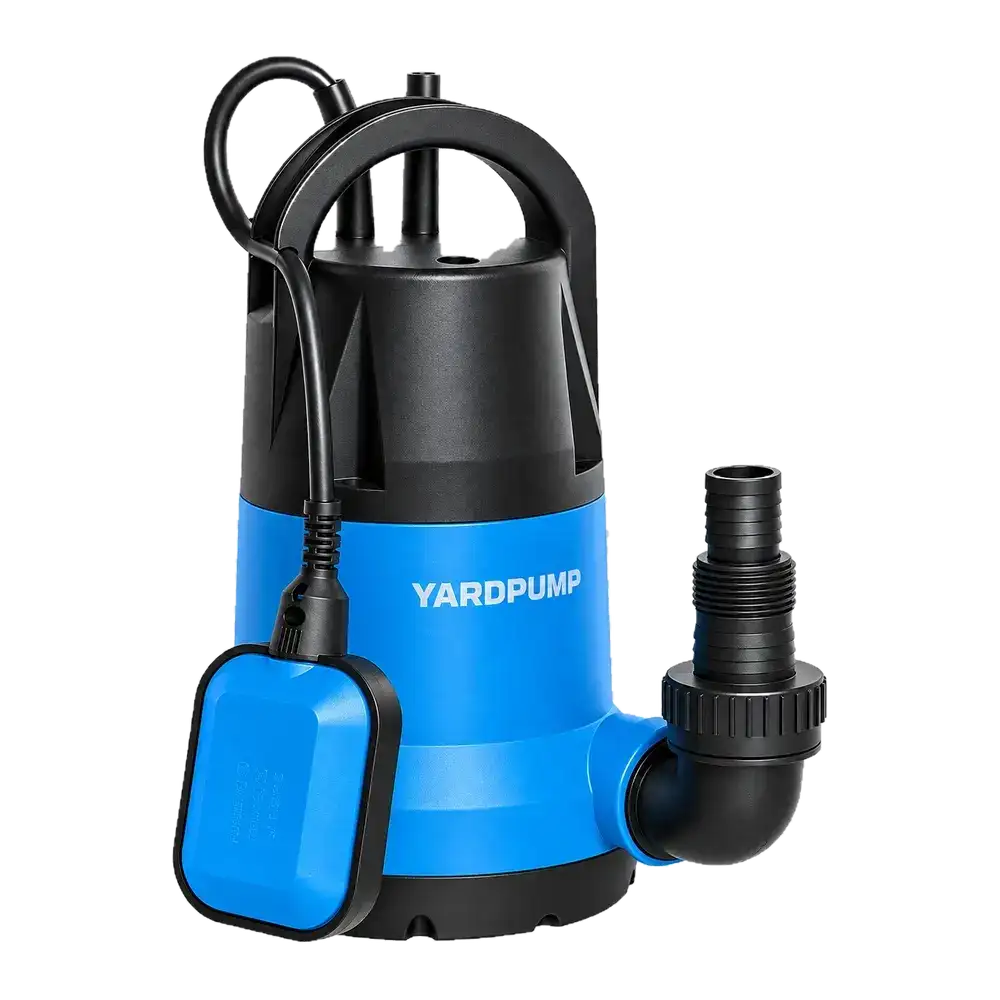
Every time the sump pump starts, water comes out of the connection at the foot of an outdoor downspout. It recedes when the pump stops. Check whether the lines feed the same buried drain and what lies between that junction and the final outlet. If the receiving pipe cannot take the water, the level can rise and force water out of a lower opening. Buying a higher-flow pump can make the backup happen sooner when the restriction is downstream. Watching the pump move water out of the pit is not enough to diagnose it.
Why can water leave through the other branch?
Roof runoff normally flows by gravity. The pump sends its water outdoors and may discharge into a gravity line also used for roof runoff. If the receiving pipe is open and the outlet is low enough, both streams go to the outlet. A submerged outlet, sediment at a low point, a deformed pipe or two inflows arriving faster than the common line can drain can raise the water level to a downspout opening or cleanout. The pump's actual flow may also drop as the receiving water creates more head for it to overcome.
This differs from discharged water soaking back through the ground into the sump. The backup occurs in the pipe and at a branch opening, even if surface drainage later carries the spilled water away. A wet basement alone does not establish a common drain. Trace the visible lines and have an installer confirm the connection from plans, access points or other professional inspection.
Record rain, pump operation and the final outlet together
From a safe position, photograph the pump outlet, downspout connection and any accessible discharge point. Note rainfall, pump start and stop times, where and when water appears, and whether the receiving outlet is submerged. A backup that follows a pump start in dry weather directs attention to an obstructed, deformed or submerged line. If it happens only with roof runoff, check those conditions and the capacity for both inflows. If water still rises at the downspout with the pump off, do not focus only on its check valve: roof water and downstream conditions may still matter. Stay away from flooding around access openings and do not open submerged or pressurized connections.
Once the connection is identified, have the installer compare the lowest opening, the junction height, low spots or turns in the buried pipe, and the permitted discharge route. If power equipment has flooded, have qualified personnel deal with isolation and flooding before any operational test. Do not assume where either line ends if the outlet is out of sight or divert it to another property or an unconfirmed outlet for a test.
Compare both inflows with the remaining capacity
For illustration, the pump delivers 40 L/min through the installed tubing under the observed conditions. The roof supplies 35 L/min and the common end of the drain can carry only about 60 L/min at the current outlet level. The inflow initially exceeds discharge by 15 L/min. If about 30 L can accumulate below the lowest opening, a fixed-flow estimate would use that space in two minutes. Flow rates and outlet levels change in service, so this is not a prediction for a particular property. It shows why all of the inflow must be compared with what the common line can carry.
Correct a blockage, damaged pipe or submerged termination before selecting a different pump. If a clear common pipe is too small, compare separate routes and changes to the shared line with the installer under the applicable local drainage requirements. Check performance at the intended wet-weather outlet conditions before deciding on pump size. A check valve does not increase the capacity of the common line.
Frequently asked questions
Would a check valve on the downspout prevent the backup?
It could block one route without adding capacity. Water could back up higher in that branch or emerge somewhere else. Ask the installer to check the complete system and allowed outlets.
Does a dry-weather backup prove the water comes from the pump?
The timing is a clue. Confirm the underground connection and outlet conditions. If water still emerges with the pump off, check for other inflows or backwater.
If water reaches the final outlet, can I rule out limited drain capacity?
No. Some flow only shows the line is not completely blocked. Check whether the outlet can carry both streams when they occur together.