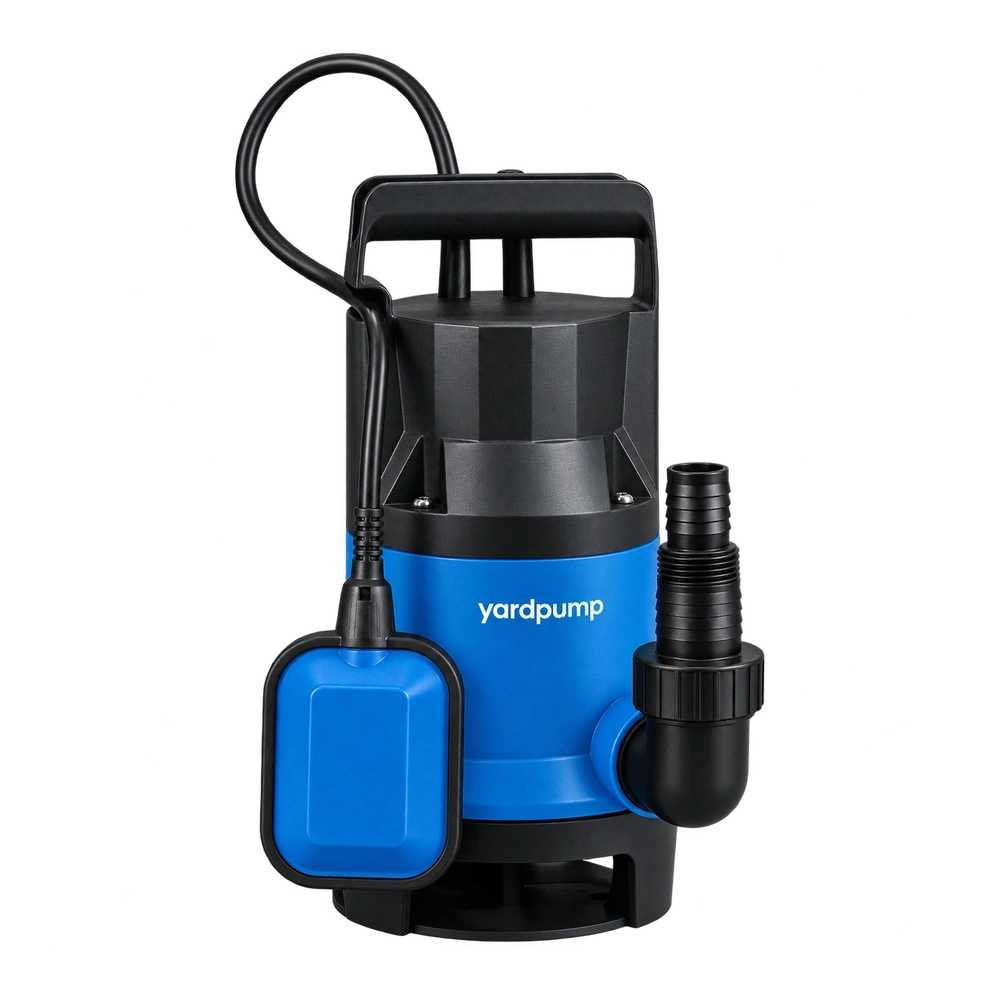
Suppose a single-phase submersible pump is delivering water, but a clamp meter placed around its intact cord displays 0.0 amps. First identify the conductors inside the clamp. Current travelling to the motor and current returning from it produce opposing magnetic fields. The meter sees their combined effect. A zero or near-zero reading around the whole cord does not show that the motor draws no current, that power is off or that there is no leakage. Measuring load current and investigating residual current are different jobs.
The same display can mean two different things
Consider a simplified example. At one moment three amps go out on one conductor and return on the other. If both conductors pass through the jaws, the net reading ideally cancels. A measurement around a single live conductor can show that conductor's load current instead. Three amps is just an example to show direction. It is not a pump rating. Actual readings depend on supply, hydraulic duty, the moment of measurement and the instrument settings.
Residual current measurement deliberately includes all live conductors of the circuit at the chosen boundary. In a typical single-phase circuit those are line and neutral, with the protective earth excluded from that sum. Current that returns by a path outside the measured group can leave an imbalance. A small signal calls for an appropriate leakage current instrument and setup. Clamping the whole cord of an earthed appliance can include return current on the protective conductor, potentially hiding the very path under investigation. A zero on a standard load clamp does not replace the relevant electrical safety tests.
What the user can report and what service should measure
From a dry, safe position, users can report whether the pump delivers water, the meter's display and range, whether the clamp was around the whole cord or an identified test point, and whether any protection operated. Do not strip the cord, make a splitter, handle a wet plug or repeatedly reset a device. If there is cable damage, water at the connection, any electric shock, burning odour or tripping, stop using the equipment and have it safely isolated by qualified personnel. A clamp display is not a way to establish absence of voltage before opening a pump or touching wiring.
A technician first defines the job. To compare running current with the nameplate or an approved sample, measure the individual live conductor using an appropriate approved setup. Record the hydraulic duty, supply, test point and steady operating interval. To investigate residual current, select the correct conductor group and an appropriate low current range, and account for jaw closure and test location. The technician selects additional checks for the protective conductor and insulation under the applicable service procedure. A small displayed number is not an automatic pass. One snapshot may also miss an intermittent event.
Put the test point on the service report
Beside the value and unit, include the measurement purpose and location. Load current can support a comparison at the same hydraulic duty. Residual current can inform a protection investigation. The readings do not substitute for each other. Separate starting current from steady operation. For energy comparisons, use measured real input power rather than inferring efficiency from amps. Label an unexplained whole-cord reading as unsuitable for acceptance, so a photo of a zero display does not send a good pump back to the factory.
The same pump can have different reported numbers at an installation and a factory simply because the measurement boundaries or duties differ. Compare those first, then investigate the instrument and the unit itself. For a drainage complaint, assess water delivery under allowed conditions. For a concern about electrical safety, preserve the observations and have qualified service take over instead of trying to reproduce the fault at home.
Frequently asked questions
Does 0.0 amps prove it is safe to open the pump?
No. Magnetic cancellation says nothing about whether conductors are energized. Follow the applicable procedure for isolation and proving absence of voltage.
What if protective earth is inside the clamp as well?
Some current returning on earth can be included and cancel. Have the technician confirm the intended measurement boundary.
Can I convert one clamp reading into pump input watts?
Not by itself. AC real power also depends on supply voltage, phase and waveform. Use a suitable real-power measurement.