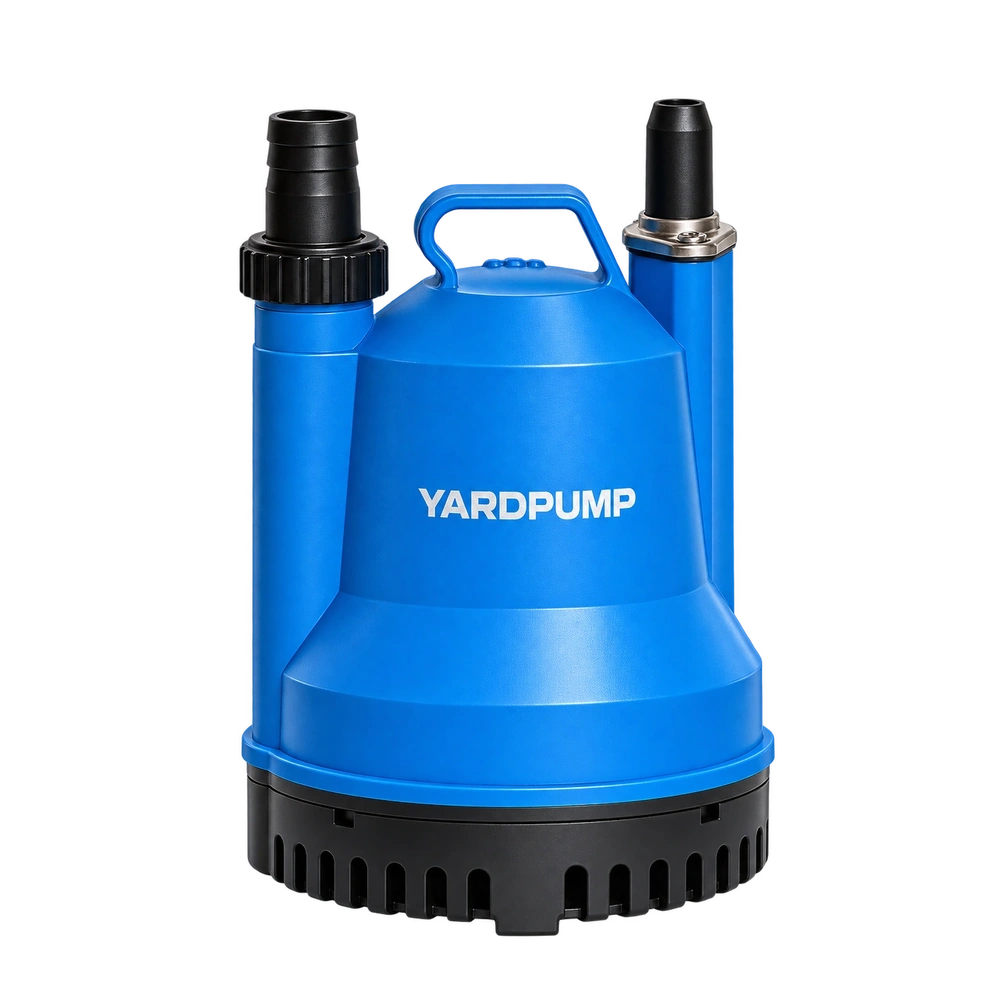
Imagine a low-level pump at the end of a cleanup on a hard floor. There is still a continuous sheet of water. A ruler beside the pump shows depth. Move the unit near the edge of the wet area and the outlet starts alternating between water and bubbles. Check where water can approach the intake. Next to a shallow edge, one side can draw down faster than water replenishes it, leaving a route for air. A single depth reading beside a foot does not represent the whole inlet perimeter. Keep the pump within its specified start and running conditions throughout the assessment.
A shallow sheet can feed the intake unevenly
Picture a thin sheet of water running over a floor toward a low point. If the pump sits near the edge, water can reach it readily from one side while the other has very little supply. As flow accelerates toward the entrance and the local surface drops, air can reach an exposed part of the intake. It may happen without a large visible swirl. Sometimes a thin air path appears first. Sometimes the irregular stream outside is the first thing you notice. Floor gradient, an adjacent wall or a tilted pump can produce further variation. This is distinct from multiple puddles separated by a ridge, where water cannot reach the pump location at all.
Foam in the liquid, entrained air and a changed priming state can also affect the discharge. Inspect hose connections for leaks. Bubbles by themselves do not prove cavitation. Low-level pumps have separate starting, running and residual-water conditions. If the water is already below an allowed limit, stop and use an approved finishing method instead of trying to demonstrate the fault. Water around the feet does not establish the required cooling and intake conditions.
Compare positions without changing the rest of the route
With the pump safely isolated, use a level, firm location surrounded by a wider area of water and clear only the accessible intake areas the instructions allow. Match initial depth, liquid, hose, outlet elevation and pump orientation in the comparison. Within the allowed depth range, record which side of the water sheet thins first, whether air repeatedly enters and when the discharge changes. Observe from a safe position. Never move the operating pump by pushing it in water or pulling its cord. If electrical equipment is wet or a controlled comparison is not safe, have qualified people isolate and assess it first.
For illustration, say both starts are at 22 mm of water, assumed to be allowed for the test. In position A, water can reach the intake across a broad area. In position B, the depth at the selected measurement point is the same but the wet sheet ends a few centimetres from the intake. Repeated air in B and stable delivery in A, under otherwise comparable conditions, support an edge supply effect. If moving the unit does not help, review actual depth, liquid and the manufacturer’s priming or vent instructions. The example depth is not a minimum for any model.
Choose a position that gets a continuous supply
A low point that remains fed from a wider area can make the setup more reliable. Where suitable, use an approved collection arrangement rather than trying to draw disconnected water across an uneven floor. When the remaining sheet can no longer feed the pump, use the appropriate finishing method rather than forcing the pump to stay on. Compare low-level utility pumps by approved liquid, starting depth, control and operating conditions before comparing residual numbers.
Frequently asked questions
Can air enter from the wet edge without a visible whirlpool?
Yes. Air can reach an intake through a locally thinned path with little visible swirl. Look at repeated behaviour when you change the relative position in safe conditions.
Can I cover the dry side of the intake with fabric?
Do not obstruct openings. Fabric can be pulled against the inlet and reduce supply. Change the collection or placement instead.
The depth is above the quoted residual level. Why can the pump still draw air?
The residual figure describes an endpoint under defined conditions. The pump still needs adequate local depth, inflow, cooling and the correct control for the intended operation.