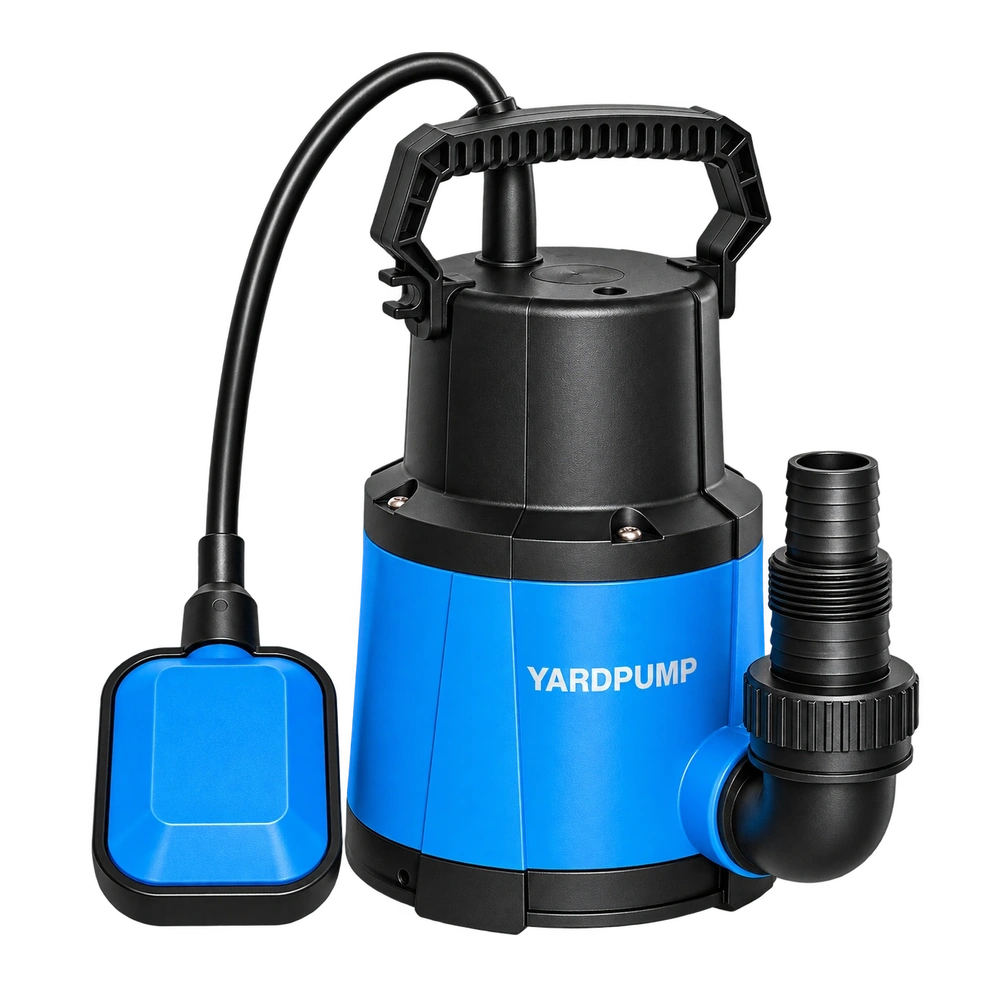
Take an example from purchasing spares for two frequencies. A buyer sourcing a small single-phase submersible pump for two markets sees the same 12 μF marking on both run capacitors. Is it safe to buy one spare for the two pump versions? Only if the motor maker approves the same part for both exact arrangements. A change of frequency changes the capacitor's reactance even when the capacitance stays fixed. It can also change the motor and pump duty. The number on the can is a useful check against a bill of materials, but it does not define a compatible assembly.
Calculate the component effect first
For an ideal capacitor, the magnitude of its reactance is one divided by the product of 2π, frequency and capacitance. An illustrative 12 μF gives about 265 Ω at 50 Hz and 221 Ω at 60 Hz. If the same RMS voltage were applied across that ideal component alone, its current would increase by about 20 percent between 50 and 60 Hz. This example is a component calculation. It does not predict the current in a pump's auxiliary winding.
The winding has impedance of its own. Rotor slip, magnetic conditions and mechanical load can influence the complete motor. With the capacitor in series with the auxiliary winding, the voltage across the capacitor need not equal line voltage. A speed change can also move the pump to a different point on its head and flow curve for the installed pipework. A simple percentage applied to reactance therefore cannot predict line current, temperature rise, starting margin or input power.
Check the motor version against a real load
Ask for the pump and motor identification, wiring drawing revision and the approved component list. Identify the supply voltage and frequency, the main and auxiliary winding versions, the run capacitor and any starting device. Check approved AC voltage, capacitance tolerance, capacitor type, terminals and installation conditions. A start capacitor with the same printed capacitance is not automatically intended for continuous duty. If the approved lists use a common spare, capture both motor versions and their revisions in the spare record. Confirm that the terminals and wiring route are also approved for the installed enclosure.
Have qualified staff validate the versions on a protected test rig. Use the approved supply for each version, take meaningful head and flow points and include relevant starting conditions. Record voltage, frequency, flow, head, input and temperature rise. Keep the water temperature, immersion or cooling conditions, definition of stability and any protective action with the results. If voltage across the capacitor or auxiliary branch readings are needed, trained staff should follow the diagram and the safe measurement procedure for the equipment. End users should isolate the pump, avoid opening wet electrical equipment, and leave internal measurements and discharge of stored energy to qualified staff.
Make the spare decision traceable
Share a warehouse part only when it is approved in both assemblies and the complete versions have passed their agreed validation. If capacitors with the same capacitance carry different approved voltage, terminal or package requirements, keep those part identities separate. A shortage does not make them interchangeable. Ask the supplier to fill any holes in an unloaded test or single discharge reading rather than treating it as evidence for the whole duty range.
If a capacitor is used just for starting, establish when it drops out before applying reasoning for a permanent run circuit. Its connection time and switching arrangement also need the motor maker's approval. When a supplier cannot connect the offered capacitor to a particular revision and duty, hold the substitution and request a documented decision. That is a spare part decision, not an instruction to tune a pump by trying different values.
Frequently asked questions
Does a capacitor with a higher marked voltage always qualify as a replacement?
No. Its capacitance, service category, temperature limits, mounting and terminals also have to match the approved arrangement.
Is one successful start enough to approve the frequency change?
No. Check starts at the agreed boundary and compare operation, heating and protection in realistic water duties.
Should I pick a different capacitance just to keep the calculated reactance equal?
No. Matching reactance does not verify the winding circuits, pump load or motor assembly.