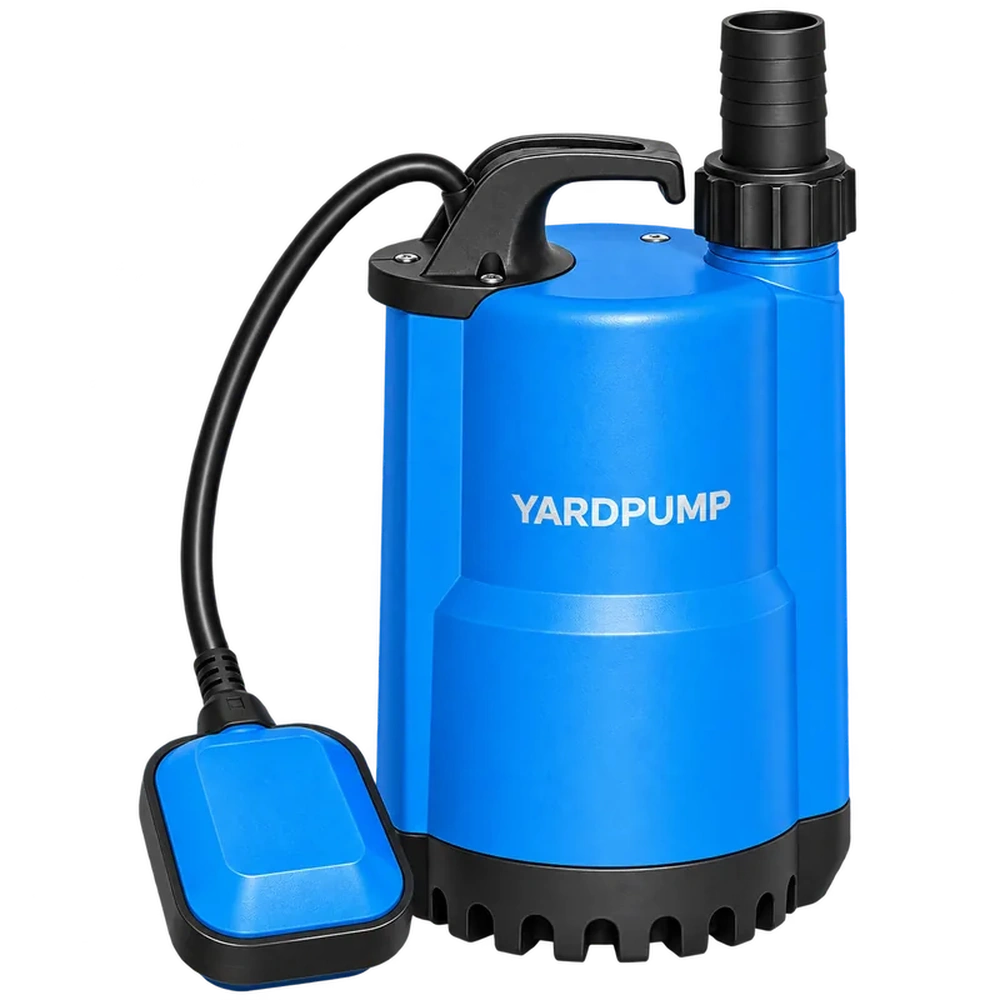
Imagine a clean-water submersible pump comes out of a hard-water tank with a pale crust on the housing. Discharge still looks normal, but the pump sometimes stops after running. Scale can affect external heat transfer, although visible deposits do not establish the reason for stopping. Identify the cooling path first. Does that surface transfer heat to water? Were water level and temperature acceptable? Were the actual flow and head unchanged? Those conditions determine whether the deposit is a useful lead.
The case temperature is not the winding temperature
A design that rejects heat through its housing passes heat through internal parts, the casing and the surrounding water. An attached layer can add thermal resistance. Its coverage, thickness, contact and the local water movement affect the result. A design cooled mainly by internal through-flow may not depend strongly on the visible area. Deposits can also restrict a passage or interfere with a float, changing hydraulic load or control behaviour. Do not treat the case surface reading as winding temperature, or touch an energised submerged pump to assess warmth.
For illustration, take a uniform layer 0.5 millimetres thick with conductivity of 0.5 watts per metre kelvin over 0.01 square metres. Thickness divided by the product of conductivity and area gives about 0.1 kelvin per watt for that ideal layer. Actual deposits can be irregular or porous, and heat can take parallel paths. Convection and contact also matter. The figures illustrate thermal resistance, not the properties of an actual deposit or the temperature rise of a motor.
Compare conditions without changing several things at once
Record the location and extent of the deposit before cleaning. Note water temperature, immersion depth, stable flow and head, running duration, protective behaviour and supply conditions. If cleaning is allowed, have suitable personnel isolate the pump and use a compatible method from the instructions. Do not scrape seals or cable entries, or use an unknown acid. If the unit shows overheating, electrical leakage or possible damage, do not run it again merely to collect data. Use qualified service.
An approved bench comparison can use known samples at matching conditions. Check whether a deposit also changes the water passage or hydraulic load. Match the water temperature and cooling condition before comparing winding temperature evidence. A change in case temperature alone may call for an appropriate winding measurement. A short run that improves after cleaning does not establish that the whole pump is ready for release. If the deposits do not explain the result, continue checking water level, supply, control and wet-end resistance.
Use the finding to guide maintenance and purchasing
Follow the permitted media and service instructions when inspecting surfaces and inlet openings. Keep a dated record of cleaning and symptoms so that a later complaint can be compared with the same conditions. If hard water cannot be avoided, ask the supplier what can be cleaned, what cooling conditions apply and how the actual duty can be verified. Do not extend the observed resistance to deposits or long-term thermal performance of one unit to a family. The decision needs loaded thermal evidence and a defined cooling boundary.
Map the deposit against the local water path. When comparing units, record clearance to the tank wall and screens. A change in the surrounding flow can affect cooling even when the two housings look alike.
If the original report lists only run time, ask whether the pump had reached a comparable thermal state.
Frequently asked questions
Does normal discharge establish normal cooling?
No. Flow is one hydraulic observation. Surface heat transfer, water temperature and local resistance can still change.
Can I soak the pump in a household descaler?
Check the product instructions and material compatibility. An unapproved cleaner may affect the housing, seal or cable, so do not improvise a soaking procedure.
Can I use the case reading as winding temperature rise?
No. A case reading describes that point. Winding rise needs a suitable approved measurement method.