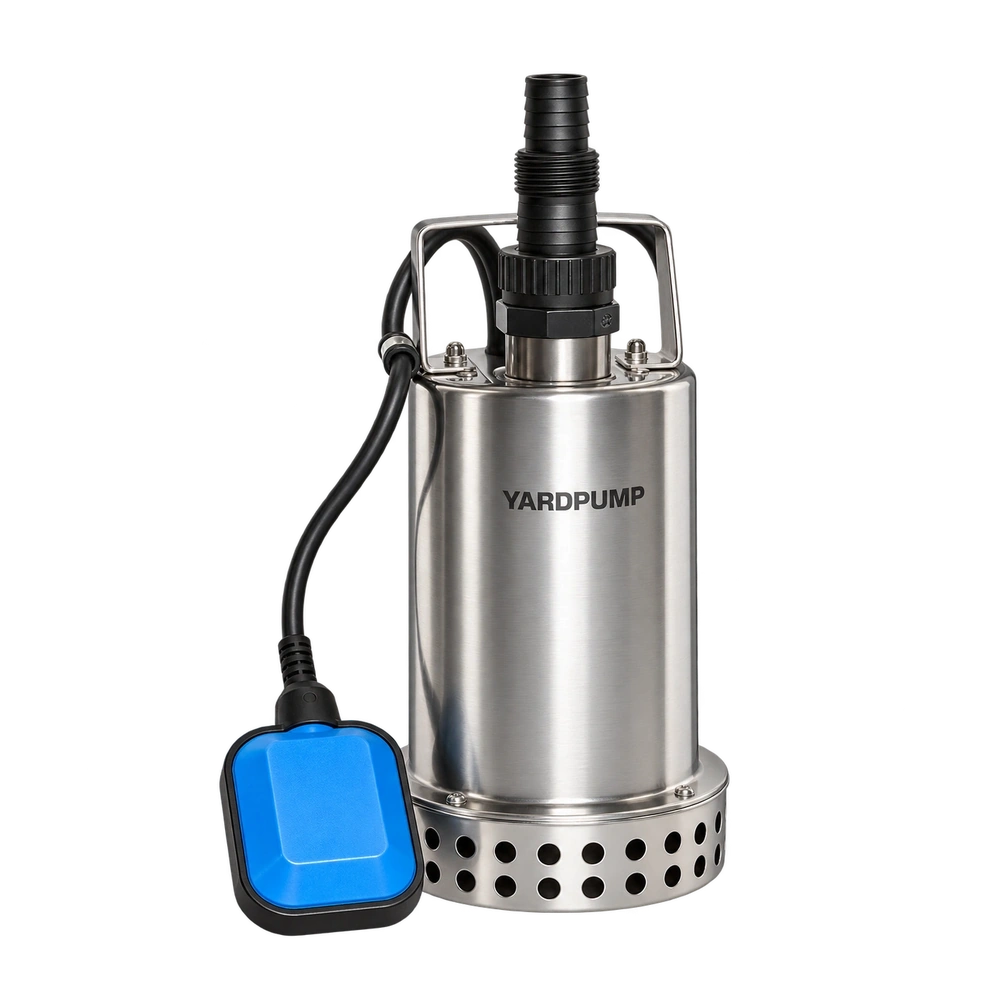
A small clean water pump is fully covered in a narrow collection channel. The float moves freely, yet the pump clears water faster when moved away from the wall. Do you need a higher powered pump? First check whether the wall restricts access to the intake or changes the way water approaches it. A comparison only means something if water depth, hose, outlet height and pump position are controlled. Being submerged does not establish that water has a clear path to every intake opening.
Measure clearance at the openings
Use the instructions and pump construction to identify whether water comes in from the underside, side screens or more than one surface. The widest point of the housing may not be beside the intake. A ledge, rib or corner can obstruct a side grille even when the feet have room. A hose that tilts the pump can close a gap that was present when it was positioned. After isolating the pump, photograph the obstruction and measure the closest gap at the opening. Look for sediment and debris that can collect in the restricted space. Do not remove a factory intake screen or cut the housing to create room.
Imagine a base with two side inlet windows, one facing a ledge and one clear. Even if about half the opening area appears obstructed, that does not mean flow must fall by half. Water may still move around the obstruction, but local speed and losses can change and the pump can move to another operating point. Uneven approach flow can also change noise or vibration. Use these observations to decide where to inspect, not to estimate flow from sound.
Keep the discharge the same while changing position
Follow the site and pump instructions for isolation, and prevent automatic restart before moving the pump. Use an approved orientation and stable support. Never lift it by the cable. Mark water level, discharge elevation, hose route and bends. Use comparable water level ranges in both tests. If moving the pump removes a sharp bend or lowers the hose end, the change in flow cannot be attributed to the wall alone. Photograph any unavoidable differences so they can be checked separately.
Under approved operating conditions, compare stable discharge from a safe observation point, or time the removal of the same volume between the same levels. If water is entering the pit, note changes in inflow; drawdown measures net removal. Repeat each position with clearance for the float and the intake covered. Reproducible improvement after moving away from the wall justifies checking layout and support. If the gain only appears when a hose straightens, the intake leaves sediment or the water rises, check that condition first.
Choose a position or a pump that fits the channel
Where there is room, choose a stable position with an open approach, free float movement and access for inspection and cleaning. For a narrow channel, ask the manufacturer about the applicable clearance, orientation and intake design before selecting a more compact pump or revising the layout. An unpublished clearance is not permission to place the pump against the wall. A dimension for another pump is not a general rule. For water containing debris, verify that the pump is approved for it and that the intake remains accessible for cleaning.
A wall can restrict both float movement and intake flow, but the evidence is different. Check start and stop levels and physical travel for the float. For intake loss, see whether a pump that is already running steadily recovers flow at the same water level and outlet conditions. Keeping the two checks separate helps avoid replacing a motor to solve an installation problem.
Frequently asked questions
Can a sidewall affect a fully submerged pump?
Yes. Immersion and clearance at an intake are different conditions. Inspect ledges and debris opposite the opening.
Could raising the base help?
Only consider it with a stable, approved support and adequate water and float levels. It may leave the side restriction unchanged.
Should float operation be rechecked after flow recovers?
Yes. Verify travel, hose support and cleaning access at the new location as well as delivery.