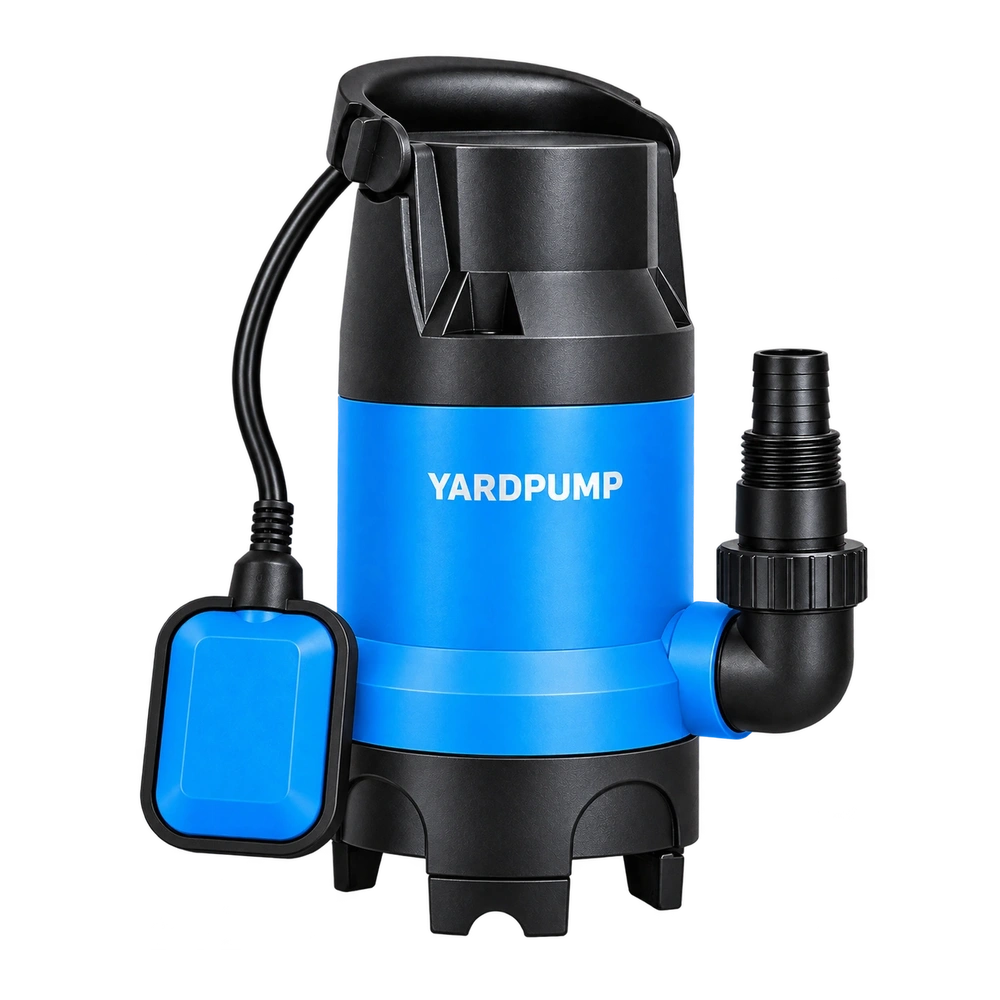
Suppose two small pump variants have the same motor identification but different factory cord lengths. A technician measures resistance at each plug and sees a fraction of an ohm more on the long cord. Has the supplier changed the winding? The plug reading may include both conductors, terminations and any components in the measured motor circuit. Record that boundary and the circuit state before comparing the numbers. An increase from a longer line can occur without a change inside the motor.
Count the path out and back
In a simple two-lead resistive circuit the instrument sees the outgoing conductor, internal connections and the return conductor in series. Copper wire resistance increases with length and decreases with cross-sectional area. Temperature also matters. A smooth outer sheath or an apparent cable size does not identify the actual conductors. Use the verified cable construction and account for terminations where appropriate. If different materials or sizes were supplied, the same per-metre estimate cannot necessarily be used.
Consider an illustrative calculation with copper at about twenty degrees Celsius, conductor area of 0.75 square millimetres and resistivity near 0.0175 ohm square millimetres per metre. A five-metre cord gives about 0.23 ohm for the two conductors together. A twenty-metre cord gives about 0.93 ohm. The difference is around 0.70 ohm before adding contact or temperature effects. These figures do not recommend a particular cable size or length for a pump. A measured difference of that order makes the cord a plausible contributor. It does not demonstrate that the winding is identical. If the measured difference is much larger and repeatable, review the circuit and assembly records rather than assigning the rest to the winding straight away.
Four-wire measurement does not move the sensing points
An appropriate four-wire method can remove much of the test lead effect with a suitable instrument and connection. If the sensing points are on the plug blades, the factory cable is still inside the measured boundary. More displayed decimal places cannot distinguish that cable from the motor winding. Other designs can place a protection device, float-controlled path or electronics between the plug and the motor. A capacitance branch or an interrupted contact can make the simple resistive calculation unsuitable. Use the approved method for that configuration.
Have qualified personnel isolate all energy, follow the instructions for any stored energy and make the checks under dry safe conditions. An importer comparing results should record the electrical version, measured points, measurement method and range, actual equipment temperature, cable construction and elapsed time. Do not bypass protections or open a sealed assembly to obtain a convenient reading. Where the decision depends on winding resistance alone, use a factory or qualified service result at the approved measurement boundary. If the report corrects for a cable contribution, retain the raw value, correction basis and uncertainty that remains for contacts and tolerances.
Let the purchase requirement name the right measurement
A whole-assembly resistance requirement can be checked from the plug in the exact configuration where that method was approved. A winding specification requires appropriate evidence for the winding itself. A reference number for a short cord is not automatically the limit for a longer one. This distinction lets the buyer investigate a change in the assembled circuit without accusing the supplier of a winding change that the data cannot see. It also stops a true mismatch being concealed under an unverified length correction.
Frequently asked questions
Should I use the cable length just once?
For the simple two-conductor path, count both outgoing and return lengths. Other circuits require their approved method.
Does a four-wire meter at the plug exclude the product's cable?
No. Parts inside the sensing points still contribute to the result.
Can the same calculation be used on a pump with an electronic float control?
Not automatically. Have qualified personnel confirm the internal path and specified test. Do not bridge or bypass the control.