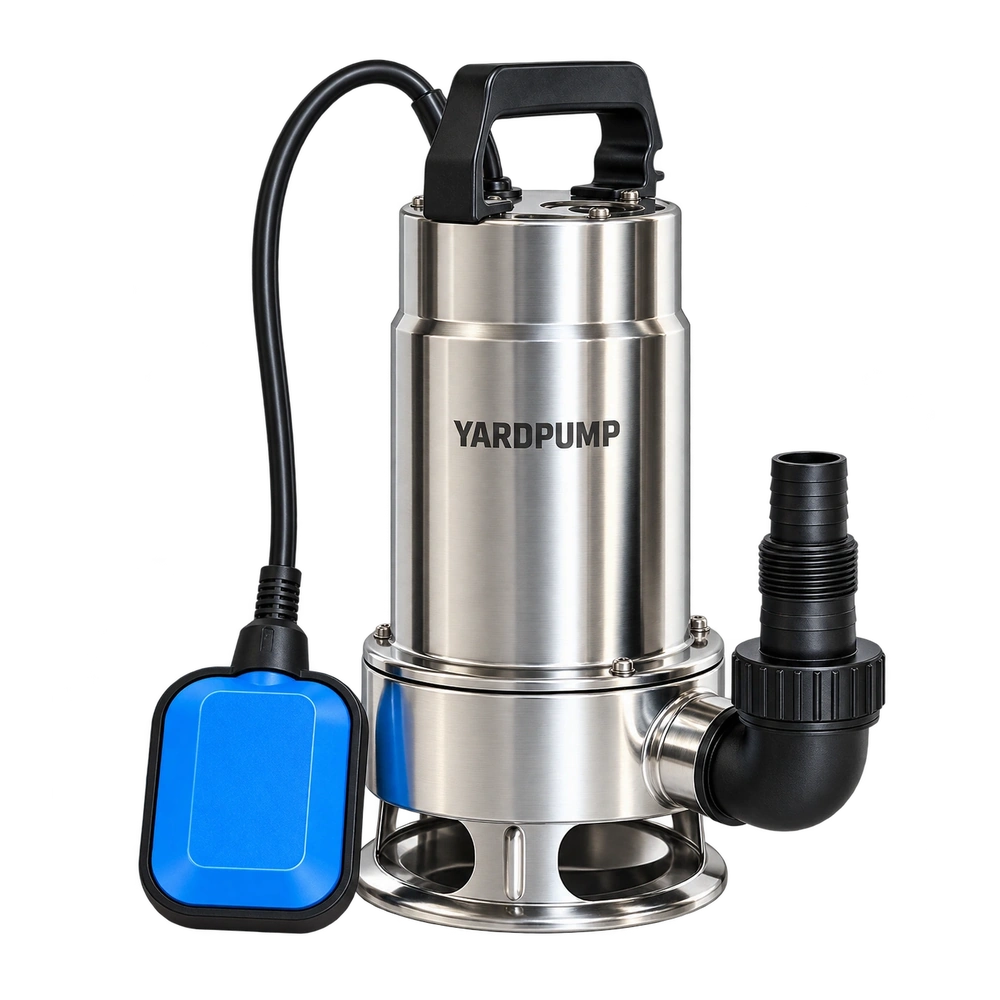
If a service record says a submersible pump's resistance reading gradually rose to over-range, identify what was measured. Was it one isolated winding or a path that included a capacitor, thermal protector or controller? A resistance meter applies a test signal. A capacitor in the path can charge and change the response after the test begins. A drifting display does not establish an open winding. Other paths, poor contact, temperature, range changes and the state of a protector also matter.
Different points give different readings
The DC resistance of a safely isolated winding should be compared under the conditions and method in the service documents. A reading at a complete pump connection can include other components. If a capacitor remains in the path, current seen by the instrument can change with time. If parallel or series paths are present, even the final steady reading may not represent one winding. A controller, protector or switch can make the same two external points behave differently in different states. Do not reconstruct the circuit from a plug, wire colours or a single reading.
This work is for qualified personnel. They safely isolate the pump, prevent automatic starting and confirm and address stored energy under the applicable procedure before identifying authorized points on the exact diagram. Do not apply a resistance range to an energized terminal, open a pump in a wet location or bridge a capacitor as a test. If there is no applicable service procedure, ask the manufacturer. Do not ask a user to open the electrical compartment to locate a winding.
Use two comparable records to separate the causes
In an illustrative bench comparison, a reading across the original connected circuit rises after the test begins. When qualified staff use the authorized procedure to establish a single winding measurement, the reading becomes repeatable at comparable temperatures. That points first toward the original circuit boundary. On another unit, an intermittent open indication remains at verified winding points and coincides with a temperature or contact change. Investigate the connection, leads, protector or winding under the approved process. Neither example is a model-specific result or a substitute for insulation testing.
Record motor revision, original points, instrument and range, reading time, winding temperature and connection state. Numbers from different terminal pairs are not directly comparable. Leads and contact can affect small resistances, so qualified staff may need an appropriate method to check them. Preserve the readings through the test instead of deleting the transient and keeping the last plausible number. The sequence helps separate a charging response, unstable contact and a verified component fault.
Write a conclusion that supports the next check
If the evidence only shows a changing reading across a connected circuit, state that limit and request the circuit and comparable winding data for the exact version. If a stable isolated winding reading falls outside the approved range, check temperature, conductor, connections and production history. Normal winding resistance does not establish normal insulation. It also does not replace verification of starting, delivery and temperature. An approved configuration and complete water test help support a repair decision. A user who encounters tripping, humming or failure to turn should stop use and contact service, not open the electrical compartment.
If reports use different ranges or units, request the original readings. An overload display means the instrument was outside its selected range; it does not establish infinite resistance. Do not use a value shown during autoranging to calculate a winding difference. Keep the display, range, meter type and time sequence with the record.
Frequently asked questions
Does a steadily rising display prove an open winding?
No. Confirm the circuit boundary, stored-energy procedure, contacts and other components before interpreting the reading.
Is it safe to measure any terminal next to a capacitor once power is off?
No. Isolation does not establish that stored energy has been addressed. Follow the authorized procedure and measurement points.
Does normal winding resistance rule out leakage?
No. Winding resistance and insulation are separate checks. Complete the electrical and operating tests relevant to the fault.