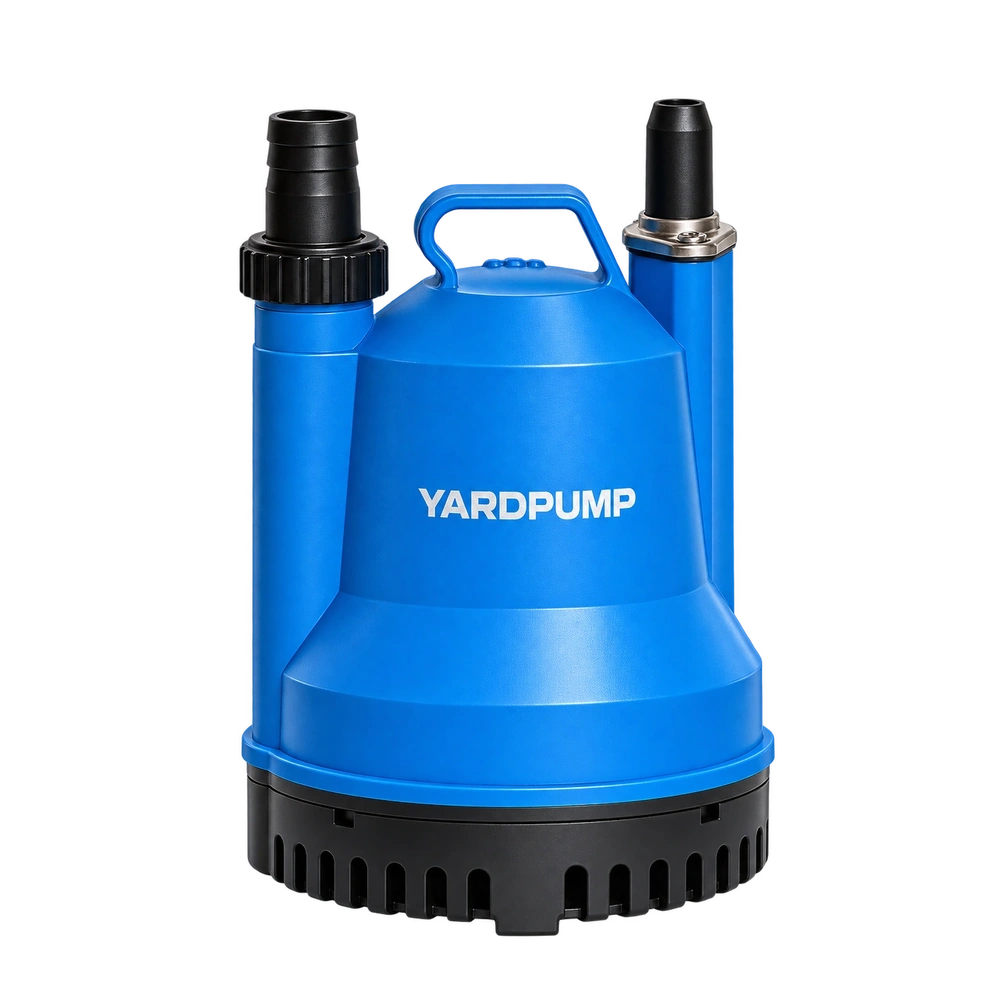
Imagine a temporary basement cleanup. The discharge hose passes through a partly open window. A trial gives a useful stream. Close the sash a little and the stream outside turns into a trickle, although the pump still sounds as if it is running. Look first at the hose cross-section where it passes the sash. Lifting water as far as the window can matter at startup, but the sash closing onto the hose introduces a different restriction. Separate them before deciding that the pump needs more head.
A window can be both a high point and a pinch point
An empty hose that rises over a window must fill and clear air before it can deliver reliably. Once delivery settles, the outlet elevation and losses along the route matter. Squeezing a flexible hose can reduce its effective opening substantially and create sharp turns on both sides of the sill. The nominal diameter elsewhere does not compensate for that narrowed section. On some routes the stream starts well, then declines when the sash settles farther or the filled hose shifts into a narrower part of the opening.
A sharp sill can also wear through the wall. Water spilling back near the foundation can make a good discharge look ineffective. With the pump isolated and the hose safely depressurized as instructed, inspect for flattened marks, stress whitening, abrasion and the range through which the hose can move. A sash is not a hose clamp. Do not reproduce a restriction by squeezing a running hose, and never use the pump cord to hold the route in place.
Compare delivery without changing lift at the same time
Have the installer support the hose through a clear, protected passage that the sash cannot pinch. Secure the outlet at a safe, approved discharge point, positioned so water cannot simply run back toward the building. Keep the measured hose length, fittings, outlet height and starting water level comparable when testing before and after. Comparing the original window route with a new outlet at ground level mixes a possible change in elevation with the effect of the restriction.
Consider an illustrative 15-litre timing test. With the hose supported at the original window height and the outlet unchanged, it fills in 30 seconds, or about 30 litres per minute. A previously and safely observed restricted condition took 60 seconds, or about 15 litres per minute. That shows a useful difference between layouts. It does not measure the pressure drop of the sash or prove the hose can safely be reused. If the old state is unsafe, do not recreate it for a cleaner comparison. Retain the indentation photos and the result from the repaired route. Do not approach flooded electrical equipment; have qualified people isolate the area before working.
Decide whether to support the hose or build a permanent route
For a one-off job, use a passage that preserves the hose maker’s bend radius, with independent support and edge protection. At a location where the window needs to close or the pump must work reliably long term, ask an installer about a suitable dedicated route. It must still be accessible for service. Do not obstruct an escape opening or cut structural or weather barriers based on a pump test. Once the hose is no longer pinched, check the available flow against the time allowed and the actual inflow. That tells you whether to consider another utility pump or a different drainage system.
When handing the route to another operator, mark where the window should stop and where the hose is supported. If someone must close the opening for security or weather, plan a permitted alternative passage before the next drainage job.
Frequently asked questions
The height stayed the same. Why retest after fitting a rigid elbow?
An elbow can prevent pinching yet introduce a smaller bore or a higher local loss. Verify working flow with the actual elbow and hose fitted.
Will pump pressure round the flattened hose out?
Do not rely on it. The sash load, bend or damage can remain and the higher pressure can put more stress on the hose and joint.
If the outside stream is strong, why is water still returning to the wall?
Check the hose for leakage and observe where discharge runs on the ground. A return path to the foundation reduces net removal even with good pump delivery.