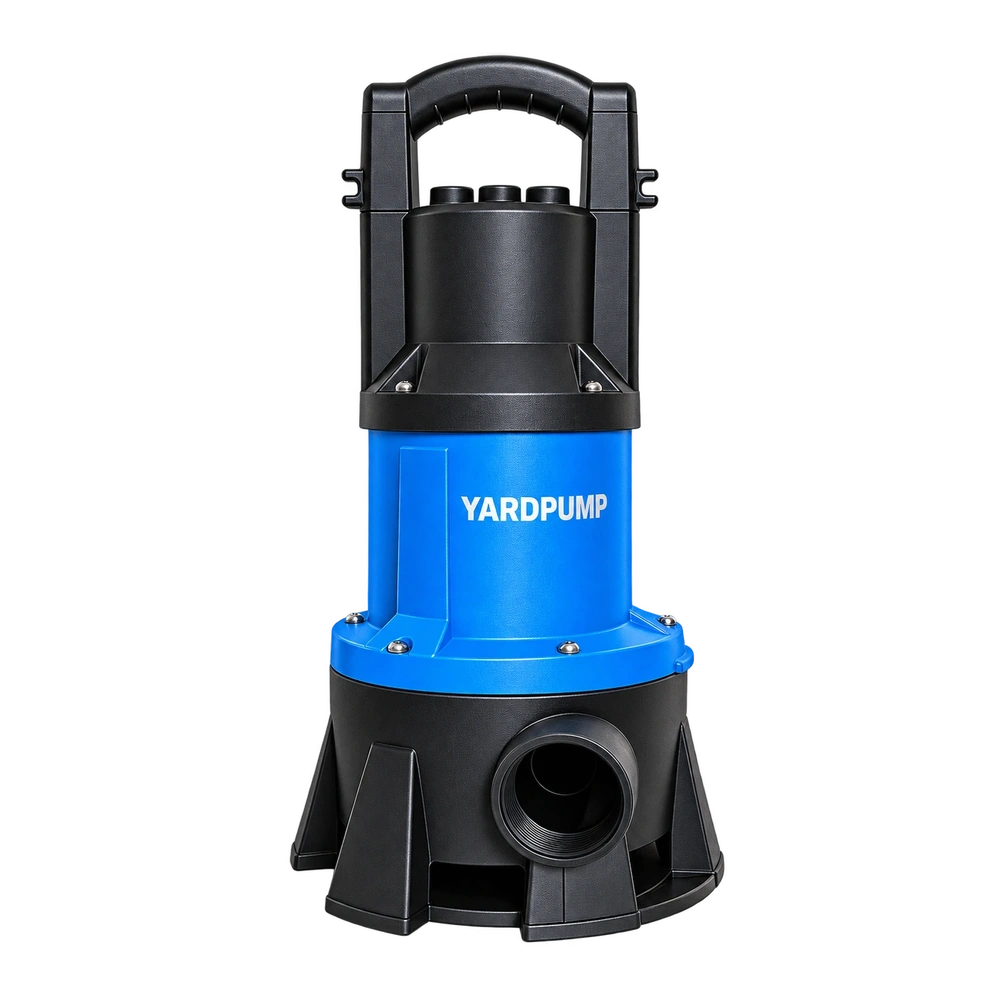
Consider a service check of a low-level pump. A low-level clear water pump leaves a different puddle after it is turned halfway around on the same floor. Does this invalidate the pump's stated residual depth? First check whether all the feet are intact, the pump sits steadily and the hose pulls up on one side. When only a thin layer remains, a small change in the height of an intake edge can make that side draw air sooner. Slope, a tile joint or a shallow depression can produce the same outcome. A deep spot in one corner is not sufficient to judge the pump.
Separate the pump's position from the floor
The inlet, base cover and feet are designed to work together. In an illustrative case, suppose one side sits 3 mm higher than the other. Near the water surface, a raised intake edge could draw air first. This example explains the effect of tilt, and is not a 3 mm correction to a residual depth rating. Turning the pump may also pull the hose, change the float's position or load the discharge connection. Photograph where the feet contact the ground, any missing part or trapped stone, the hose route and outlet position. Do not move the pump by its cord or adjust it while energized or standing in water that could be live.
Stop and isolate the unit, then relieve pressure as directed. Compare the feet and cover on a clean, approved surface. Do not pry the cover or insert an improvised shim. Check for a damaged or missing foot, an insecure cover, a raised feature on the floor, and sideways hose load. Set the pump on a stable level surface as the instructions permit, and support the hose without pulling on the pump. Identify depth locations on the floor so they do not turn with the pump, rather than choosing the deepest new patch each time.
Vary one condition before choosing a fix
Within the approved operating limits, compare normal drain cycles with the same starting level, discharge route and stopping rule. Note the level immediately after stopping and again a defined time later. Check whether the hose drains back and compare readings near and away from the pump. Starting depth, automatic switch-off depth and final residual depth under defined conditions are different quantities. Do not override a float or run the pump dry to reach a lower number.
If the low side or retained water pattern moves with the pump, look at the base and hose. If the water stays at the same spot on the floor and the pump is stable, investigate the depression, slope or path to the inlet. Both conditions can coexist, so record them separately. If a foot is missing or the cover is loose, stop using that configuration and have service identify the approved assembly. Do not glue a substitute foot on, prop up the pump with a loose object or drill the base to lower an intake. Give the buyer or service team the floor arrangement, fixed test points and a base photograph, then use the records for that exact version and test condition. If the comparison cannot be made safely, leave it to qualified staff. The method is for shallow clear water drainage, not slurry or an uneven bed with loose debris.
A useful return record includes floor locations as well as equipment orientation. This makes it possible to repeat the observation without relying on a single view of water from above.
Frequently asked questions
If the water stays in the same tile joint after the pump turns, should I replace the pump?
Check the joint depth and slope against the measuring datum and pump placement before choosing a replacement.
Can I hold the pump down or lift the hose to improve the result?
Do not hold down an operating pump. Support the hose as directed and compare at the same outlet conditions.
Can it stay in use with a missing foot if it still pumps?
Have the actual design assessed under the instructions. A visible stream does not clear a damaged base.