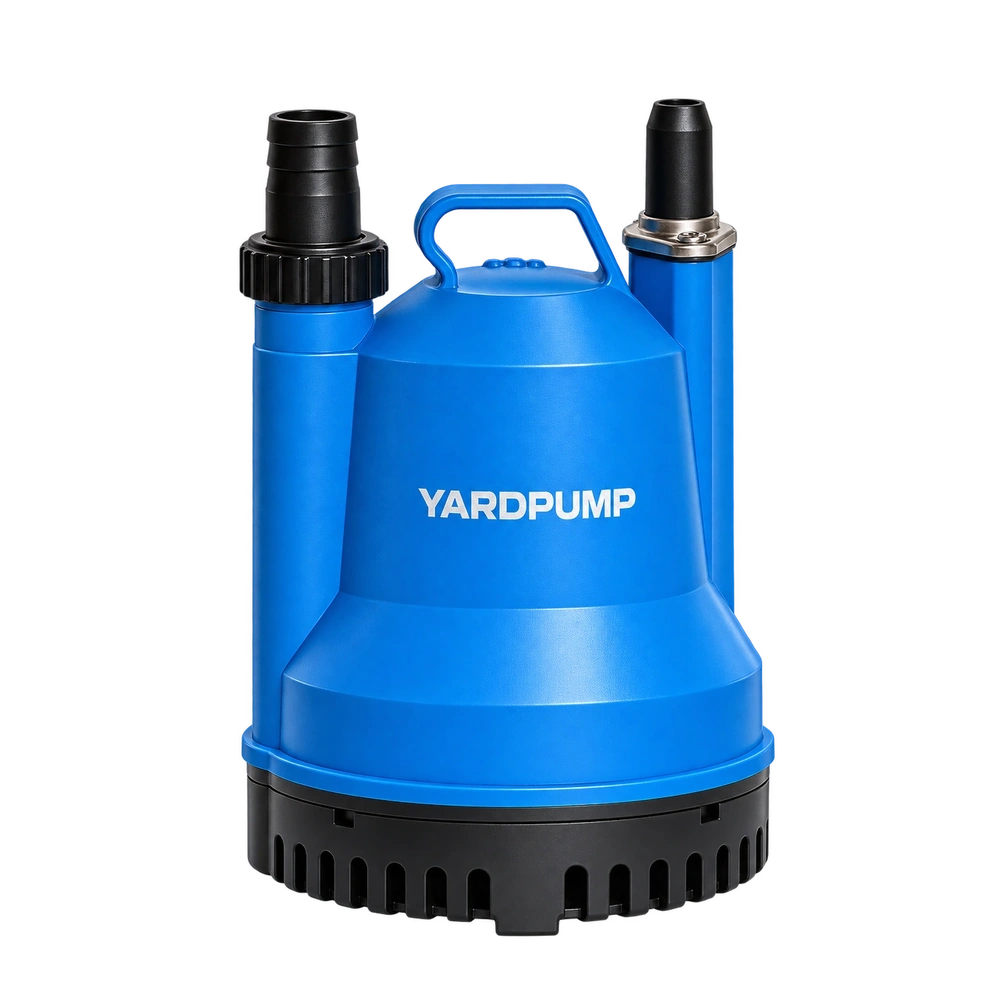
Each compact submersible pump meets its endurance test conditions when run by itself. During a multi-station run, however, the shared water warms and some pumps reach a different thermal state. The bath is part of the test boundary. Count heat entering and leaving the shared water and check that all stations stay within the approved temperature conditions. Do not interpret the warmer run as a pump fault until the boundary is comparable.
Follow energy from each station into or out of the water
Electrical input is not the same as heat entering the bath at once. Part of the energy can heat the motor and go into the water through the housing; part becomes hydraulic output. In a recirculating test, energy dissipated in the closed return loop can also end up heating the shared water. In an installation where water leaves to another system, that water may carry energy outside the boundary. External control equipment and piping may also reject heat to room air. Draw the actual circuit and do not assume every watt follows one route or disappears as soon as it reaches the outlet.
Include other heat inputs, such as a recirculation pump or equipment inside the tank. Cooling coils, replacement water and heat exchange with the room can remove energy. All have limits that depend on actual conditions. A refrigeration unit’s nameplate is not proof of heat extraction at the chosen setpoint, room temperature and water flow. Keep the bath’s spatial temperature distribution separate from its average rise: a stable displayed average may still coexist with a warm return reaching one station.
Do a first-pass energy estimate and compare it with a run
For a simplified illustration, take 150 kg of water and suppose six stations each transfer an average of 250 W to the shared water, with all heat loss and cooling ignored. Over 30 minutes the water gains about 2.7 megajoules. At roughly 4.18 kJ per kilogram per kelvin, the average increase is about 4.3 °C. This assumes a mixed tank and excludes the heat capacity of the tank and components. The assumed 250 W is heat actually transferred in the example rather than a pump specification or a reading from the electrical feed.
Use an approved lab procedure to compare one station and the proposed simultaneous setup under similar starting conditions. Log calibrated temperature at the supply to the pumps and representative returns; note water mass, tank temperature at the start, room conditions, cycle timing and cooler operation. Over a suitable interval, observed average temperature rise can help estimate net heat pickup if mixing and other assumptions are valid. Keep track of the guard, appropriate water levels and electrical protection throughout. Do not extend a run outside its approved water-temperature or duty conditions to obtain a stronger trend.
If near pumps see different supply temperatures, improve mixing or measurements before interpreting a tank average. If all stations warm together, check actual installed cooling and replacement-water conditions before assigning slower performance or earlier thermal stops to unit variation.
Set the maximum simultaneous duty from evidence
Decide how many pumps can operate on that rig under the agreed cycle and thermal limits, including the worst planned overlap and the cooler’s recovery time. A larger well-mixed bath can slow temperature rise; it does not indefinitely remove a mismatch between incoming and outgoing heat. Use a capable cooler, an approved replenishment plan or fewer concurrent stations, then verify the resulting conditions. Rerun any acceptance result affected by an out-of-limit bath using the approved procedure.
Record the station count, cycle, supply and return temperatures and deviations with each result. A multi-station trial is comparable to a single-station trial only for decisions that the actual thermal and hydraulic boundaries support.
Frequently asked questions
Can I sum the pumps’ nameplate watts to size the bath cooler?
It is an initial reasonableness check at best. Estimate actual energy entering the shared water and verify real cooling capacity at the test conditions.
Does adding more water solve continuous heat buildup?
It slows the rise for a given net heat input. A sustained imbalance still warms the bath.
Does a stable cooler display establish each pump’s inlet temperature?
No. Check representative temperatures where the units actually take in water.