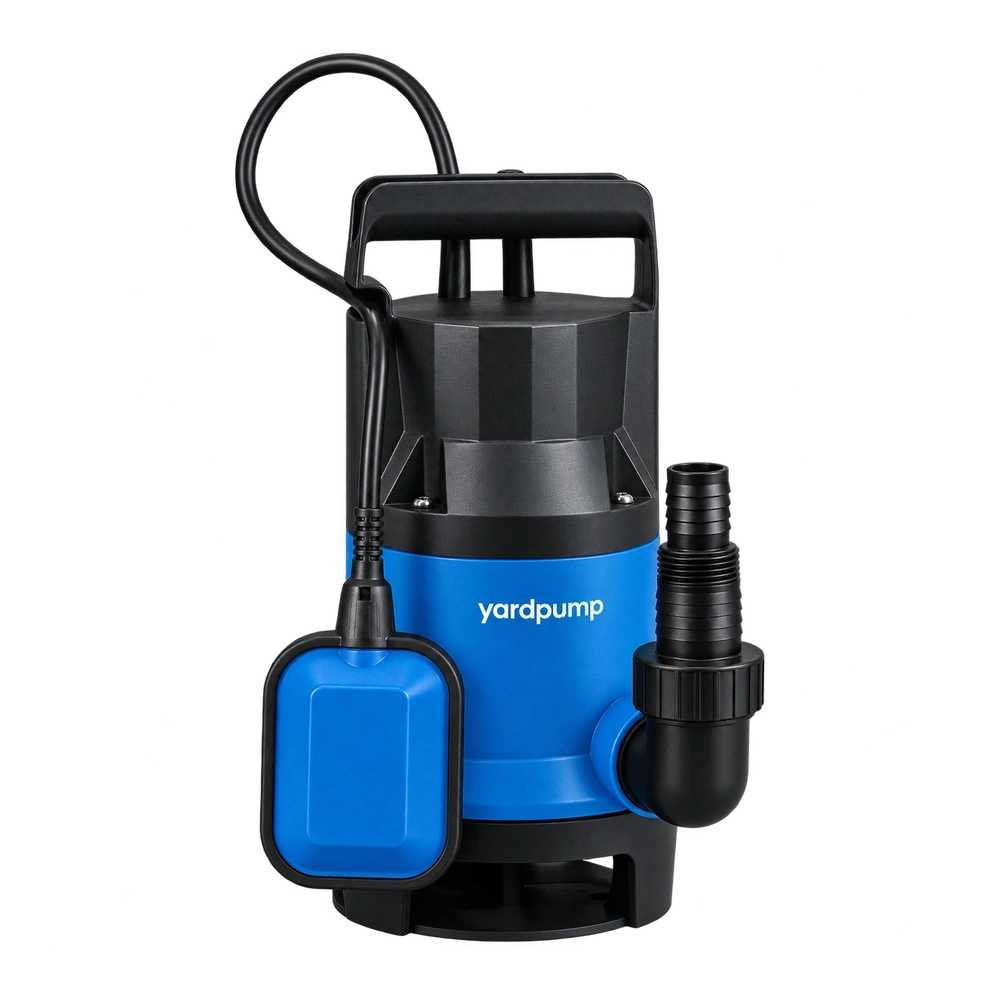
A sump pump delivers normally and shows no visible outward leak while running. It remains underwater after a hot stop, and a service team later finds water traces inside. Could water have entered after shutdown? Yes, under some conditions. Where a closed cavity has a gas space, its internal absolute pressure can fall as it cools. If the outside stays submerged, water can be driven inward through a leak path that was not obvious in operation. Absence of outward oil leakage does not establish a seal against inward water. Water could also have entered earlier, been introduced during service, or condensed inside. The timing and route still need evidence.
Internal and external pressures need not move together
Imagine a rigid cavity with a gas space. If gas mass and volume remain fixed, absolute pressure approximately follows absolute temperature. On the outside, water pressure includes atmospheric pressure and the head above the leak. That external pressure can stay high or rise as water drains back into the basin. Actual pump designs can contain oil, compliant parts, dissolved gases and pressure compensation. Seals may behave differently after rotation stops or as materials cool. A simplified gas calculation explains a possible driving force, not which interface failed.
For illustration, take a fixed gas space at 102 kilopascals absolute and 50 degrees Celsius. At 20 degrees Celsius the idealized pressure would be about 92.5 kilopascals. Outside, 101 kilopascals atmospheric pressure plus about half a metre of fresh water gives around 106 kilopascals at the path. There would be roughly 13.5 kilopascals driving inward under those assumptions. As liquid enters, gas volume and pressure can change again. These figures are not a pump specification or permission to apply the suggested temperature, pressure or depth in a test.
Preserve the shutdown history before opening the unit
Record utility or service conditions, the pump identity, liquid, run length, time after stop, water level during cooldown and any protective device indication. A qualified team should safely isolate suspect equipment and preserve its condition. Do not ask an operator to move or restart a suspect pump in water. In the approved inspection, record exactly where liquid first appears and whether it resembles the external fluid. Consider whether a prior handling or test step could have introduced moisture. Fog or beads alone can be condensation. Control any opening, drainage or sampling step that could mix water from separate compartments.
Compare the pressure direction on the bench
Have the service or engineering team compare appropriate specimen states: cooldown with external immersion, a controlled cold condition, and a test with the suspected pressure direction using the authorized method. Record internal and external conditions that can be measured without changing the leak path, and keep the liquid and assembly state comparable. Do not increase pressure arbitrarily to force a detectable signal. Use guarded facilities and approved limits appropriate to the design, and conduct the applicable electrical checks before any return to use. Ingress that repeats only in the immersed cooldown condition supports a thermal-pressure mechanism, but you still need to identify the path and distinguish the effect from cold changes in the seal itself. A dry cooldown comparison with the same internal preparation can help separate condensation from water arriving through the exterior. If the suspected ingress occurs at a cord entry, keep that interface in its installed orientation; changing it for easier access can change what the trial demonstrates.
If witness marks or samples show liquid in more than one compartment, record which one was first found wet and how the part was handled. A wet outer junction can drip into an opened inner chamber during service and confuse the sequence.
Frequently asked questions
Does the outside becoming cool prove it is drawing water in?
No. It only shows a change in temperature. Establish the actual pressure direction, liquid contact and presence of a credible leak path.
Do all pumps with an oil chamber have an air space?
Do not infer that from the exterior. Verify the fill, free volume and any compensation features for the exact design.
Does a room-temperature air test rule out this fault?
Not by itself. Temperature, liquid contact, pressure direction and whether parts are moving can affect the result. Use an approved test that addresses the condition under investigation.