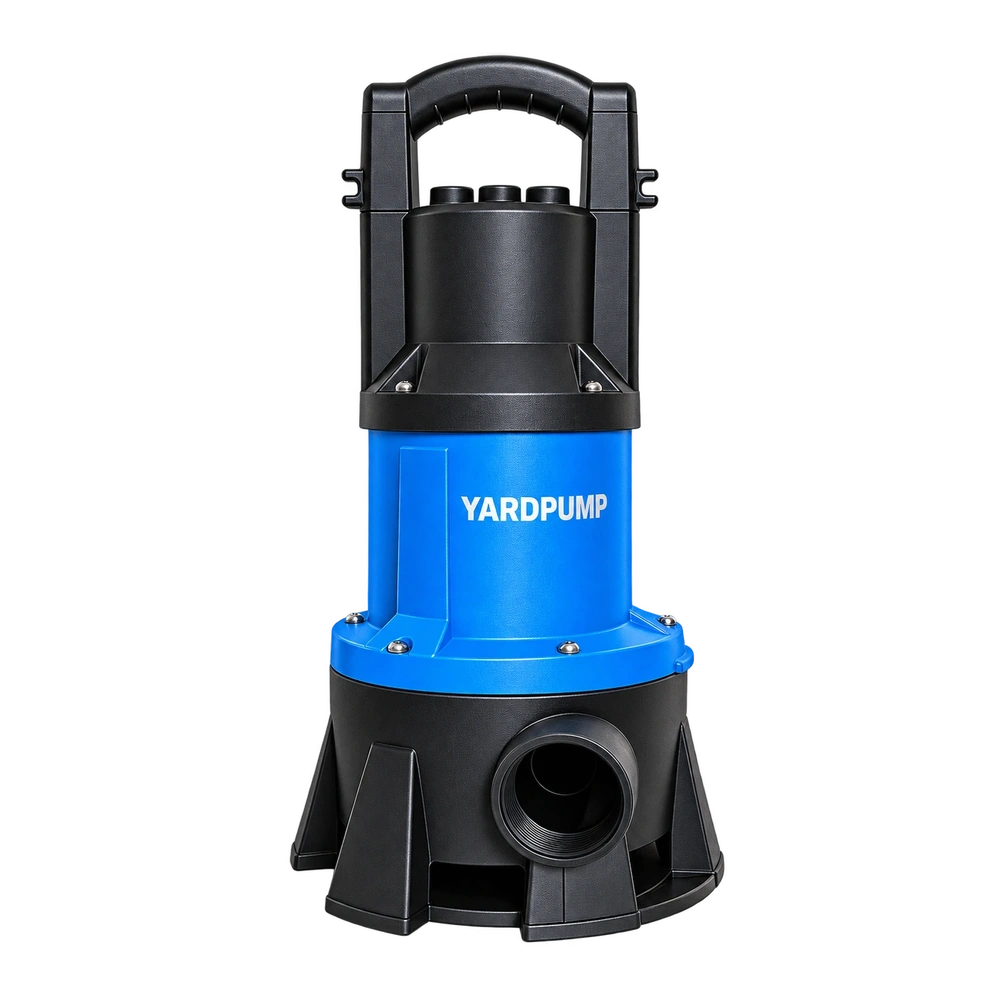
A stainless-steel submersible pump is running in a clear test tank. You can see the housing by eye and the camera shows a cool patch where the pump appears. That is not a housing temperature measurement. A common long-wave thermal imager sees radiation from near the free water surface and reflected radiation, rather than reporting the temperature of the submerged housing. Once the pump is out, reflective metal can still pick up images of technicians, lights or nearby hot equipment. Establish which surface the instrument sees before using a thermal image for any acceptance decision.
Separate water, wet metal and exposed metal
A clear tank allows visible light through. That does not mean long-wave radiation from the pump passes through the water to the imager. A picture combining thermal and visible images can make it particularly easy to assign a temperature to the wrong object. Air movement, ripples, reflection and evaporation can affect a reading directed at the surface. An ordinary clear tank wall is also not automatically an infrared window. Verify that any window material is suitable for the wavelength of the instrument.
Once the instrument sees an exposed surface, its finish still matters. Polished metal has relatively low emissivity and can reflect more radiation from its surroundings. A wet patch, matte coating or rough material can behave differently. At the same actual temperature, surfaces may appear in different colors. If a bright feature moves when the operator changes the viewing angle, investigate reflection first. Moisture also changes local heat transfer. One nominal setting for the material does not turn every pixel into a reliable housing temperature. If the target is too small in the image, the reading can blend with a neighboring hot fitting or cool background. Follow the imager’s guidance on distance and spot size.
Choose a measurement that answers the acceptance question
For housing temperature under water cooling, use an approved contact sensor or engineered measuring point suitable for immersion and electrical safety. Qualified staff should install or change it with power isolated and restart prevented. Record the location, attachment, liquid temperature and depth, established operating conditions and reading time. Do not improvise by lowering an unsuitable probe into a running pump. For an exposed reflective surface, a qualified operator may use an approved high-emissivity target, distance and angle if the conditions and surface permit them. A target attached below water does not solve a blocked infrared view.
If the question is winding temperature rise, housing temperature provides context. Use the approved winding test for the acceptance decision rather than working backward from the housing measurement. An image taken immediately after lifting the pump out should not be entered as an immersed measurement. Cooling, timing and the water film on the body can all change.
Decide what an image can support
In an illustrative test, the tank surface reads 24°C. At an exposed metal location that can be observed safely, two viewing angles give 31°C and 43°C. These numbers are examples. The readings from the tank and metal see different objects, and the result from the metal warrants a check for reflection. Averaging the images does not give the submerged housing temperature. Record the direction of the camera, a visual image and the approved instrument data for the same conditions. If the comparison cannot be made, treat the thermal images as observations, not temperature-rise results. When comparing pumps with different housings, match the measurement location, water temperature and operating duty before comparing readings.
Frequently asked questions
Does clear water still prevent a useful housing reading?
Yes. Visible transparency is not the same as the transmission needed by a typical long-wave thermal imager. Confirm whether it sees water, a tank wall or an exposed part.
Can a cool casing rule out hot windings?
No. The liquid may keep the housing relatively cool. Verify winding temperature rise using the approved test.
Should I replace the camera if the color changes with the angle?
Check reflection, the area covered by the instrument and any water on the target first. Evaluate the instrument after the measurement conditions are understood.